INTRODUCTION
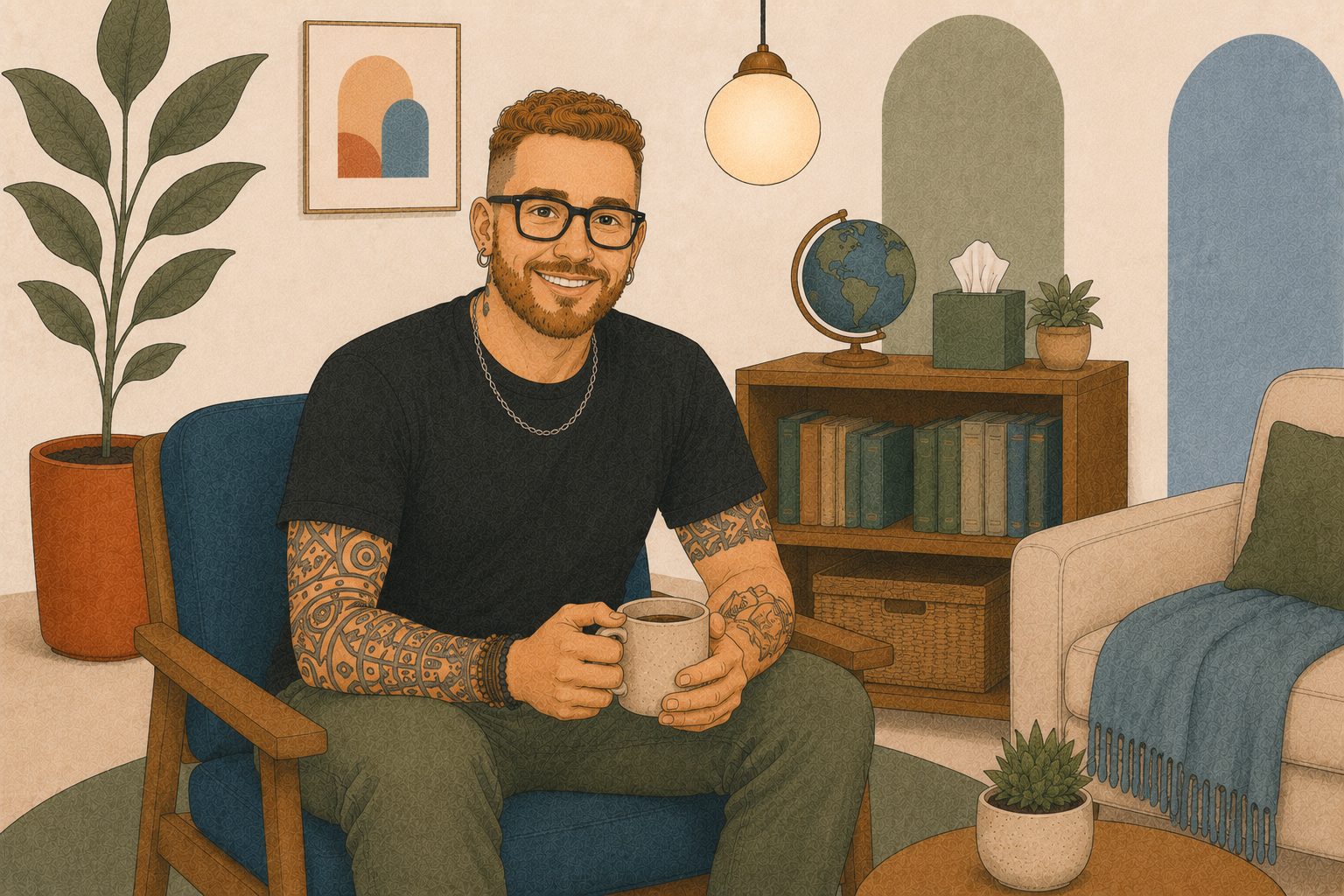
Hi, I’m Kris (they/them)
I’m a licensed social worker providing identity-affirming care, consultation, and education, specializing in gender & sexuality, LGBTQ+ wellbeing, and the experiences of trans and gender non-conforming (TGNC) communities.
Philosophy of Care
The Journey of Becoming
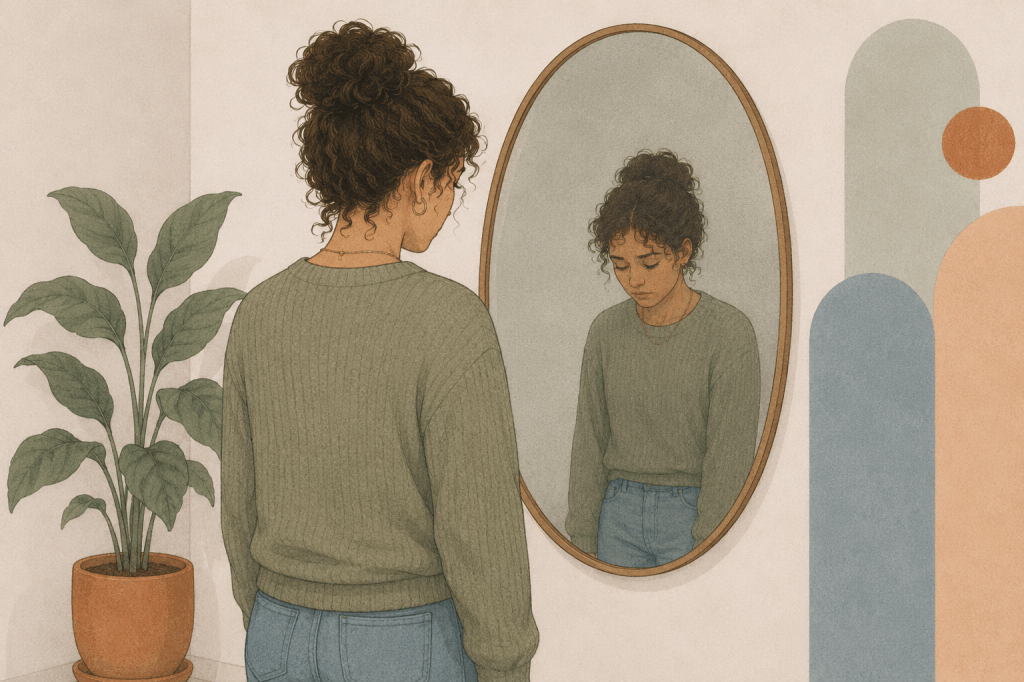
Human lives are shaped by relationships, experiences, expectations, and the worlds we inherit. What we call symptoms are often adaptations to an environment, so my role isn’t simply to treat what’s visible, but to understand the larger story. That’s why my work begins where individual lives and larger systems intersect.


 You
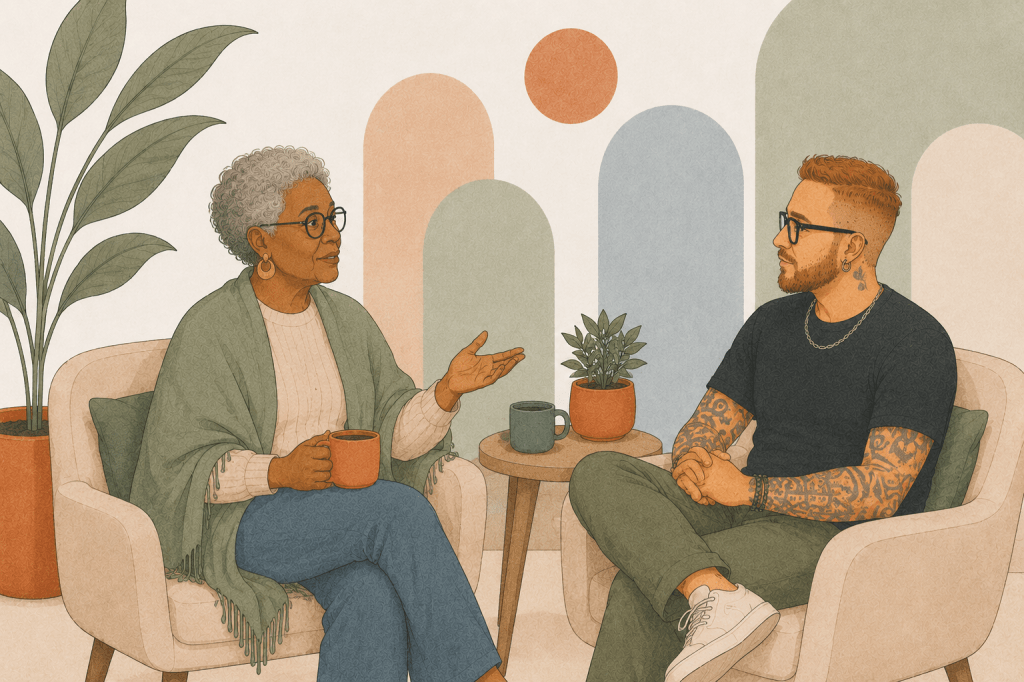
YouI believe some of our deepest wisdom is forged in our hardest moments. Healing comes from the courage to move through them with intention, and someone to walk beside you as you do.
Who I Work With
Let’s Find the Right Fit
Every person, family, school, and organization faces unique challenges. Choose the path that reflects who you’re here for, and explore the services designed to meet those needs.


A Shared Human Story
Meaning Behind the Monolith Branding
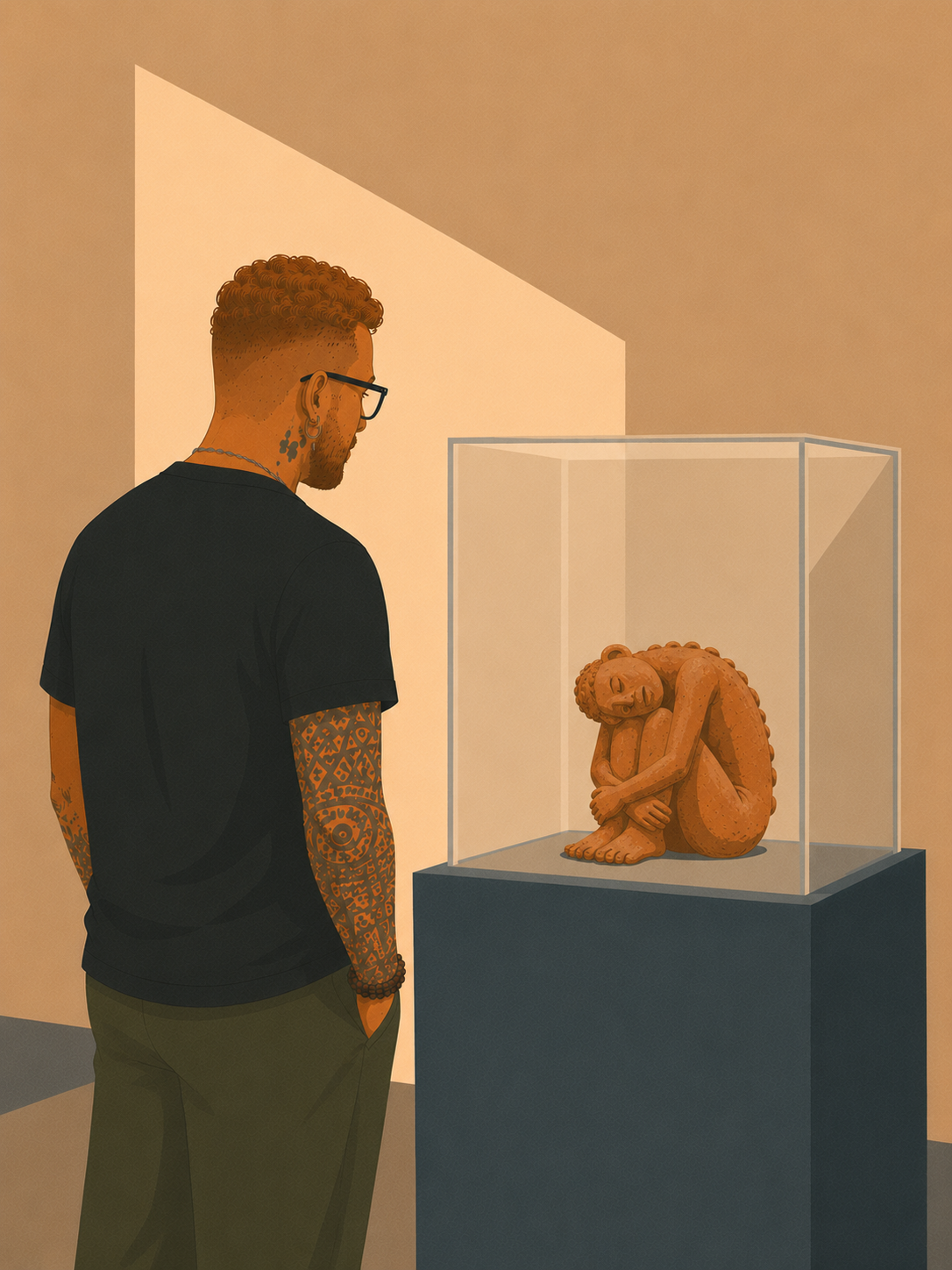
History remembers empires, but I’m drawn to the people who lived within them. Standing before a terracotta figure at the Met, I realized the hands that shaped it carried the same hopes, fears, and longings we do today. The monolith became a symbol of the thread connecting us across time.
I didn’t come looking for this figure. It simply stopped me. Among thousands of years of history, I kept returning to one sculpture that invited me to slow down and really see it.
The longer I sat with it, the less it felt like an artifact. Across centuries, cultures, and languages, its posture and expression communicated something instantly familiar.
That moment reinforced how I saw ancient civilizations. I stopped seeing distant cultures and started seeing people whose hopes, fears, and emotions weren’t so different from my own.
Every experience we have becomes part of a larger human story. The brand monolith is my tribute to that story, and to the countless people whose creativity, resilience, and imagination shaped it.
Meaning behind THE MONOLITH
Conversations Across Millennia
Across cultures and millennia, people have left behind expressions of what it means to be human. Though civilizations rise and fall, the hopes, fears, and longings that shape us remain remarkably familiar. The brand monolith honors the incredible human imagination that continues on in us today.
c. 15,000 BCE
700s CE
c. 1000 CE
1200s CE
2026
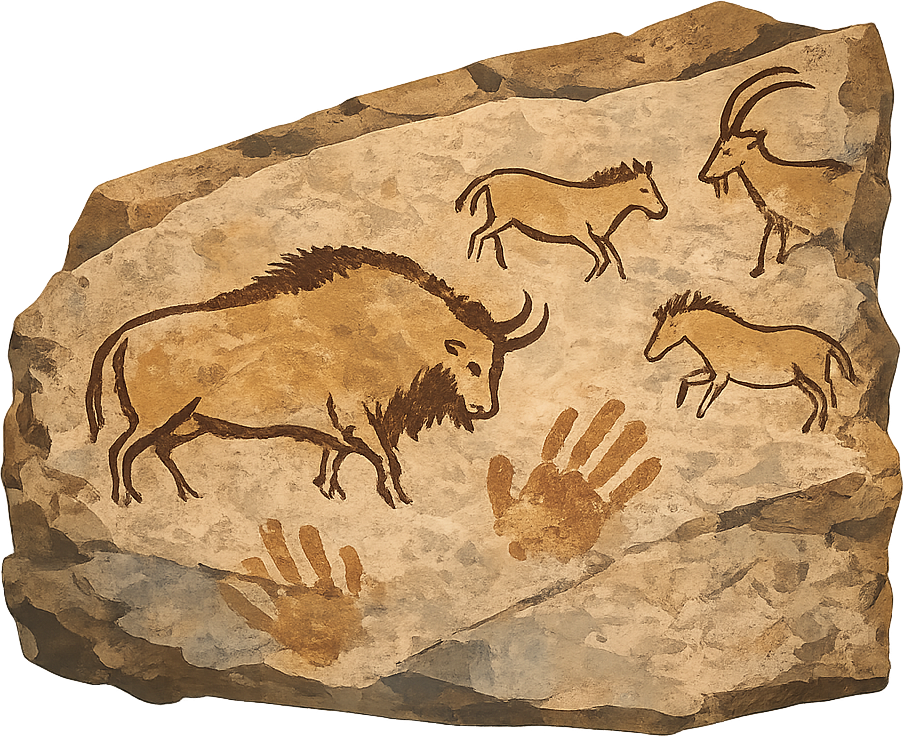
Upper Paleolithic
Somebody stood in a dark cave at Niaux and drew the world around them, fifteen thousand years ago.
Since the dawn of humanity, we have sought to express ourselves. Before writing, before diagnosis, before any of the language we now use for feeling, people were telling stories, making meaning, and leaving their mark on the world.
When we ignore our interconnectedness, it’s easier to feel alone. Appreciating it can bring great peace.
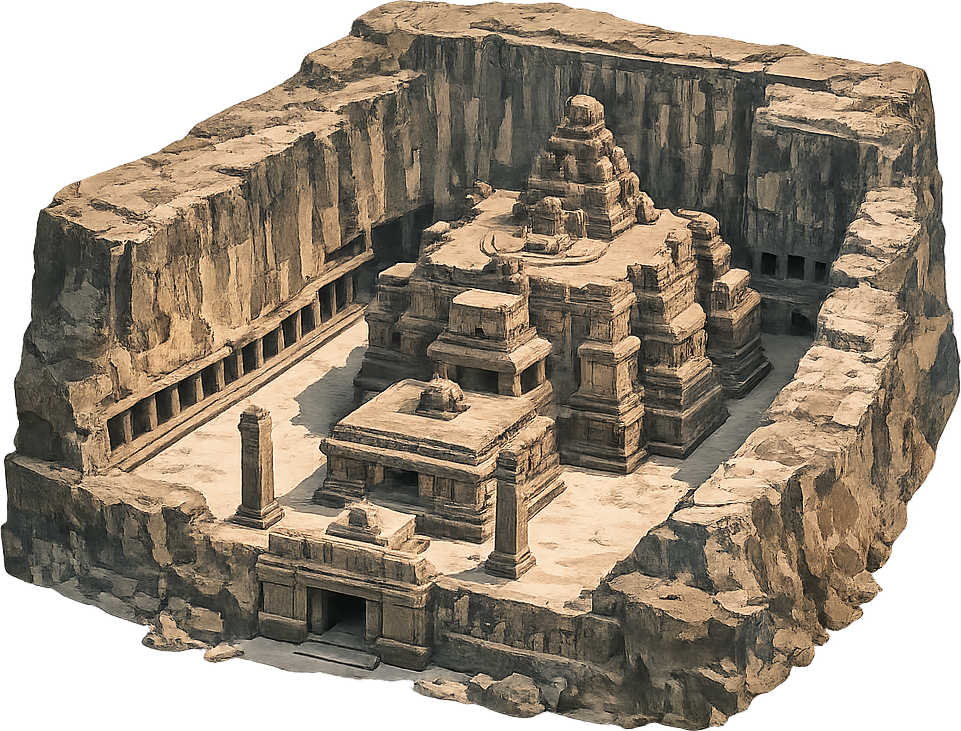
An Impossible Temple carved out of a mountain
The entire temple was carved from a single rock without any joints, making it a true monolithic structure.
Kailasa was cut down into solid basalt from the top, three stories of courtyards, life-size elephants, and towers released from a single rock, and adorned with detailed sculptures indicating high levels of mathematical and architectural knowledge.
The civilizations who made what we still cannot replicate were remembered as lesser anyway. Being told your way of being is lesser is not an ancient problem, its colonial.

Postclassic Maya
At Chichén Itzá, the setting equinox sun draws a feathered serpent down the temple steps, finishing a design the Maya laid a thousand years ago.
The Maya built the Temple of Kukulcán so precisely that the sun completes it, each of its three hundred and sixty-five steps marking a day of the year. Long before our instruments, people were already reading the sky and leaving what they understood in stone.
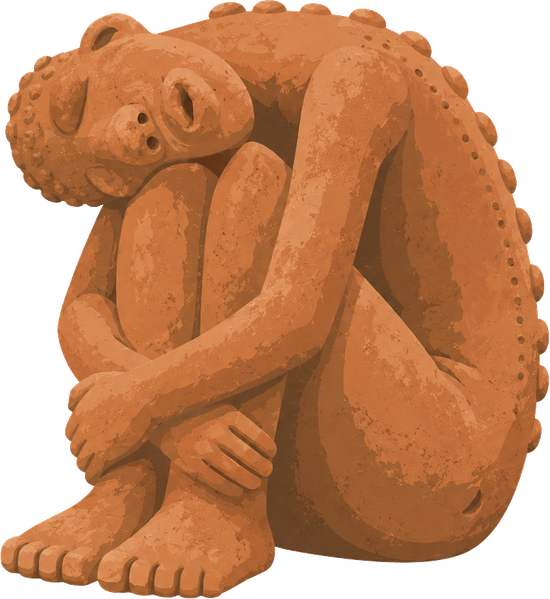
My reflection in a Statue
A seated figure made in Mali in the 1200s, deep in thought.
When I first moved to New York I spent hours walking around the Met, but always came back to this one piece. A simple clay figure crafted centuries ago, but with emotion any human, from any place or time, can recognize. Grief, maybe rest, something curious. In identifying with the figure, I felt less alone in the big city.
It came across immediately, across eight hundred years and an ocean, with nothing translated in between. We can feel and understand each other through our interconnectedness.
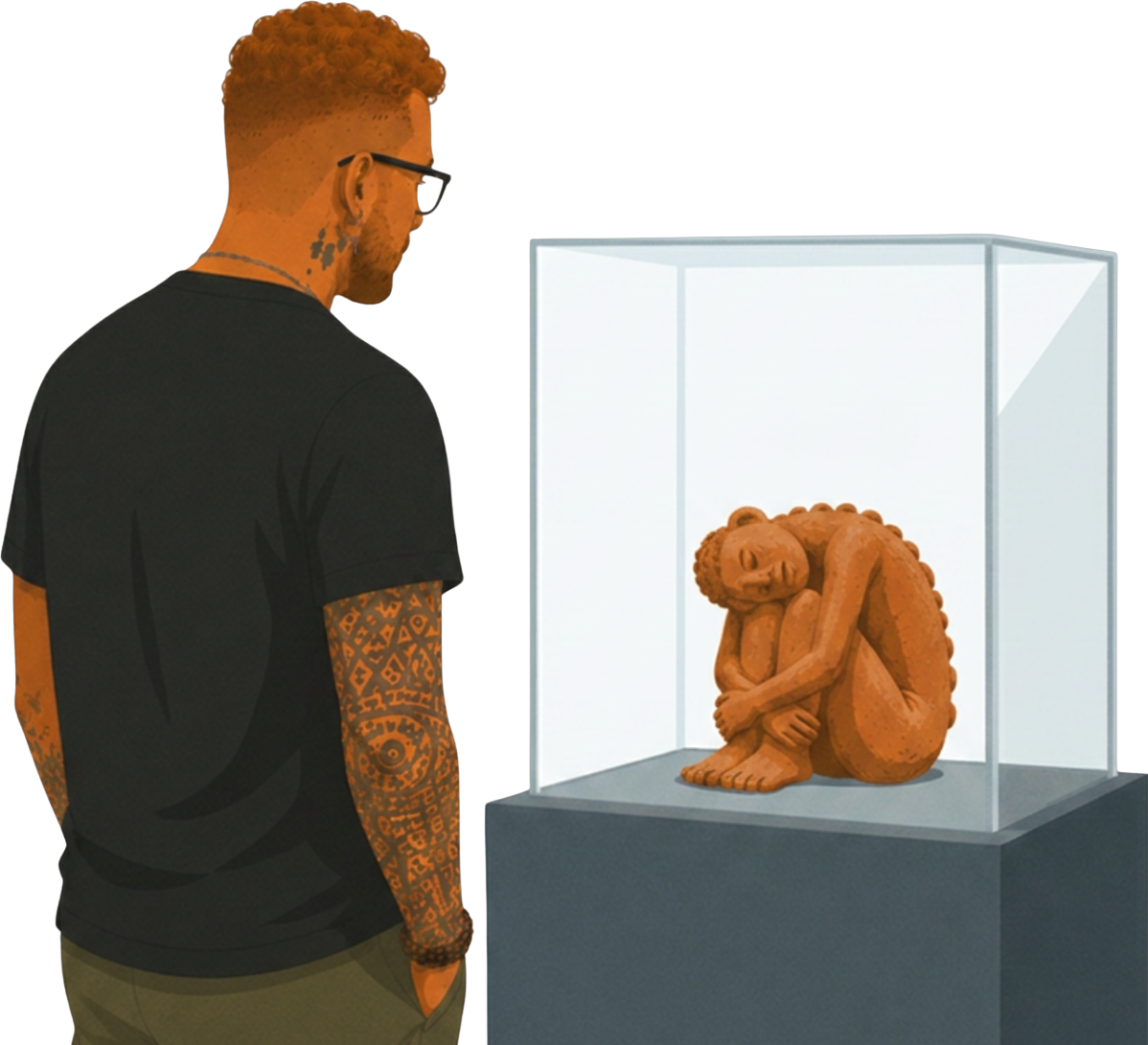
Human connection across time and space
One thousand years apart, but instantly understood.
When I first moved to New York, I didn’t know anyone, so I spent hours wandering The Met each week. Every visit led me back to the seated figure from Mali. In its expression, I recognized my own pain, and in recognizing it, I felt a little less alone in the city.
The monolith is not decoration. It reflects my belief that what you feel is real, that others have felt it before you, and that your experiences are worthy of being witnessed.
A Core Belief
Rewriting The Code We were Given
From birth, our families, culture, and systems shape the beliefs we carry about ourselves and the world. We inherit a broken code, and those messages form the operating system beneath our thoughts, relationships, and choices. By returning to where those patterns began, we can meet unmet needs and begin writing a different future.
What’s showing up now
Overly strong reactions that feel bigger than the moment.
Your nervous system is responding to earlier emotional patterns that learned to protect you.
Therapy helps you understand why these reactions exist.
Reactions feel less intense and don't take over your whole body.
Anxiety or people-pleasing in your relationships.
Early experiences shaped how safe it feels to need or disappoint others.
You learn to notice relational triggers and respond with more awareness.
Less urgency to fix, explain, or manage other people.
Shutting down, numbing, or pulling away.
Your body learned withdrawal to cope with stress.
Inner child work tracks what pulls you offline, and gently interrupts it.
You stay present longer instead of disappearing.
Chronic self-criticism or shame.
Internalized messages from early experiences are still running.
Inner child work meets the harsh inner voice with compassion.
The inner critic quiets, and self-worth stops hinging on performance.
Feeling younger during conflict or stress.
Certain situations activate younger nervous-system states.
Inner child work brings awareness to those states as they surface.
More self-compassion, and less self-blame.
Difficulty trusting safety or calm.
Your system learned that safety was inconsistent or short-lived.
Healing helps your body experience safety in real time.
Calm starts to feel neutral instead of unfamiliar.
My Approach
The CARE Framework
The Contextual Assessment for Relational Ethics (CARE) Framework is a tool I built to help navigate clinical judgment when a situation is genuinely in tension and there is no clean answer.