SERVICES
Support for Youth & Families
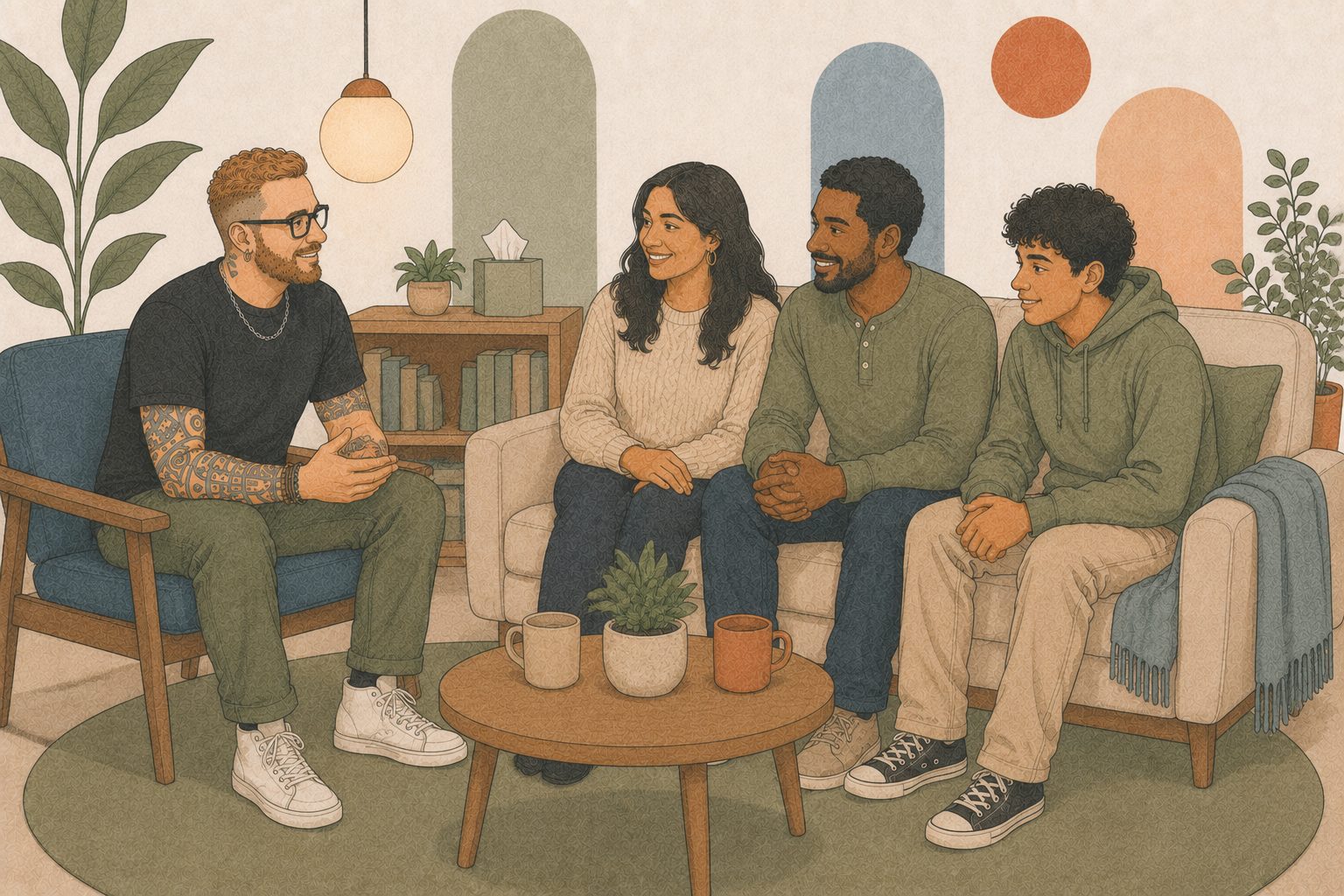
Affirming therapy, guidance, and support for LGBQ+ and TGNC young people, and the people who care for them.
Who You’re Here For
Start Where It Fits
Whether you’re a caregiver, the young person, or the family someone chose, part of this page is written for you.


The Family System
Breaking Harmful Cycles Together
Much of what hurts in a family was inherited over generations. Patterns of fear, control, and coping become the ways we navigate relationships. By understanding those patterns together, families can begin building new ways of relating to one another.




Gender-Affirming Care
Healing Happens Together
Every family deserves to move from fear and uncertainty toward connection and trust.







Six components, two done with yourself and four in relationship, all moving toward self-worth. Select any station to read the work it does.
Our earliest relationships shape how we come to know ourselves.
Our sense of self develops through early relationships, lived experiences, and the messages we receive about who we’re allowed to be. Understanding these patterns helps us make sense of the beliefs we carry today.
Healing begins by changing the relationship with ourselves.
Relational wounds often become beliefs about being wrong, too much, or unworthy. Through inner child work, reparenting, and self-compassion, repair helps build a more stable and authentic sense of self.
The therapeutic relationship as a corrective experience.
An affirming therapeutic relationship offers a new experience of being seen, understood, and accepted. Over time, that relationship can help reshape the patterns that once formed in the absence of safety and connection.
Connection is a form of care, not just companionship.
Connection with peers, chosen family, and affirming communities creates belonging where isolation once existed. Healing deepens when our identity is witnessed, supported, and celebrated with others.
We inherit generations of care, not just generations of struggle.
LGBTQ+ communities have always had ways to care for one another when families, healthcare, and institutions failed to do so. Through chosen family, mutual aid, and community-born care, we inherit generations of wisdom that continue to shape healing today.
Care challenges the systems, not just the symptoms.
The distress people carry is systemic, not only personal. Grounded in Just Practice, Liberation Health, and queer care traditions, advocacy becomes part of treatment because healing also means changing the conditions that cause harm.
Everything changes when our inner voice becomes an ally.
Gender-affirming care is about more than reducing distress. It helps transform our relationship with ourselves so self-worth, rather than shame, becomes the foundation for everything that follows.
For All Families
You Don’t Have to Have All the Answers
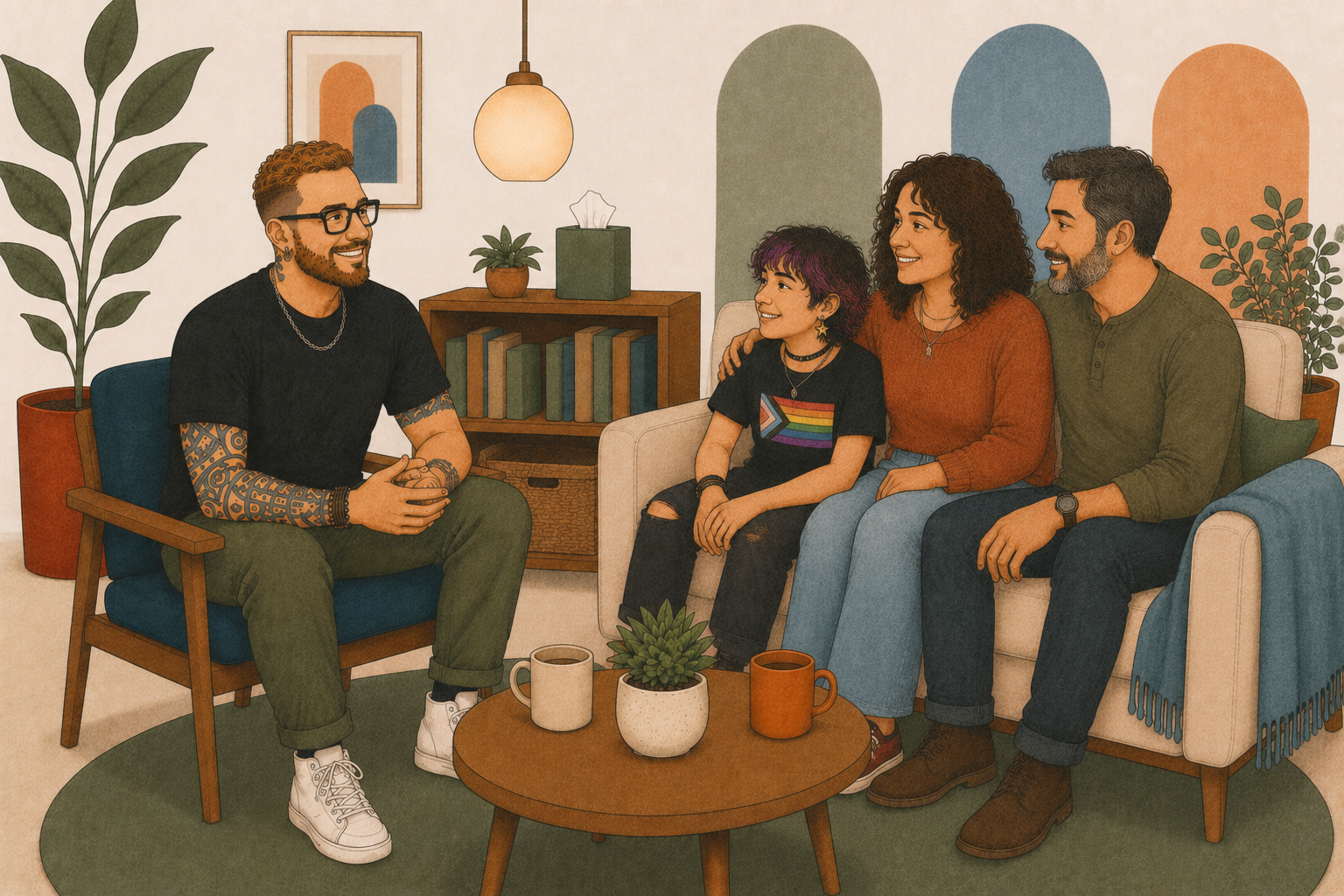
Your child is working out who they are, and you do not have to guide it perfectly, or alone. We take it on together, at your family’s pace.
A Day in the Life
The Impact of Cultural Transphobia
For queer and trans kids, cultural transphobia moves through every layer of their life, from personal relationships to community norms to state policy. Understanding how it operates allows us to recognize the harm as structural, not personal, and respond accordingly.
Micro · Home, body, inner world
Micro is the closest layer, home, body, and inner world. It is where transphobia is felt most personally, in who names you and whether you feel safe being known.
Meso · Schools, healthcare, sports, city
Meso is the institutions a young person moves through, school, healthcare, sports, city. Its rules decide who gets a bathroom, a team, or care, and who is left out.
Macro · Laws and cultural narratives
Macro is the outermost layer of laws and cultural narratives. It sets the climate every other layer breathes in, giving harm permission before it reaches a kid.
MORNING
MICRO · HOME
- Misgendered & deadnamed
- Called a freak & “going to hell”
- No “masculine” clothing
- Surveillance & isolation
THE SCHOOL DAY
MESO · SCHOOL
- No gender-neutral bathrooms
- Banned from team sports
- Bullied & slurred
- Deadnamed & misgendered
OUT IN THE CITY
MESO · CITY
- Barriers to affirming care
- ICE presence at airports
- Public misgendering
- Program cancellations
THE CLIMATE OVERHEAD
MACRO · FEDERAL
- “Two genders” declared
- Identity criminalized
- Activists cast as threats
- Care access rolled back
CARRIED WITHIN
MICRO · INTERNAL
- Internalized transphobia
- Body & gender dysphoria
- Low self-worth
- Shame, fear & self-harm
Areas of Exploration
Supporting Youth & Families
Families come to me at all kinds of moments, a first conversation, a hard season, a question no one else has answered. We take it on together, with room for the young person and the family both.






I work with young people one-on-one, at their pace, on identity, relationships, and feeling okay.
I give families practical footing on names, pronouns, and what changes as your child’s needs do.
The whole family comes in, so one person is not carrying the hard conversation alone.
You get the words for the conversations you are afraid to start with your kid.
I help you find the right providers and get through the systems and paperwork in the way.
One session on one question, for families who want guidance without starting ongoing care.
Guiding the work
The Circle of Secure Attachment
Secure attachment is not a fixed trait we either have or we don’t. It is a rhythm we live inside, the confidence to go out, the safety to come back, and a little more resilience each time around.
One continuous cycle
A path we keep returning to
A secure relationship gives us two things at once: a steady base to explore from, and a haven safe enough to return to. We move through this cycle again and again across a life, and it heals through repetition. Tap any stage to explore it.
The secure relationship
Secure Base & Safe Haven
At the center is a relationship that holds both ends, someone who sends us outward and stays a place to come back to for comfort and repair. It might be a therapist, a partner, a caregiver, a community, and in time, our own steady sense of safety.
Setting out
Supporting Exploration
With someone secure behind us, curiosity becomes possible. We try, we risk, and we take up space, trusting it is safe to venture out because we know where home is. Exploring is not the opposite of connection, it is what connection frees us to do.
Out in the world
Watching Over & Enjoying Together
The secure relationship stays available from a distance, watching over without hovering, and delighting in what we find. Being enjoyed, not only tolerated, is its own kind of safety, and it tells us we are worth returning to when we come back in.
Coming back
Welcoming the Return
When something gets bigger than we can hold alone, we come back, and we are met without shame. Returning is not a failure of independence, it is the design working, the same relationship that sent us out now steady enough to receive us again.
Comfort and repair
Protect, Comfort, Accept Feelings
Here we are protected, helped to name what we feel, and allowed to feel it. Every relationship misses sometimes, and trust is built less by avoiding the misses than by the repair that follows. Enough of these, and the system settles toward trust.



guiding the work
Childhood Development: Three Core Needs
When children develop their sense of self, Self Psychology identifies three essential needs: Mirroring, Twinship, and Idealization. Too often, queer and trans children are denied these affirming experiences, resulting in the low self-esteem and poor mental health.
Mirroring
Affirmation and encouragement that helps a young person feel seen, valued, and emotionally understood.
Twinship
The experience of sameness, belonging, and not feeling alone in who you are.
Idealization
Connection to a healthy adult model that is experienced as safe, admired, or aspirational.
The self
Fragmented.
Unmet needs fragment the self, carried as shame.
Add each need
Cohesive.
All three met, self-esteem forms.
Recognition is the intervention
Kohut, 1977 · Miliora, 2000 · Wright, 2021
What Kids Actually Want
Homesick For The Real World
A 2025 Harris Poll asked 500 kids what it would take to get them off their phones, and they answered plainly: unsupervised play with friends. Yet the parental fears keeping that door closed rarely match what the data show. Flip each card to see what the research found.




Explore My Work
Deepening Family Connection
A set of workshops for caregivers and families, built to strengthen communication, deepen understanding, and support a young person with more confidence.
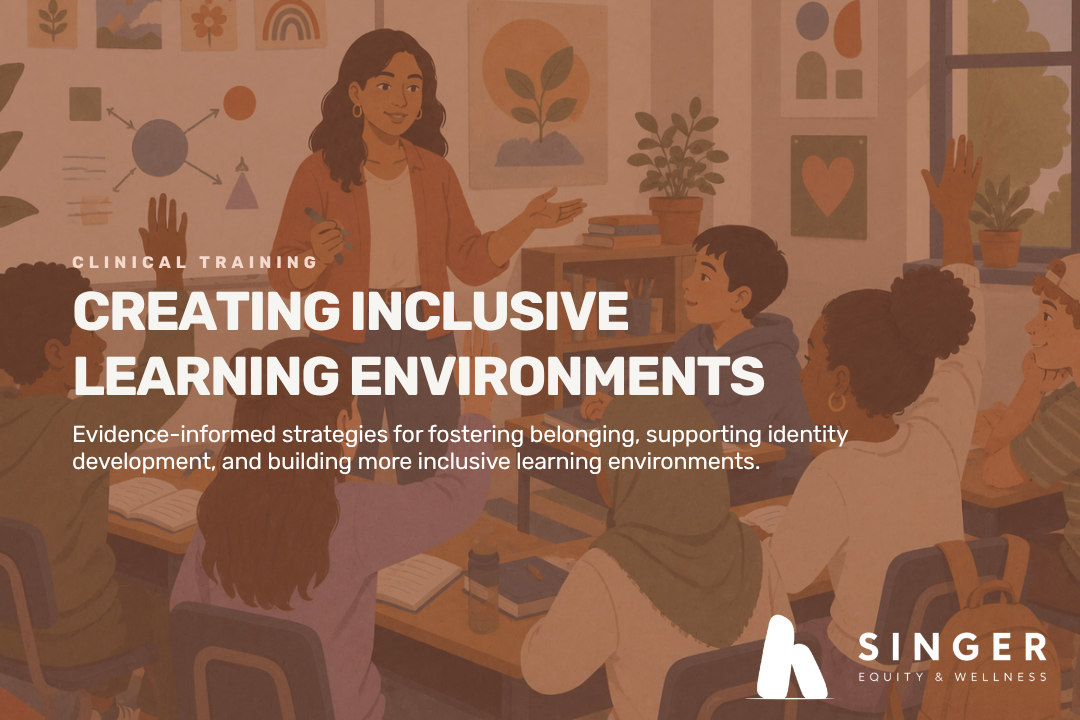
For Caregivers
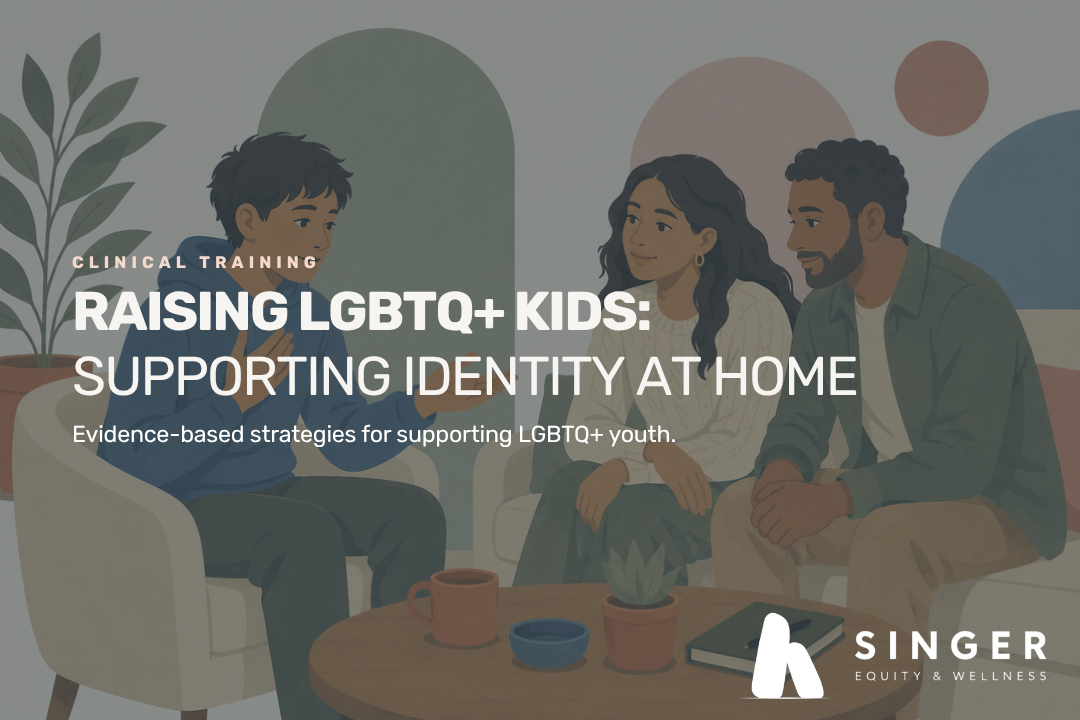
Raising LGBQ+ & TGNC Kids: Supporting Identity at Home
Evidence-based strategies for supporting LGBQ+ youth while strengthening communication and building trust.
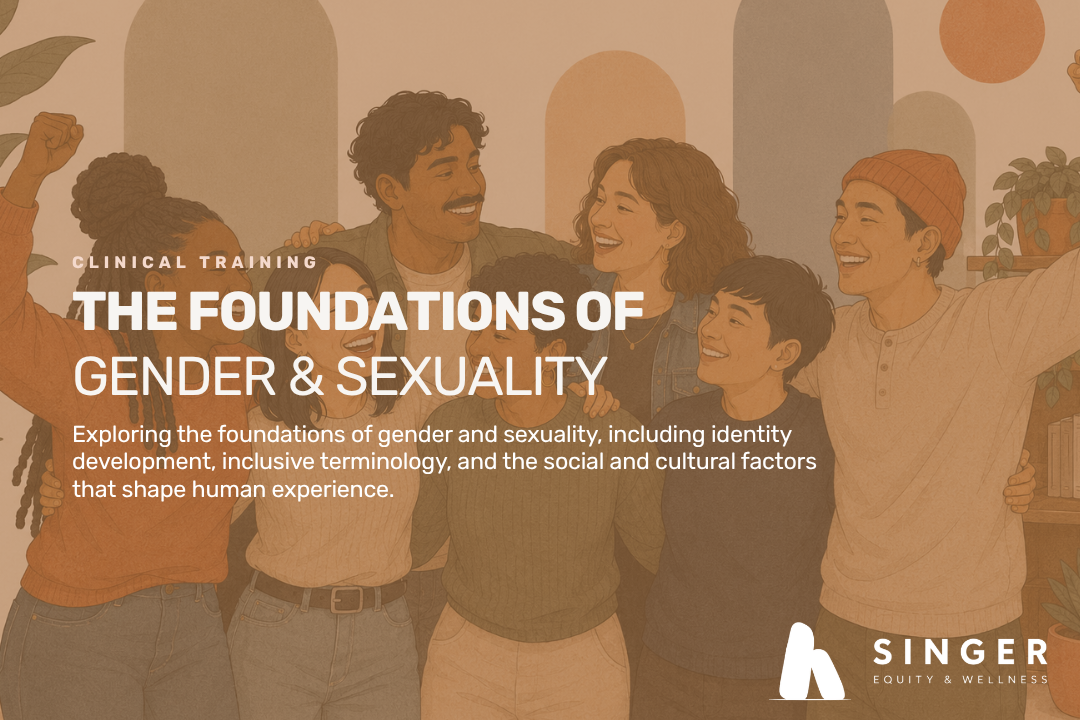
Foundations
The Foundations of Gender & Sexuality: An Introduction
An accessible introduction to key concepts, terminology, identity development, and affirming practices.
For Families
Building the Family Unit: Creating Connection at Home
Practical tools for strengthening the family as a whole, deepening communication and connection as you support a young person together.
Did You Know?
Tid Bits To Take With You
A few ideas worth considering, drawn from research and from the people who have lived it.
Acceptance at home is protective.
Accepted LGBTQ+ youth report higher self-esteem and lower depression than those who face rejection at home.
Ryan et al., 2009, 2010
A name is a daily act of recognition.
Using your child’s chosen name and pronouns is one of the simplest, most powerful ways to show up for them.
Ryan et al., 2023; Kohut, 1977

Clothing is not rebellion.
A binder, affirming clothes, or a new haircut help your child feel at home in their own body.
Kohut, 1977

You don’t have to be their only support.
Connecting your child to affirming peers, mentors, and community strengthens the whole family.
Hidalgo et al., 2019; Kim & Feyissa, 2021
Rejection doesn’t have to be loud to wound.
Silence, avoidance, or “it’s just a phase” can register as love being withdrawn.
Ryan et al., 2009; Sterzing & Gartner, 2020
Home can be the steady center.
With so much anti-trans noise out there, home and school can be where your child is simply, fully accepted.
Ryan et al., 2010; Trans Legislation Tracker, 2026
Reviews
What Families Say About Our Work
Feedback is a welcomed part of the collaboration process. We shape the experience together through practicing open communication.
When our child came out, we wanted to be supportive but honestly didn’t know where to begin. Kris never made us feel judged for not having answers. They helped us understand what our child needed, and our relationship is stronger because of it.
S
Steve Collins
Family Therapy
My daughter went from dreading her sessions to counting down the days between them. Kris took her seriously and never tried to fix her into someone easier for the rest of us. Six months in, she is more herself than I have seen in years.
J
Julie Ramirez
Child Therapy
I have sat through plenty of trainings that left me feeling lectured at. Kris’s was the opposite. It was practical and grounded in real situations, and I left with things I could actually use the next morning. Months later, I still reach for them.
J
Jackie Cross
Parent Workshop
To the Young Person
You Don’t Have to Explain Yourself Here
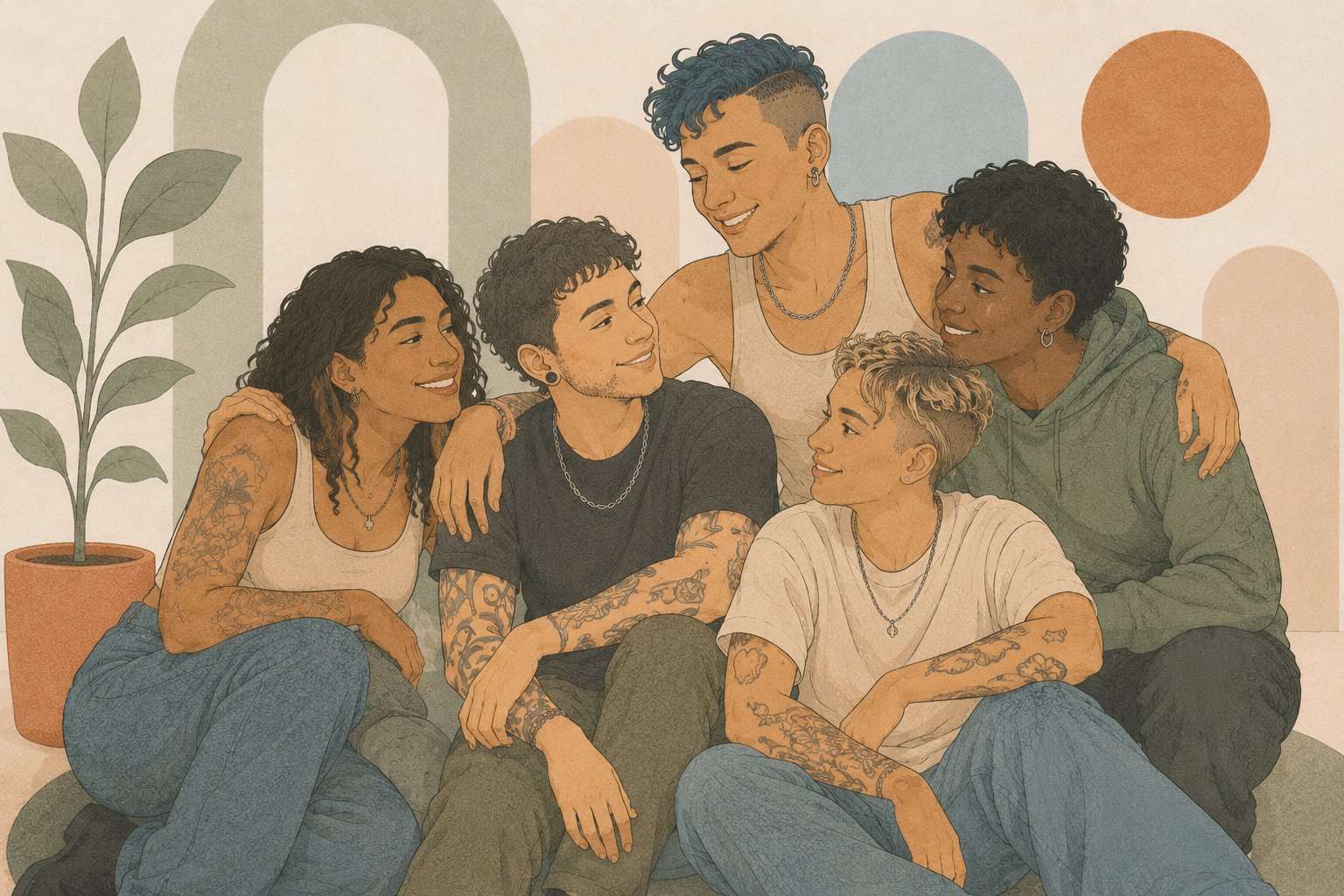
You may be sorting out who you are, or you may already know, and either way I want to support you. Queer and trans young people are handed plenty of reasons to stay hidden, so here you get the opposite, room to be exactly who you are, at whatever pace is yours.
The Family You Choose
A Found Family Is Built, Not Given
In queer and trans communities, chosen family is a long-standing practice: building the safety and belonging biological family couldn’t provide, across many different kinds of relationships.







Beyond the binary
Identity Exists on a Spectrum
We live in a binary culture that often limits the expansiveness that is the human spirit. Move beyond either/or thinking and explore how different dimensions of identity exist along a continuum rather than within fixed categories.
Female is a marker assigned at birth from a quick look at genitals, naming it, not a fixed truth.
Bodies hold more variation than two boxes can, hormones, chromosomes, and anatomy all differ.
Intersex bodies are natural and common, roughly as often as red hair, never a disorder.
The label given at birth marks one moment, it was never a map of the whole person.
Male on a certificate is a guess made for you, binary sex sorting is cultural, not universal.
Attraction to the same gender is one whole, healthy orientation among many, never a lesser one.
For many, desire crosses more than one gender, or shifts across a life, and stays valid.
Bisexual, pansexual, and asexual are complete orientations, not phases or confusion.
Orientation is about who draws you, not how you look, act, or are read by others.
Attraction to a different gender is common, yet it is one option, not the natural default.
Cisgender, identity matching the sex assigned, is one experience of many, not the measure.
Gender is often known deep within long before it is ever named aloud to anyone.
Transgender and nonbinary people are real and self-defining, honored across many cultures.
Identity is who a person knows they are, whatever others assume when they look.
Being a cis man is one point on the spectrum, never its endpoint or its norm.
Femininity is policed hardest on bodies not expected to carry it, a rule, not a nature.
Expression can lean one way today, another tomorrow, and be fully real at each turn.
Expression need not resolve into one box to be valid, ambiguity is a place to live.
How a person dresses or moves is language, not proof of their gender or desire.
Masculinity is boxed into a narrow look by society, though it has always been plural.
emotional Regulation
Naming What You Feel
Most of us get by on a few words for how we feel, but “fine” and “bad” only take us so far. The Feeling Wheel expands six core emotions into more precise vocab, because a feeling we can name is one we can start to understand and express to others.
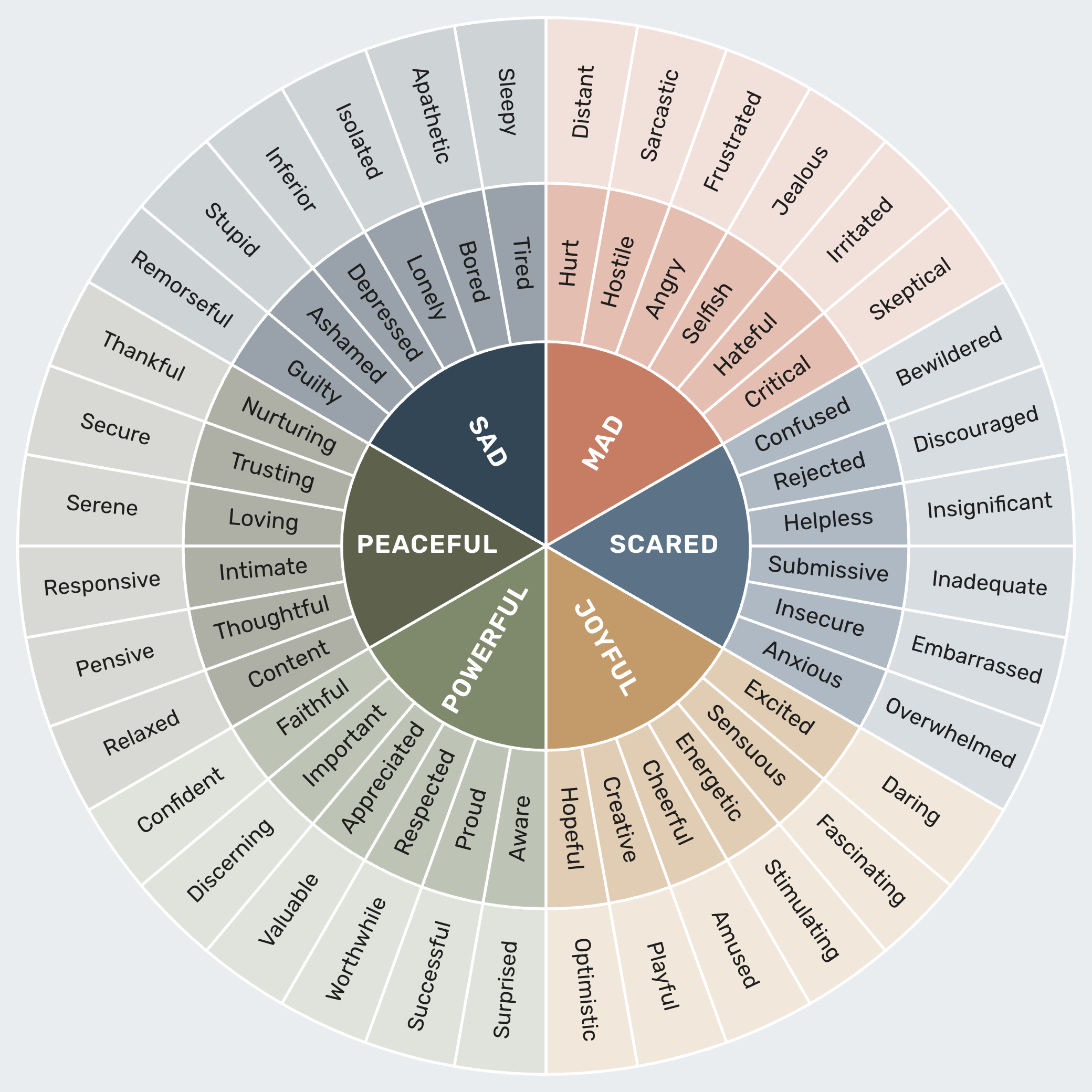
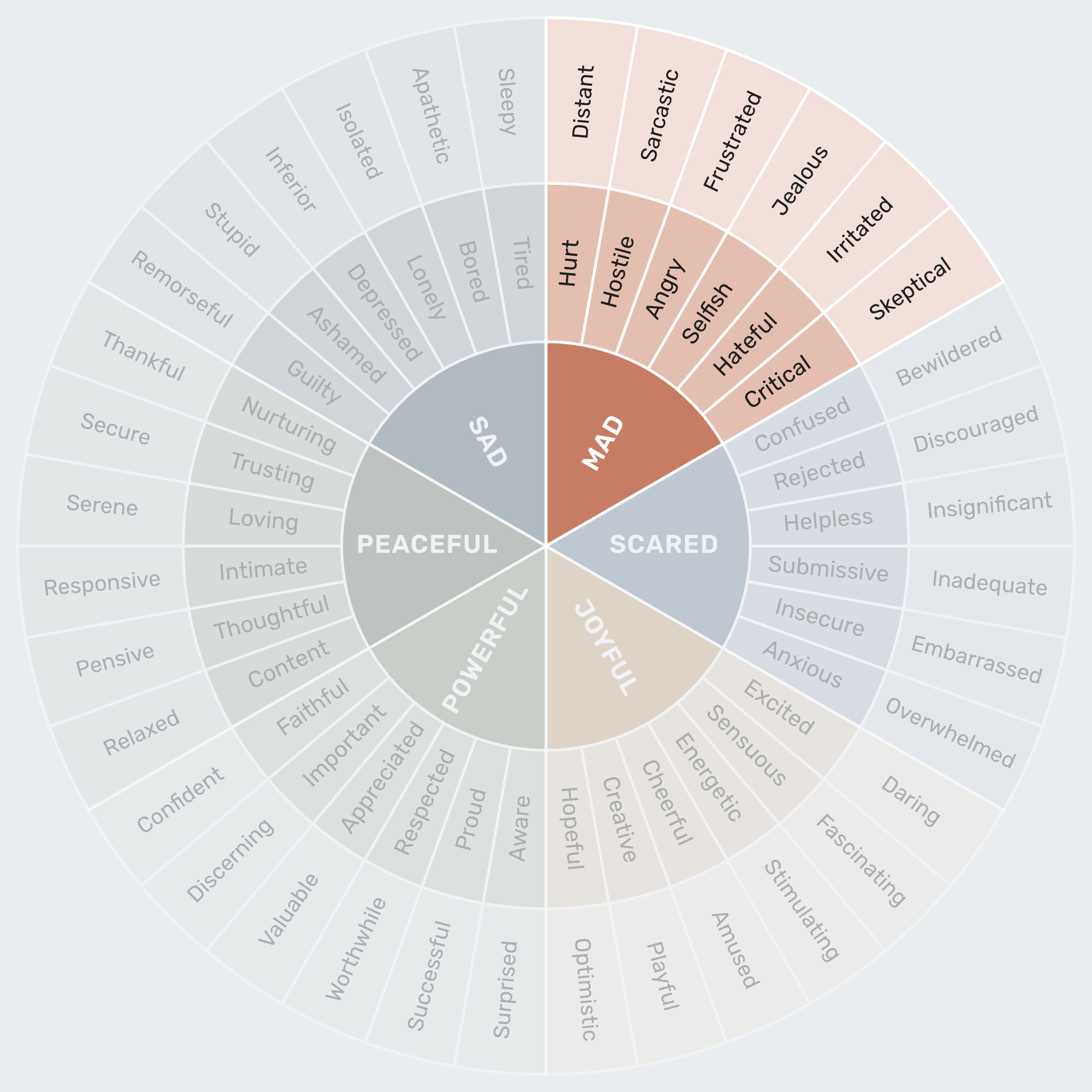
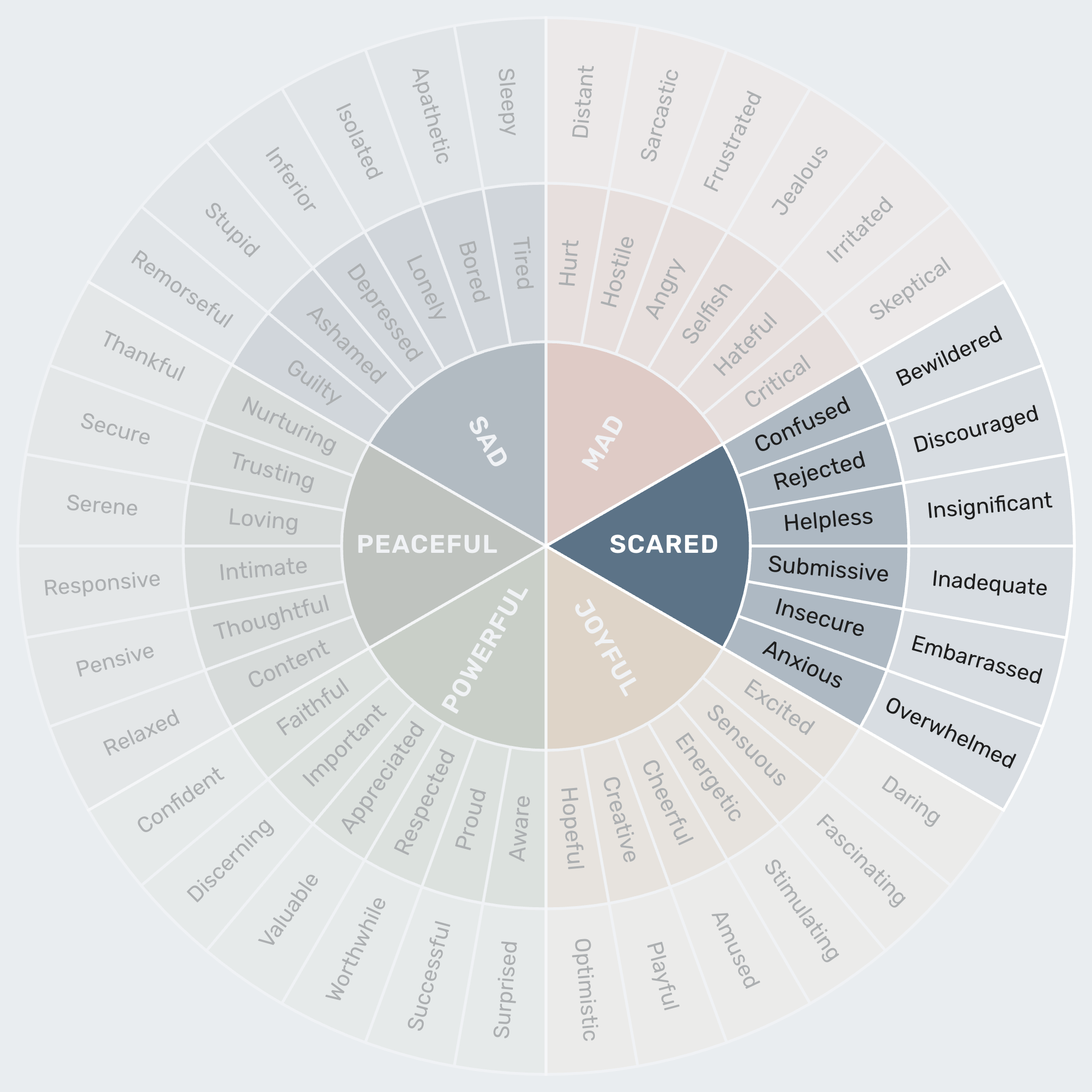
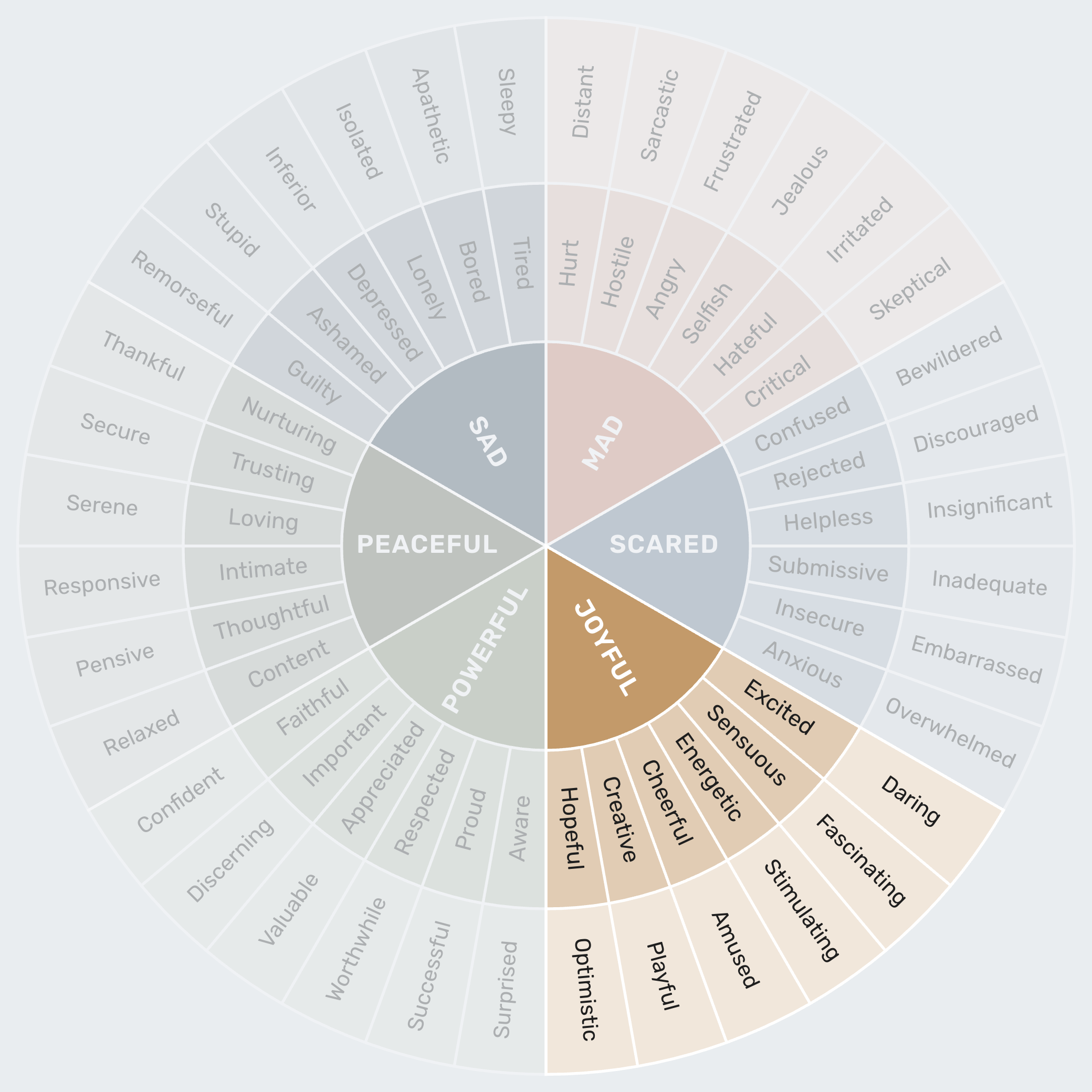
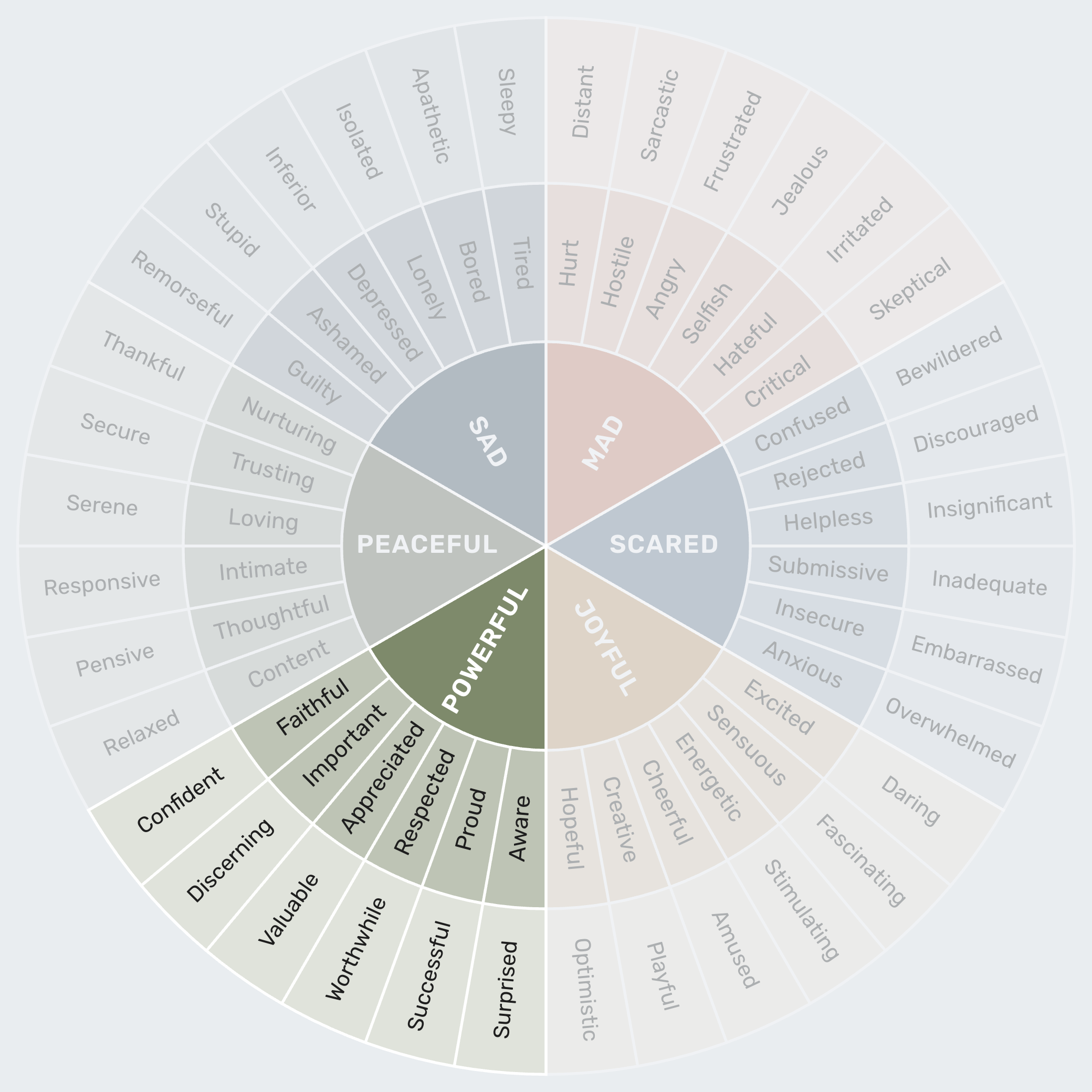
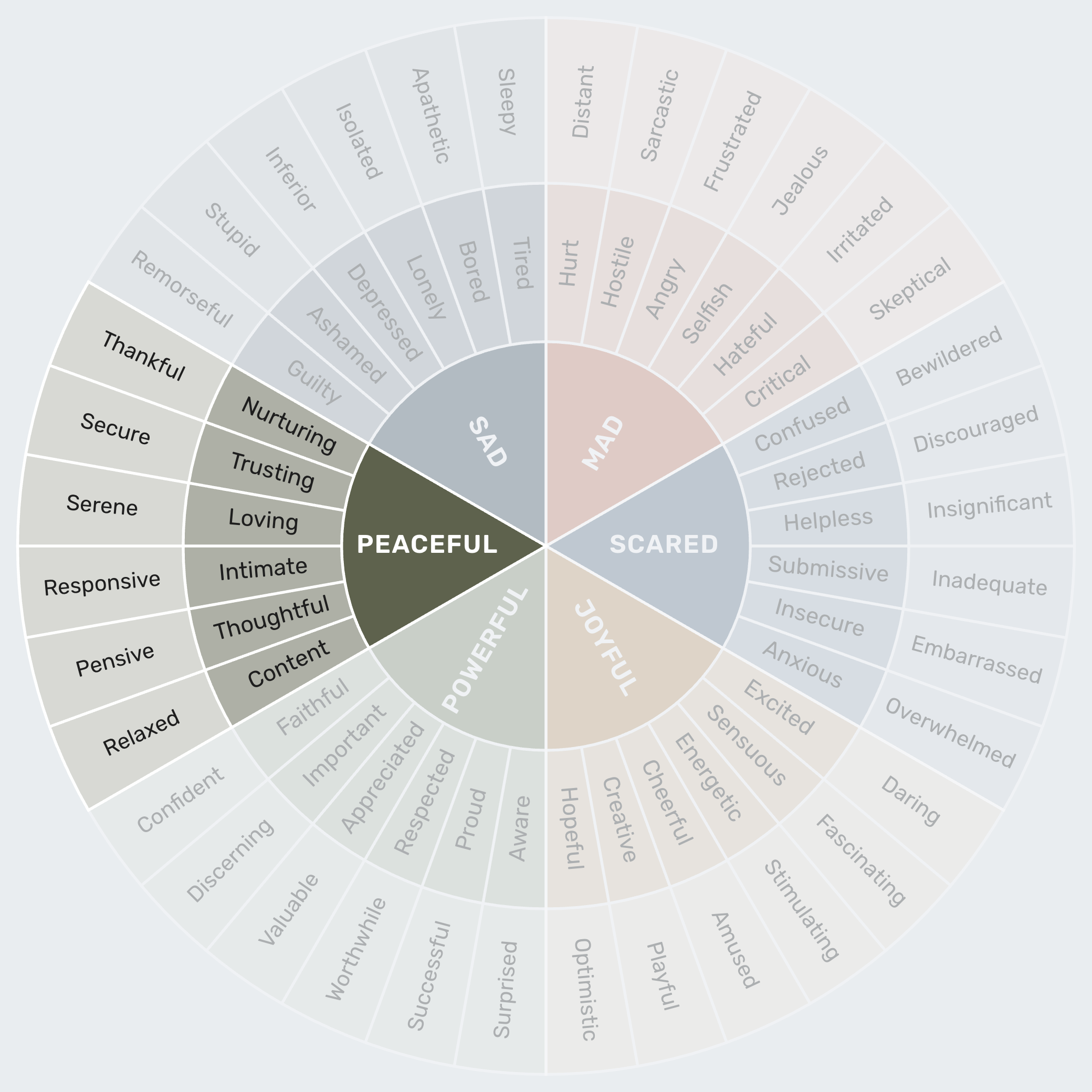
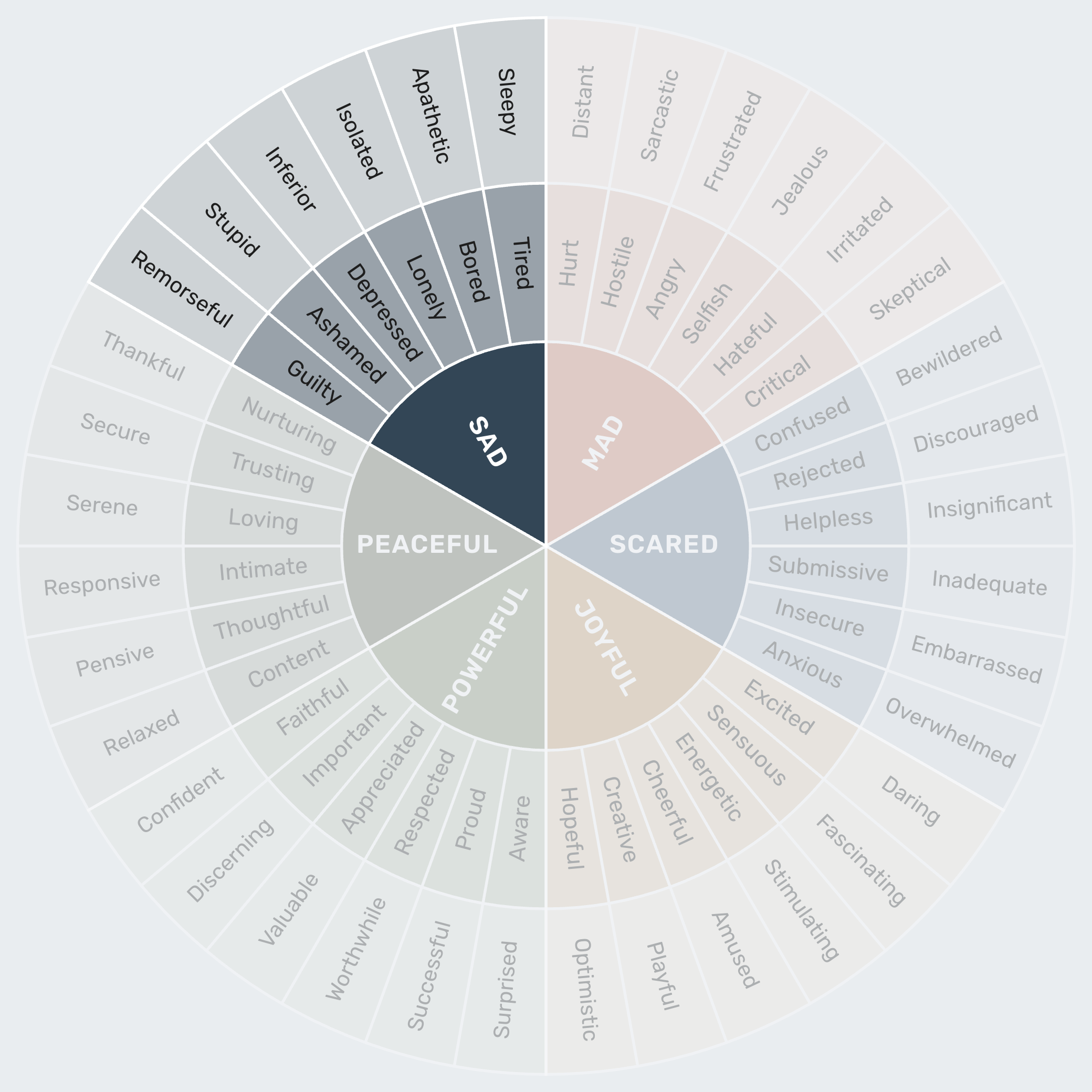
Tap the color family that feels closest, even if the word is not exact. The wheel opens that family into more precise words.
Mad→Scared→Joyful→Powerful→Peaceful→Sad→Six shades of mad. Which is closest?
Six shades of scared. Which is closest?
Six shades of joyful. Which is closest?
Six shades of powerful. Which is closest?
Six shades of peaceful. Which is closest?
Six shades of sad. Which is closest?
Adapted from Gloria Willcox, “The Feeling Wheel,” Transactional Analysis Journal (1982). There is no wrong answer here, and feelings from different families can be true at the same time.
Did You Know?
Tid Bits To Take With You
A few ideas worth considering, drawn from research and from the people who have lived it.
You come from a powerful lineage.
Trans and queer people helped spark Stonewall, and have since led movements, won medals, and made art the world loves.
Bird et al., 2012
You are not the problem.
The discomfort you feel is the world failing to recognize you, not proof that something is wrong with you.
Meyer, 2003; Miliora, 2000
Chosen family is not a backup plan.
It is one of the most beautiful bonds our community makes, people who pick you on purpose.
Kim & Feyissa, 2021
Community is looking for you, too.
GSAs, clubs, and online spaces are full of people who will get it right away.
Hidalgo et al., 2019
Gender euphoria is real.
That spark when someone gets your name right, or you catch yourself in the mirror and grin, is your truth saying hello.
The Trevor Project, 2023
Resources
Resources for Every Stage of the Journey
Whether you’re a young person, caregiver, educator, or clinician, these resources are designed to help you find support, understanding, and next steps.

Individuals
Resources for individuals exploring identity, seeking affirming support, and finding their own path toward wellbeing and understanding.
Explore Resources →
Youth, Families & Schools
Resources for youth, families, and schools navigating mental health, identity, and belonging with affirming support and community care.
Explore Resources →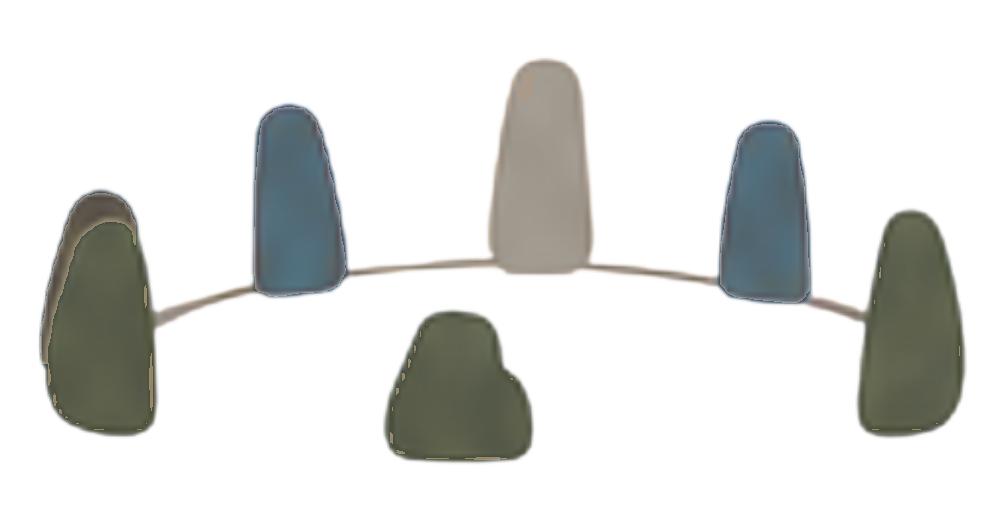
Clinicians & Organizations
Resources for clinicians and educators building affirming, identity-centered practice from clinical frameworks to continuing education.
Explore Resources →
