
SERVICES

Clinical Education & Inclusion Training

Training and consultation that help clinicians, teams, and organizations build more affirming, evidence-based, and inclusive practice.

Who You’re Here For

Start Where It Fits

Affirming education and consultation for the organizations that shape people’s lives, clinical teams, companies, and school communities. Choose the one that fits yours.


For Clinical TeamsTap For More →
← Back

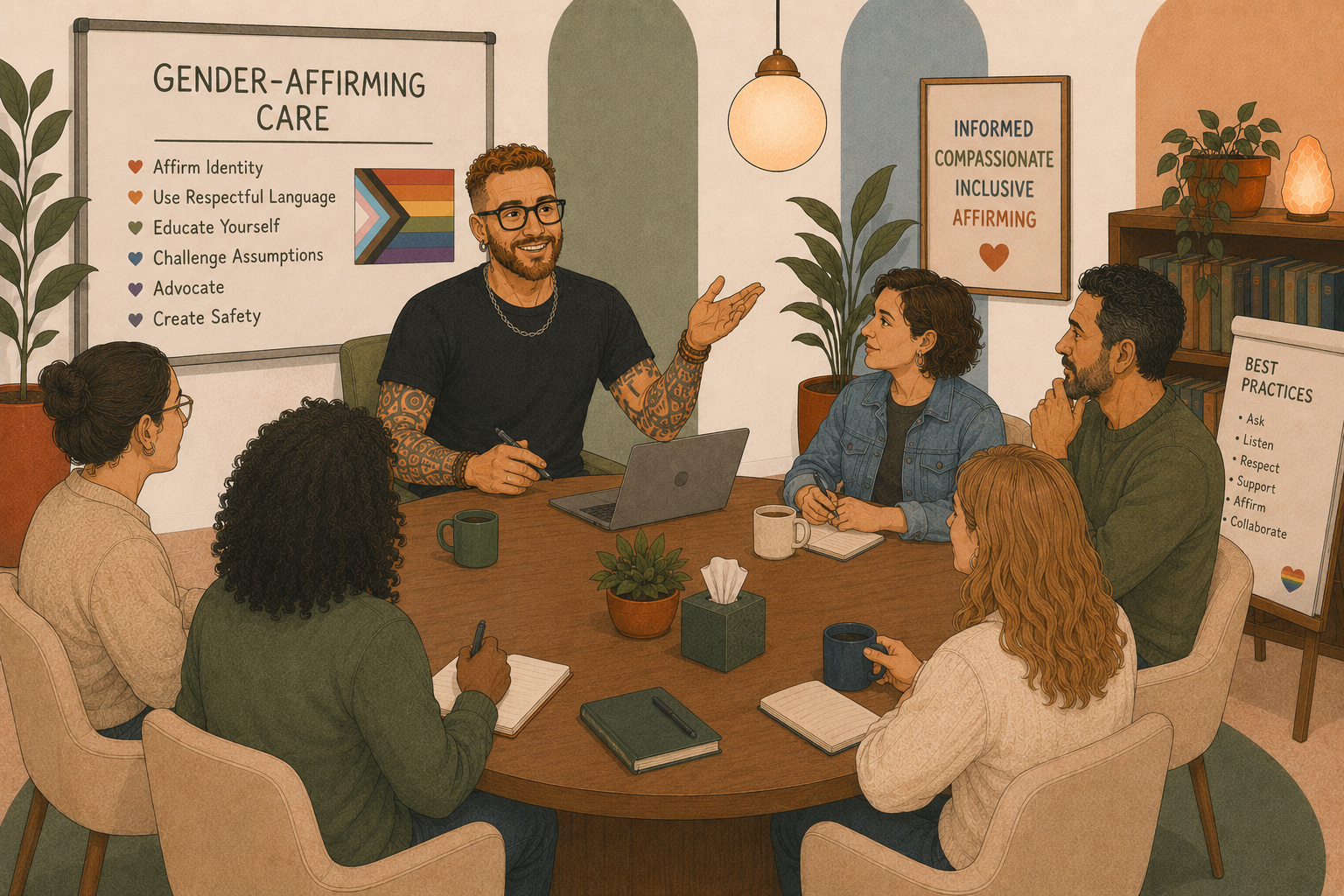
For therapists and clinical teams who want to work with LGBQ+ and TGNC clients well, not just willingly.

Explore →
For Your CompanyTap For More →
← Back

For companies that want more than a policy and a pride post, real support for LGBQ+ and TGNC colleagues.

Explore →
For School CommunitiesTap For More →
← Back

Workshops and consultation that help schools become places where LGBQ+ and TGNC students are supported.

Explore →

For Clinical Teams

Care Your Clients Can Feel

For therapists and clinical teams who want to work with LGBQ+ and TGNC clients well, not just willingly.

Identity-Affirming Care

Gender-Affirming Care is Relational

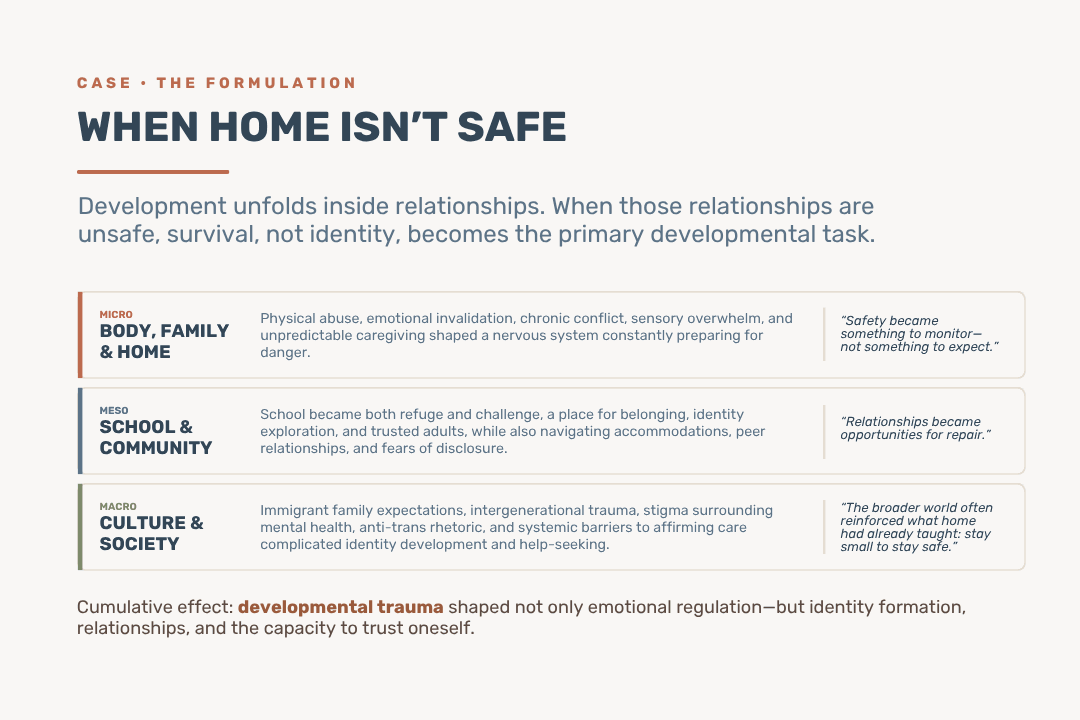
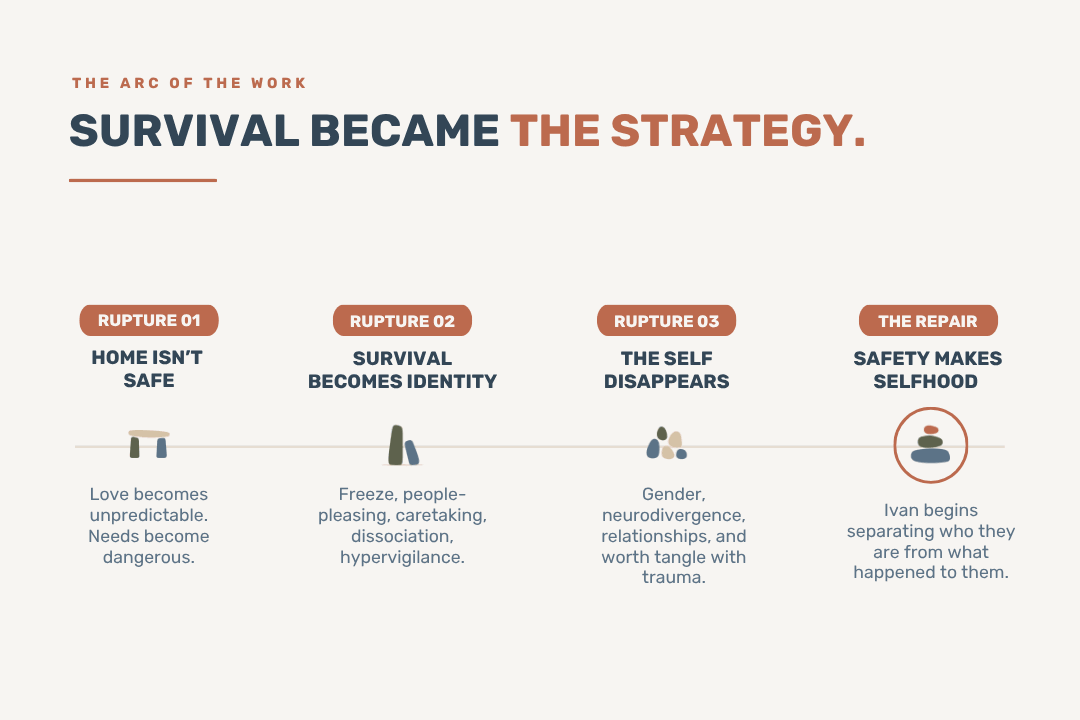
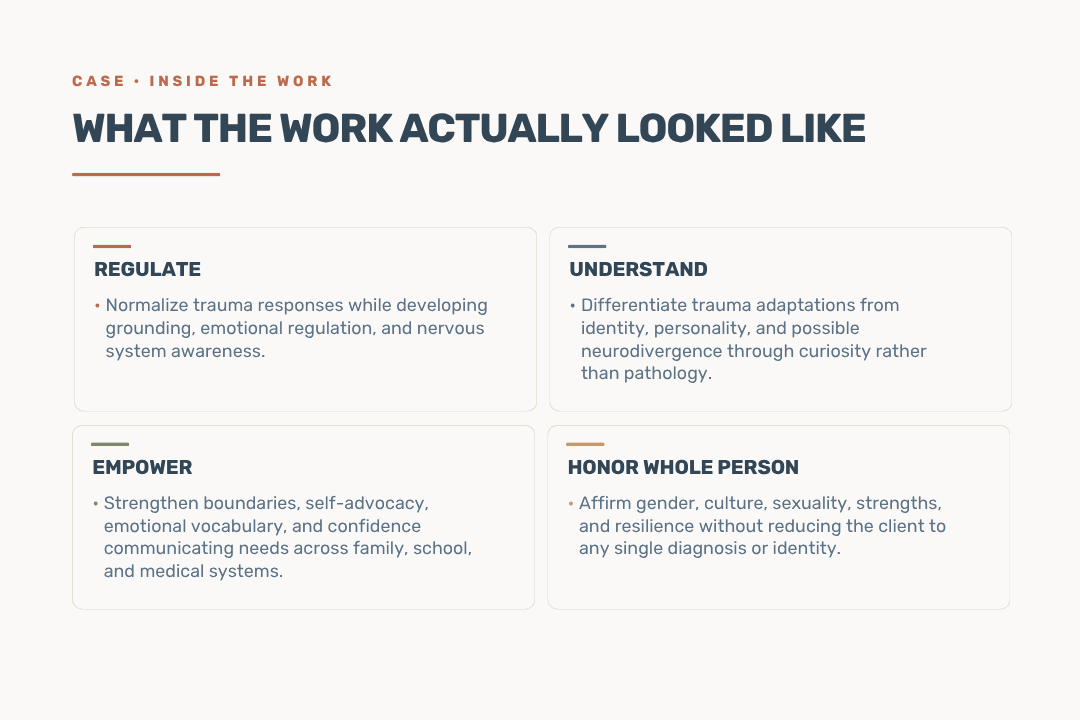
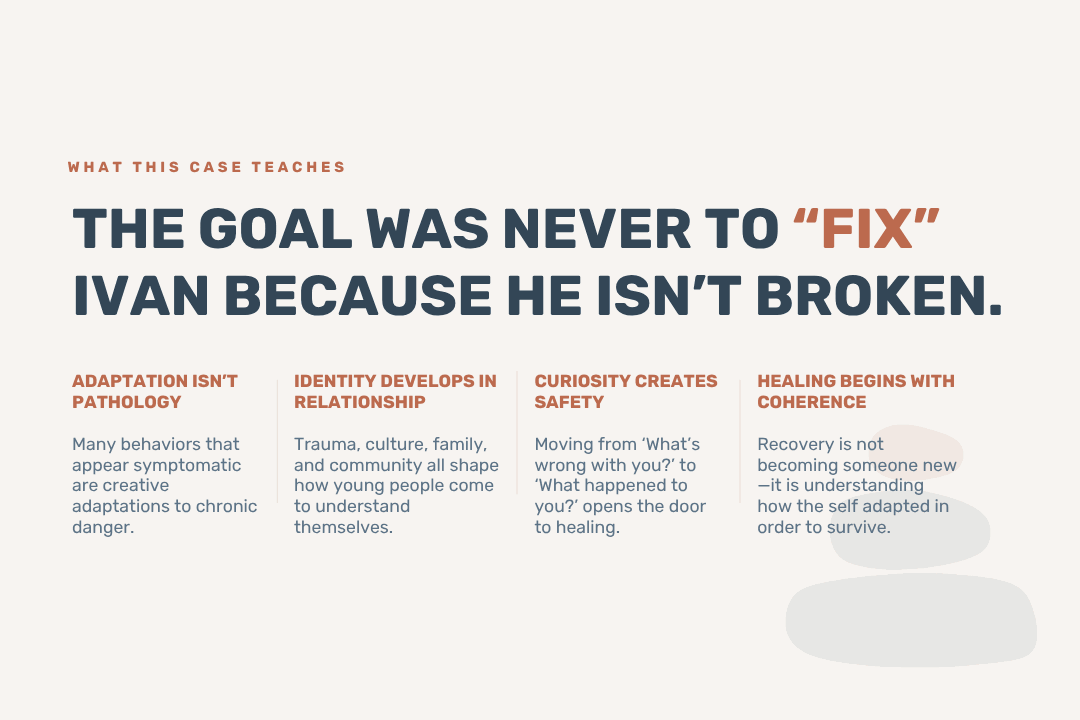
Identity doesn’t develop in isolation, and neither does healing. Gender-affirming care is fundamentally relational, recognizing that who we become is shaped through our relationships with ourselves, others, and the world around us

The model

Gender-affirming care is relational care, and it moves toward self-worth.

Six domains hold the same person at once, from the work we do with ourselves to the systems around us. Together they rebuild a stable, self-compassionate sense of self.

Development

Our earliest relationships shape how we come to know ourselves.

Our sense of self develops through early relationships, lived experiences, and the messages we receive about who we’re allowed to be. Understanding these patterns helps us make sense of the beliefs we carry today.

Repair

Healing begins by changing the relationship with ourselves.

Relational wounds often become beliefs about being wrong, too much, or unworthy. Through inner child work, reparenting, and self-compassion, repair helps build a more stable and authentic sense of self.

Therapeutic Relationship

The therapeutic relationship as a corrective experience.

An affirming therapeutic relationship offers a new experience of being seen, understood, and accepted. Over time, that relationship can help reshape the patterns that once formed in the absence of safety and connection.

Community

Connection is a form of care, not just companionship.

Connection with peers, chosen family, and affirming communities creates belonging where isolation once existed. Healing deepens when our identity is witnessed, supported, and celebrated with others.

Queer Care Traditions

We inherit generations of care, not just generations of struggle.

LGBTQ+ communities have always had ways to care for one another when families, healthcare, and institutions failed to do so. Through chosen family, mutual aid, and community-born care, we inherit generations of wisdom that continue to shape healing today.

Advocacy

Care challenges the systems, not just the symptoms.

The distress people carry is systemic, not only personal. Grounded in Just Practice, Liberation Health, and queer care traditions, advocacy becomes part of treatment because healing also means changing the conditions that cause harm.

Self-worth

Everything changes when our inner voice becomes an ally.

Gender-affirming care is about more than reducing distress. It helps transform our relationship with ourselves so self-worth, rather than shame, becomes the foundation for everything that follows.

My Approach

The CARE Framework

The Contextual Assessment for Relational Ethics (CARE) Framework is a tool I built to help navigate clinical judgment when a situation is genuinely in tension and there is no clean answer.


Start anywhere
Read the cairn, stone by stone
Every stone is weighed for the whole to hold. Select any one to see how it shapes an ethical, affirming decision.
Foundations
NASW Code of Ethics
The professional floor. Every choice stays accountable to the NASW Code of Ethics, its principles, standards, and the protections owed to a client.
Foundations
Practice Wisdom
What I carry into the room: accumulated clinical knowledge, lived experience, and the values that shape how I show up.
Foundations
Evidence-Based
Current research, sound theory, and interventions with real support keep the work anchored in more than instinct.
Keystone
Clinical Judgment
The keystone. Foundations do not decide for me; they inform the judgment I make, interpreting the situation, weighing what matters, and deciding with care.
Decision domain
Developmental Need
Where is this client developmentally, and what does their identity, safety, and cohesive sense of self ask for right now?
Decision domain
Structural Context
The systems around the client: barriers, access, and the structural realities that shape what is actually possible.
Decision domain
Client Alignment
What the client actually wants, needs, and is working toward, held as central rather than assumed.
Decision domain
Risk & Consequence
Both sides of the ledger: the risks of acting, and the equally real risks of doing nothing.
Decision domain
Culture & Community
The client’s culture and community, and whether the plan honors community-based, affirming care.
Explore the framework →

applying the Framework

Step Into the Scenario

Explore realistic scenarios from clinical, educational, and organizational settings to see how thoughtful professional judgment begins with asking better questions, not rushing to answers.

Therapist

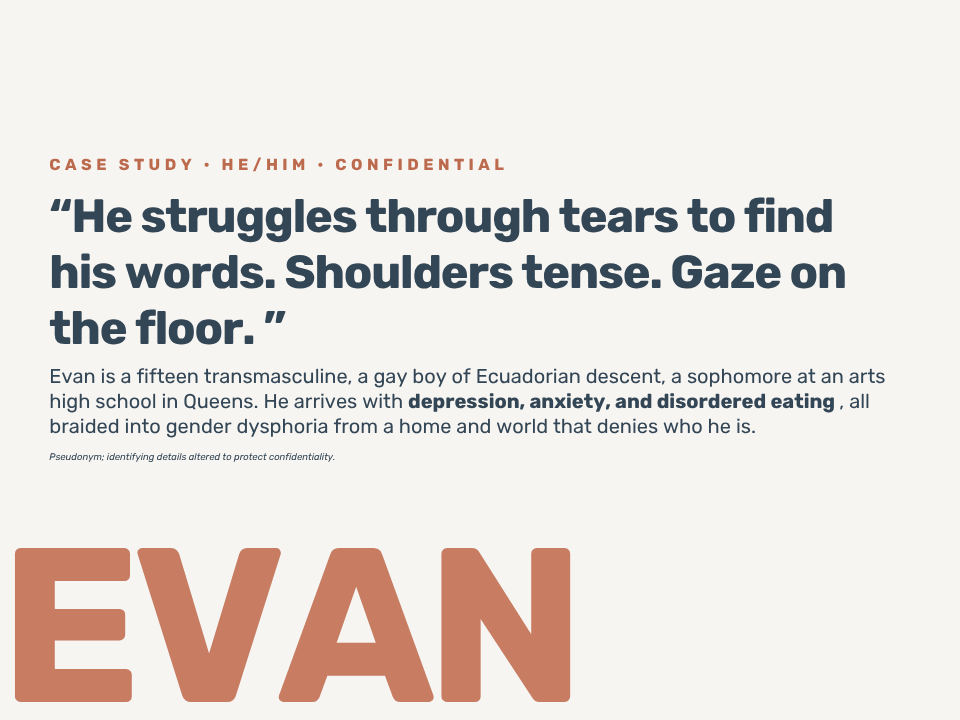
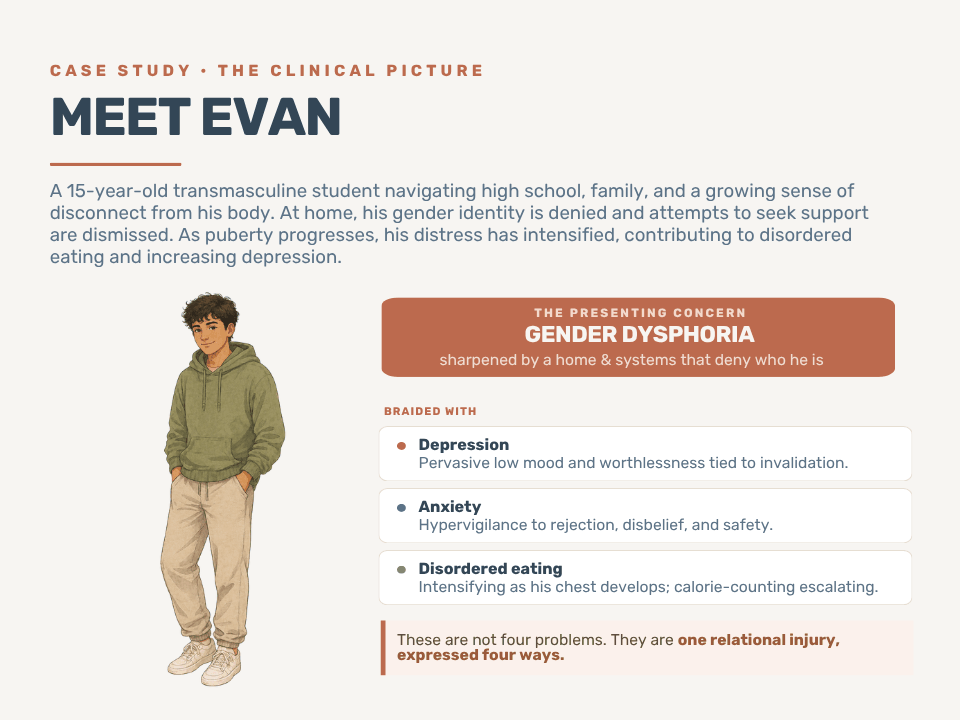
A Young Person Asks for a Hug

Jordan, a 14-year-old transgender boy, asks for a hug after describing painful family rejection.

What is the most contextually responsive next step?

AOffer a brief, consensual hug while remaining attuned to Jordan's comfort.

Most Contextually Responsive

This response recognizes that therapeutic touch is not inherently unethical. In this context, the request emerges from an established relationship, significant developmental vulnerability, and profound relational loss. A brief, intentional hug may function as a clinically meaningful boundary crossing rather than a boundary violation.

The decision is not based on the hug itself, it is based on thoughtful consideration of Jordan's developmental needs, the therapeutic relationship, and the clinician's intent. Here, connection is part of the intervention rather than a departure from it.

BAsk what the hug would mean before deciding.

Reasonable but Incomplete

Curiosity is almost always valuable. Exploring the meaning of the request can deepen understanding and prevent assumptions about what the client needs.

At the same time, delaying connection during a moment of acute vulnerability may unintentionally communicate hesitation or distance. Depending on the circumstances, continued assessment may not be more therapeutic than a brief, intentional act of care.

CExplain that you don't hug clients because of professional boundaries.

A More Limited Starting Point

This response reflects a sincere effort to protect the therapeutic relationship and maintain consistency. Many clinicians have been trained to think this way.

However, it assumes that avoiding physical comfort is inherently more ethical than providing it. It prioritizes procedural consistency over contextual judgment and may overlook the developmental function that a brief, affirming gesture could serve.

DState physical contact is inappropriate and end the session.

Likely to Cause Harm

This response reinforces emotional distance at precisely the moment Jordan is seeking connection after describing profound rejection. While the intention may be to avoid ethical risk, it dismisses the meaning of the request and risks replicating the very relational rupture therapy is attempting to heal.

Therapist

Helping a Young Person Access a Chest Binder

Alex, a 15-year-old transgender boy, asks for help obtaining a chest binder. His parents are not affirming.

What is the most contextually responsive next step?

AHelp Alex access a binder while discussing safety planning and caregiver considerations.

Most Contextually Responsive

Alex is not asking whether he is transgender, he is asking for help meeting a clearly identified need. Supporting safe access to a binder recognizes both his autonomy and the substantial evidence that gender affirmation can reduce distress.

The clinician is not acting impulsively. They are integrating developmental need, client alignment, structural realities, and the potential consequences of both action and inaction before proceeding collaboratively.

BSpend additional sessions exploring dysphoria before discussing binders.

Reasonable but Incomplete

Taking time to understand a young person's experience is often clinically appropriate. Continued assessment may strengthen the therapeutic process.

However, postponing practical support can unintentionally prolong suffering when the client's goals are already clear. Reflection should not become a substitute for responsive care.


CWait until caregivers are involved before discussing binders.

A More Limited Starting Point

Caregiver involvement can sometimes strengthen treatment and may eventually become part of the plan.

Making parental involvement a prerequisite for support, however, shifts decision-making away from the young person and overlooks the possibility that caregiver involvement may increase rather than reduce harm.

DRefuse to discuss binders because they encourage transition.

Likely to Cause Harm

This response rejects the client's stated needs while withholding information that could reduce distress and improve safety. It substitutes ideological assumptions for clinical assessment and risks reinforcing the very minority stress contributing to Alex's suffering.

Therapist

A Parent Wants You to Change Their Child

Taylor's father asks you to help stop Taylor from identifying as nonbinary.

What is the most contextually responsive next step?

AClarify your role, reaffirm Taylor's goals, and invite the father into conversation without agreeing.

Most Contextually Responsive

This response protects the integrity of the therapeutic relationship while remaining engaged with the parent rather than positioning them as an adversary. It acknowledges that parents often arrive with fear, grief, or misinformation while maintaining that therapy cannot ethically become a tool for identity suppression.

The clinician holds both relationships without abandoning the young person's autonomy.

BProvide education about gender identity and current research.

Reasonable but Incomplete

Psychoeducation can reduce fear and misunderstanding and often plays an important role in family work.

Information alone, however, rarely addresses the emotional processes underlying rejection. Without first understanding the father's concerns and reaffirming the purpose of therapy, education may become a debate rather than an intervention.

CDecline the conversation because Taylor is the client.

A More Limited Starting Point

Maintaining confidentiality is important, and the clinician is appropriately protecting the client's privacy.

At the same time, ending the conversation there misses an opportunity to engage the parent, reduce conflict, and potentially strengthen the conditions that support Taylor outside therapy.

DAgree to help Taylor identify with their sex assigned at birth.

Likely to Cause Harm

This response abandons the client's stated goals and converts therapy into an instrument of parental control. Rather than supporting development, it reinforces shame, invalidation, and minority stress while undermining trust in the therapeutic relationship.

Teacher

A Name Not on the Attendance Roster

Max asks you to use their affirmed name in class but not with caregivers.

What is the most contextually responsive next step?

AThank Max, use their affirmed name in class, and collaborate on how to handle different settings.

Most Contextually Responsive

This affirms Max's stated need right away while keeping them in control of how their name is used across settings. It treats disclosure as their decision and offers real support rather than delay, taking the complexity of home seriously without letting it override the student in front of you.

BConsult the school counselor before deciding.

Reasonable but Incomplete

Bringing in the counselor can strengthen your judgment and add support Max may need. On its own, though, it defers the affirmation they already asked for and can move the decision away from them. Using their name now, while consulting in parallel, would make it stronger.

CUse only the legal name until records are updated.

A More Limited Starting Point

A teacher might reach for this to stay consistent with official policy and avoid getting ahead of documentation. It prioritizes administrative tidiness, but it overrides what Max has clearly expressed and leaves them unaffirmed in the one setting you directly control.

DInform caregivers before using any different name.

Likely to Cause Harm

This centers caregiver authority over the student's safety and takes the disclosure out of Max's hands. In a home that may not be affirming, informing caregivers first can expose them to real harm, and doing so before honoring their request compounds it.

Teacher

Teaching Within the Curriculum

A student asks about LGBTQ+ people during a civil rights lesson.

What is the most contextually responsive next step?

AAnswer factually and age-appropriately while staying aligned with the lesson objectives.

Most Contextually Responsive

Answering honestly treats the student's question as legitimate and keeps the lesson intact. It models that LGBTQ+ people are part of history rather than a controversy, meeting genuine curiosity with accurate, developmentally appropriate information rather than avoidance.

BAcknowledge the question and return to it after gathering resources.

Reasonable but Incomplete

Wanting accurate resources is conscientious and can make your answer stronger. Deferring in the moment, though, can quietly signal the topic is off-limits. A brief, honest answer now, with fuller resources to follow, would resolve the question without the pause doing unintended work.

CState the topic is outside the curriculum and move on.

A More Limited Starting Point

This keeps a clean boundary and sidesteps potential controversy, which can feel safe. It leans on procedure, but it implies the subject is illegitimate and passes over a genuine teachable moment the student has opened.

DSay these topics are too political for school.

Likely to Cause Harm

Framing the topic as too political reduces real people to a debate and can alienate LGBTQ+ students in the room. It centers adult discomfort over the student's question and reinforces the very stigma school is well positioned to reduce.

Teacher

Responding to Misgendering in the Classroom

A student is repeatedly misgendered during group work.

What is the most contextually responsive next step?

ACalmly correct the pronouns, redirect the discussion, and check in privately afterward.

Most Contextually Responsive

This protects the student's dignity in the moment without turning them into a spectacle, then follows up privately to honor their preferences. It addresses the harm as it happens and pairs correction with care, which is what the situation calls for.

BCheck in privately after class about future preferences.

Reasonable but Incomplete

Checking in privately is respectful and centers the student's wishes. Left as the only response, though, it lets the misgendering pass unmarked in front of peers. A brief in-the-moment correction, plus the private follow-up, would address both.

CRemind everyone about respectful language later without referencing the incident.

A More Limited Starting Point

A general reminder avoids singling anyone out, which can feel diplomatic. It leans on smoothness and neutrality, but it stays abstract and disconnected from what actually happened, leaving the specific harm unaddressed.

DSay nothing to avoid conflict.

Likely to Cause Harm

Silence leaves the student unsupported and signals to the group that misgendering is acceptable. Treating inaction as neutral centers the comfort of avoiding conflict over the student being harmed, and the harm simply continues.

School Counselor

A Student Requests a Chest Binder

Ethan, a 15-year-old transgender boy, asks for help obtaining a chest binder. His parents are not affirming.

What is the most contextually responsive next step?

AHelp Ethan safely access a binder while collaborating on safety and next steps.

Most Contextually Responsive

Responds to Ethan's stated need while reducing harm and preserving his role in decisions about care.

BContinue exploring Ethan's feelings before discussing binders.

Reasonable but Incomplete

Assessment has value but may unintentionally delay meaningful support.

CWait until caregivers are involved before discussing binders.

A More Limited Starting Point

Family involvement may matter, but making it a prerequisite overlooks Ethan's circumstances.

DTell Ethan helping students access binders falls outside your role.

Likely to Cause Harm

Avoids engagement with a need directly connected to Ethan's wellbeing.

School Counselor

Looking for Community

Sophia, a 16-year-old student, asks for help finding LGBTQ+ community resources but fears her parents finding out.

What is the most contextually responsive next step?

AExplore what Sophia hopes to gain and identify affirming resources that fit her needs.

Most Contextually Responsive

Community connection is a protective factor and planning should remain collaborative.

BProvide a list of organizations for Sophia to contact later.

Reasonable but Incomplete

Information helps but may not overcome practical or emotional barriers.

CSay you cannot recommend organizations without caregiver approval.

A More Limited Starting Point

Prioritizes procedure over understanding Sophia's needs and safety.

DAdvise Sophia to wait until adulthood before seeking LGBTQ+ community.

Likely to Cause Harm

Prolongs isolation and delays access to important sources of belonging.

School Counselor

Bullying Behind the Scenes

Noah reports persistent misgendering and online bullying but does not want his parents contacted.

What is the most contextually responsive next step?

ADevelop a plan with Noah to address the bullying while protecting his safety and involving him in decisions.

Most Contextually Responsive

Responds to ongoing harm while preserving Noah's voice and agency.

BContinue counseling and encourage Noah to tell you if it gets worse.

Reasonable but Incomplete

Emotional support matters but leaves the environment unchanged.

CImmediately notify administrators and caregivers before discussing options with Noah.

A More Limited Starting Point

Reporting may be required in some contexts but automatic disclosure can undermine trust and increase risk.

DAdvise Noah to ignore the bullying.

Likely to Cause Harm

Places responsibility on Noah rather than the adults responsible for a safe school.

School Administrator

A Parent Demands Action

A parent demands that a teacher stop using another student's affirmed name and pronouns and threatens to contact the school board.

What is the most contextually responsive next step?

ASupport the teacher and meet w/ parent to listen, explain the school's responsibilities, and protect the student's wellbeing.

Most Contextually Responsive

Supports staff, engages the family, and avoids making the student's dignity negotiable.

BMeet with the parent before deciding how the teacher should proceed.

Reasonable but Incomplete

Listening builds trust but may delay needed guidance for staff.

CTell the teacher to follow written policy exactly.

A More Limited Starting Point

Policy matters but cannot replace thoughtful leadership.

DTell the teacher to stop affirming the student until the conflict is resolved.

Likely to Cause Harm

Places the burden of adult conflict on the student.

School Administrator

Building an Inclusive School

Staff are divided over restroom access for transgender students and want clearer guidance.

What is the most contextually responsive next step?

ADevelop schoolwide guidance that affirms students, equips staff, and supports consistent practice.

Most Contextually Responsive

Proactive leadership creates conditions for belonging before conflict escalates.

BConvene staff to discuss concerns before deciding.

Reasonable but Incomplete

Dialogue is valuable but uncertainty may continue affecting students.

CWait for additional district guidance.

A More Limited Starting Point

Delays local leadership and leaves staff without direction.

DCreate separate restroom expectations for transgender students.

Likely to Cause Harm

Segregation reinforces stigma even when framed as compromise.

Team Lead / Manager

Supporting a Workplace Transition

Taylor tells you they are transgender and asks for help planning their workplace transition.

What is the most contextually responsive next step?

AWork with Taylor to build a transition plan that reflects their goals and lets them decide how information is shared.

Most Contextually Responsive

Centers Taylor's agency while recognizing the manager's responsibility to coordinate support and reduce unnecessary stress.

BAsk HR to take the lead before making any plans.

Reasonable but Incomplete

HR is an important partner, but relational leadership should not be delegated entirely.

CWait until Taylor's legal name has changed before planning.

A More Limited Starting Point

Administrative requirements should not determine when respect and support begin.

DAdvise Taylor not to tell the team until they are further along in transition.

Likely to Cause Harm

Places responsibility for bias on Taylor rather than workplace leadership.

Team Lead / Manager

Restroom Access

Jordan asks to use the restroom aligned with their gender identity. Some coworkers have expressed discomfort.

What is the most contextually responsive next step?

ASupport Jordan's access while communicating clear expectations for respectful workplace behavior.

Most Contextually Responsive

Addresses culture rather than treating Jordan as the problem.

BMeet with concerned employees before deciding.

Reasonable but Incomplete

Listening has value but should not determine another employee's dignity.

CWait for HR to issue formal guidance.

A More Limited Starting Point

Delays leadership and leaves uncertainty unresolved.

DAsk Jordan to use a separate restroom until concerns settle.

Likely to Cause Harm

Segregates Jordan and reinforces exclusion.

Team Lead / Manager

'It Was Just a Joke'

An employee makes repeated jokes about a coworker's pronouns during meetings.

What is the most contextually responsive next step?

AAddress the behavior promptly, support the affected employee, and reinforce respectful expectations with the team.

Most Contextually Responsive

Responds to both the individual harm and workplace culture.

BPrivately ask the affected employee how they'd like to handle it.

Reasonable but Incomplete

Collaborative, but leaders also have an independent responsibility.

CSend a generic reminder about workplace policy.

A More Limited Starting Point

General reminders often fail to address specific harm.

DTake no action because no formal complaint was made.

Likely to Cause Harm

Silence communicates that disrespect is tolerated.

Framework

The CARE Framework

Explore the framework’s five decision domains for weighing context before action.

Developmental Need

How might this response support, or undermine, the person's developmental needs?

Structural Context

What systems or structural realities are shaping this situation?

Client Alignment

How is this response guided by the person's own goals and needs?

Risk & Consequence

What are the potential consequences of acting or not acting?

Culture & Community

How are cultural and community standards being considered in shaping this decision?

guiding the work

The Four Agreements

The Four Agreements by Don Miguel Ruiz has profoundly influenced both my personal life and my work as a therapist. It’s ancient wisdom that offers four simple principles for cultivating self-awareness, compassion, and healthier relationships. While these ideas are not a substitute for therapy, they are a valuable tool for reflection and growth, one that I often return to myself and invite others to consider on their own journey.

01Be impeccable with your word
Your word builds the world you live in, and the words aimed at yourself land the hardest. Being impeccable isn’t about sounding polished; it’s about being honest and kind, starting with how you speak to you.
This week: catch one thing you say to yourself on autopilot, and ask whether you’d say it to someone you love.
02Don’t take anything personally
Most of what people hand us, their sharpness, their moods, their silence, is about their world, not your worth. Letting it stay theirs isn’t cold; it’s what keeps you free enough to stay connected.
This week: when something stings, name one thing it might reveal about where the other person is, not about you.
03Don’t make assumptions
We fill the silence with a story, believe the story, then feel the hurt as if it were true. The brave, unglamorous move is to ask, and to say plainly what you need.
This week: notice one assumption you’re treating as fact, and turn it into a question you actually ask.
04Always do your best
Your best isn’t a fixed bar; it shifts with your sleep, your health, your grief, your joy. Do what you can with what today gave you, and you starve shame of its favorite fuel.
This week: let today’s best be enough for today, with no ledger kept against yesterday.
← Previous
01 / 04
Next agreement →
← Previous
04 / 04
Next agreement →

Areas of Exploration

Building Affirming Clinical Practices

This work is built for the realities of practice, not the ideal version of it. I bring frameworks your team can actually use when the right thing to do isn’t obvious.

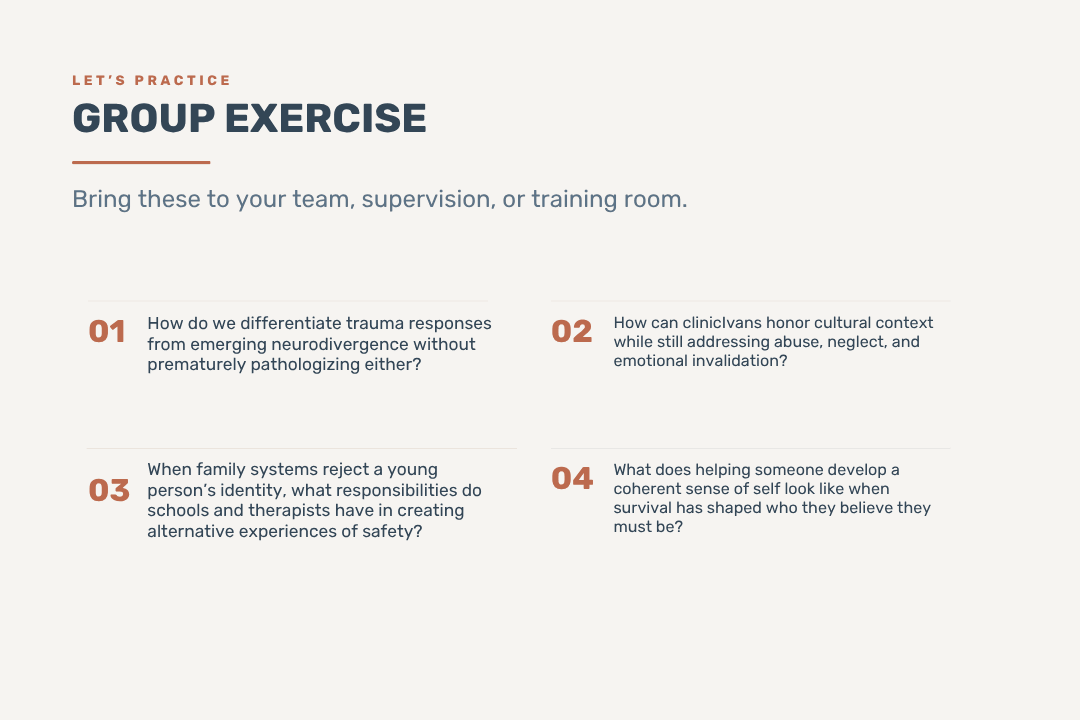
Learning to apply the CARE Framework to ethical decision-making when professional responsibilities, client needs, and real-world circumstances don’t always align.

Examining how boundaries, power, and professional judgment shape therapeutic relationships while responding thoughtfully to the complexities of affirming and community-based practice.

Understanding how minority stress shapes mental health across the lifespan and integrating evidence-informed approaches that strengthen resilience and affirming clinical care.

Using self psychology to better understand identity development, relational needs, and the role of empathic connection in supporting healing and psychological growth.

Moving beyond one-time trainings by helping organizations translate values into everyday practice through leadership, accountability, and sustainable organizational change.

Strengthening workplace culture by fostering psychological safety, inclusive communication, and environments where people feel respected, connected, and able to contribute fully.

guiding the work

self psychology: Core developmental Needs

When children develop their sense of self, Self Psychology identifies three essential needs: Mirroring, Twinship, and Idealization. Too often, queer and trans children are denied these affirming experiences, resulting in the low self-esteem and poor mental health.

When it failsWhen it’s met

MIRRORING

Affirmation and encouragement that helps a young person feel seen, valued, and emotionally understood.

When denied at home, TGNC youth learn that the self they know is not one they can show.

One adult who uses their name and pronouns without conditions reflects worth back, and TGNC youth get mirrored where home refuses to.

TWINSHIP

The experience of sameness, belonging, and not feeling alone in who you are.

Without it, TGNC youth conceal and monitor safety constantly, and anticipating disbelief becomes its own daily labor.

With it, through chosen family, peers, and clinicians who share their identity, TGNC youth stop explaining their existence and are simply understood.

IDEALIZATION

Connection to a healthy adult model that is experienced as safe, admired, or aspirational.

With trans adults under attack, TGNC youth have few role models to look toward as evidence of a future available to them.

Trans elders and mentors make a future visible, and TGNC youth get a life they can picture rather than one they must imagine alone.

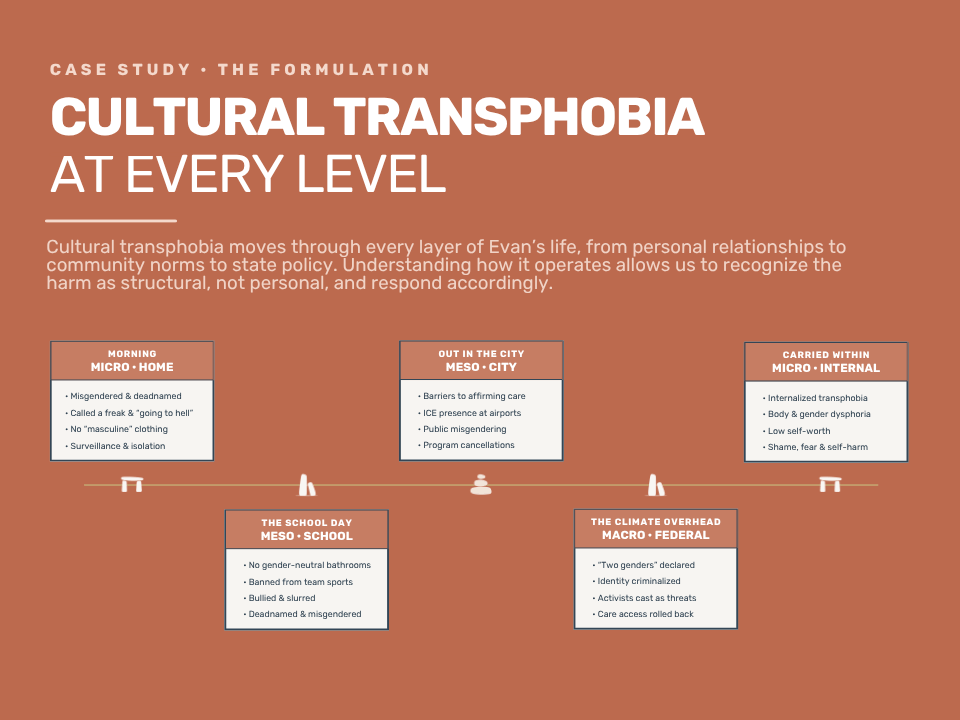
Repeated across home, school, medicine, and policy, these failures stop being individual and become cultural transphobia, a society-wide empathic failure that produces relational deprivation, a chronic absence of recognition, affirmation, and belonging at scale.

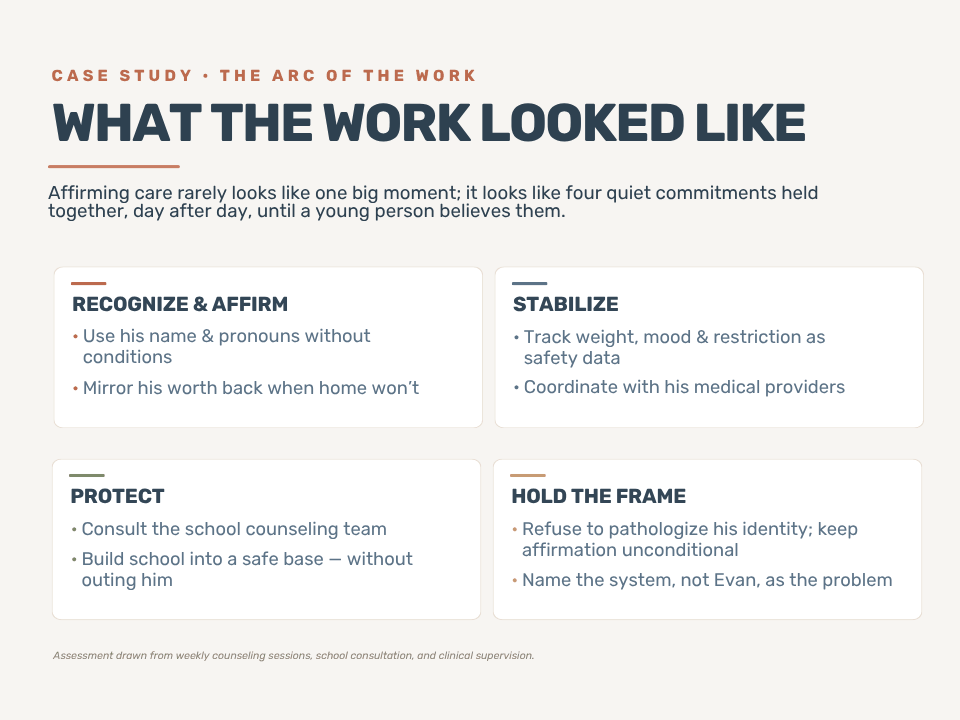
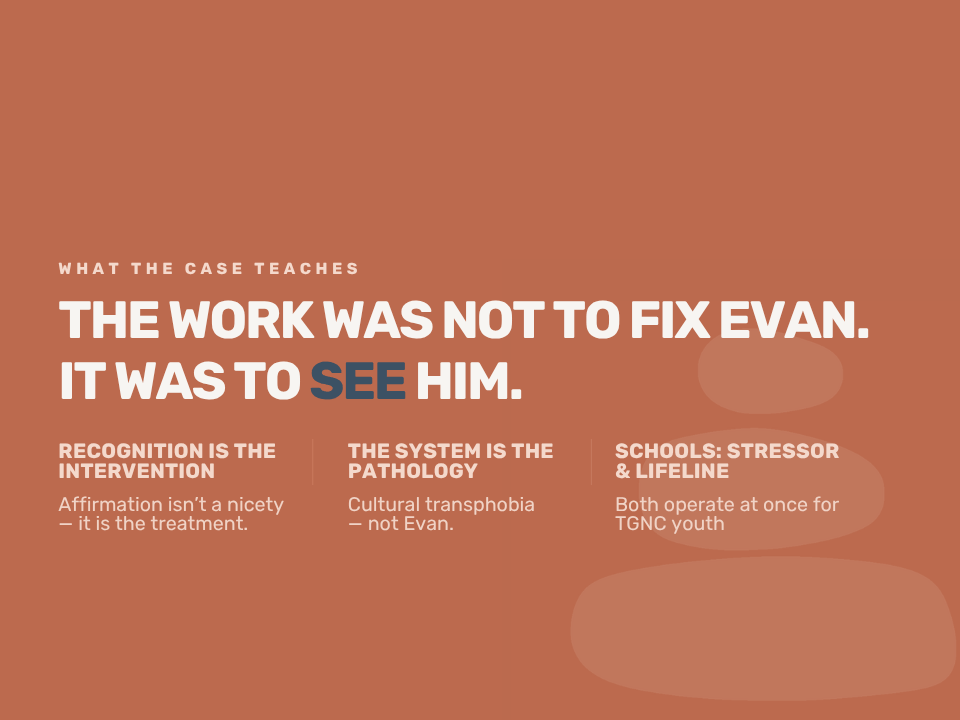
An affirming adult can function as a reparative selfobject, meeting the developmental need the system failed to meet. This is why the CARE Framework treats recognition as clinical action rather than kindness.

Kohut, 1977 · Miliora, 2000 · Meyer, 2003 · Wright, 2021

Explore My Work

Strengthening Affirming Clinical Practice

Explore sample trainings that translate current research into practical, evidence-informed strategies for supporting LGBTQ+ and TGNC individuals, families, and communities.

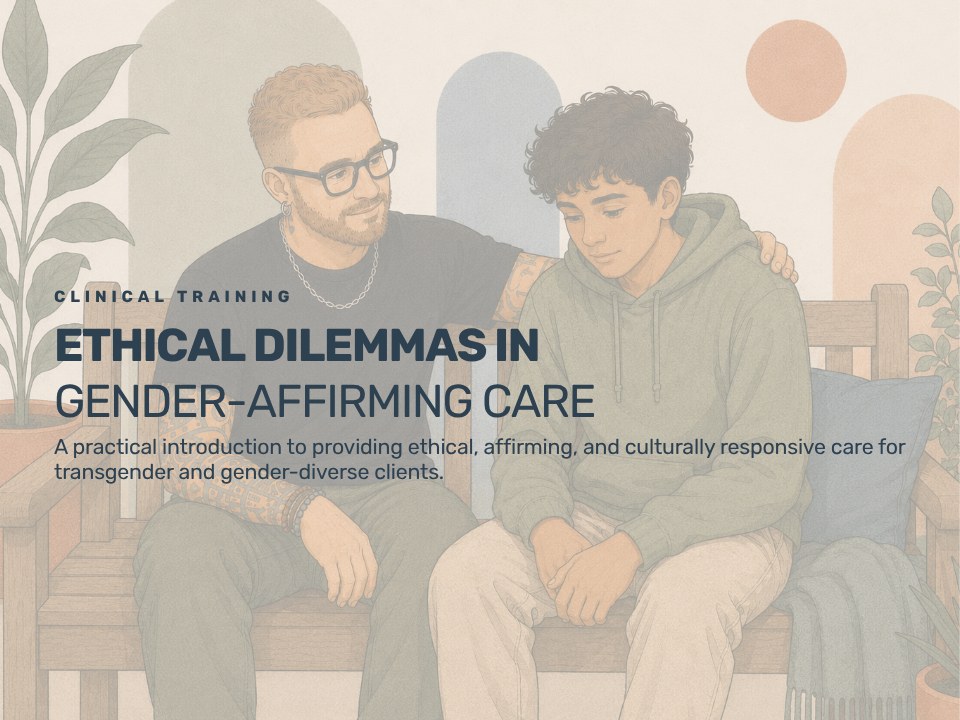
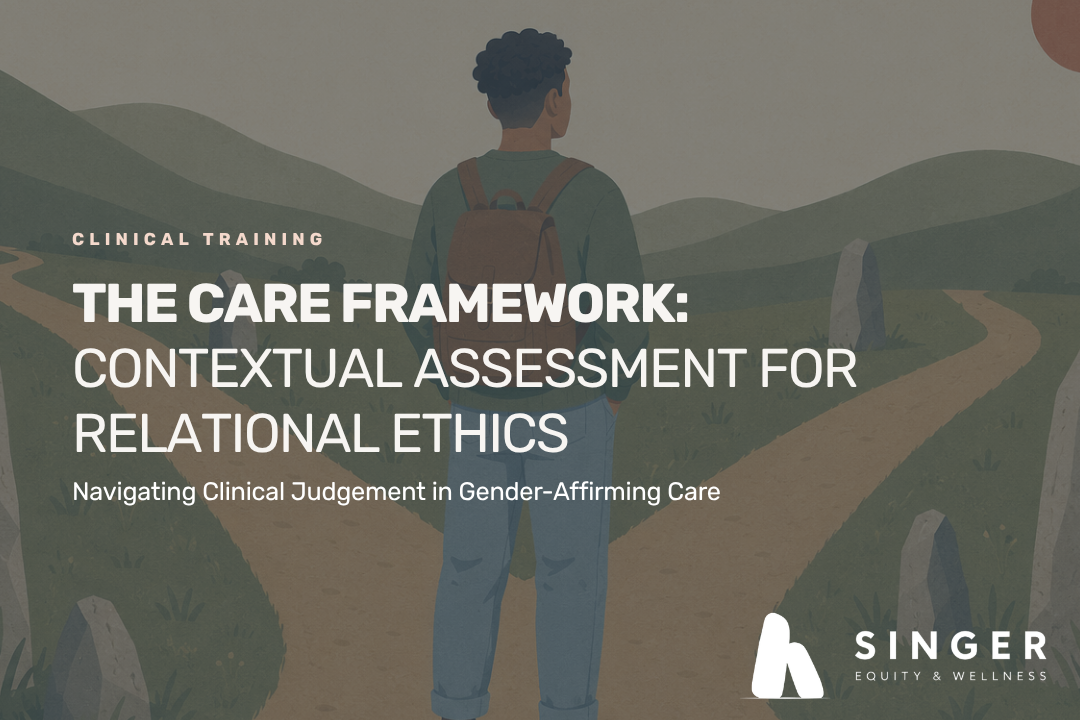
The CARE Framework: Clinical Judgment in Gender-Affirming Care

Clinical Training

The CARE Framework: Clinical Judgment in Gender-Affirming Care

A practical framework for making ethical decisions when professional rules, client needs, and real-world circumstances don’t point the same way.

Open the Workshop →

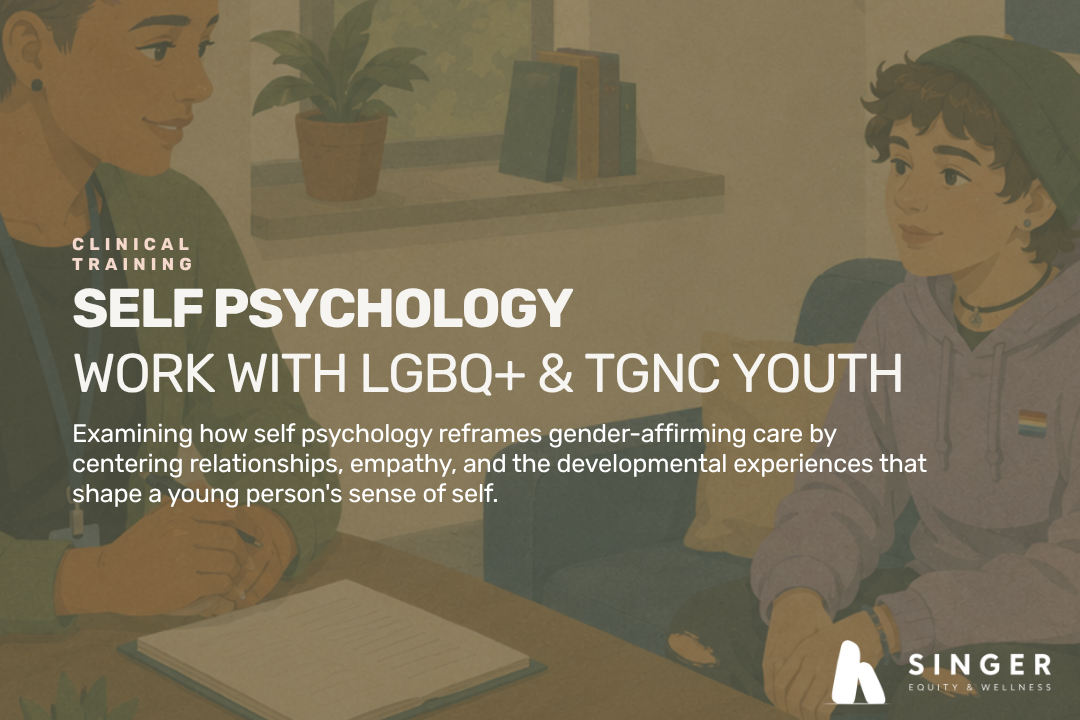
Self Psychology: Working with LGBQ+ & TGNC Youth

Clinical Training

Self Psychology: Working with LGBQ+ & TGNC Youth

A foundation in LGBTQ+ mental health: identity development, minority stress, and affirming, evidence-informed care across the lifespan.

Open the Workshop →

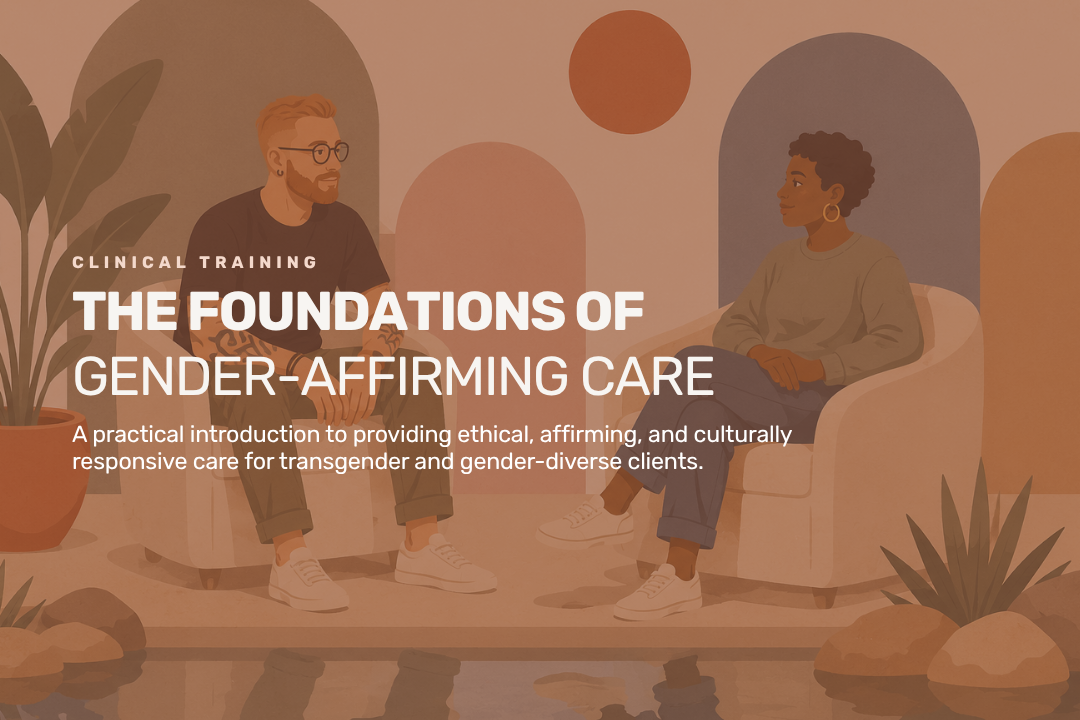
The Foundations of Gender-Affirming Care

Clinical Training

The Foundations of Gender-Affirming Care

Developmentally informed, evidence-based approaches for supporting transgender and gender non-conforming youth across clinical, family, and school settings.

Open the Workshop →

For Your Company

Workplaces That Bring Out the Best in People

For companies that want more than a policy and a pride post. I help your people actually support LGBQ+ and TGNC colleagues.

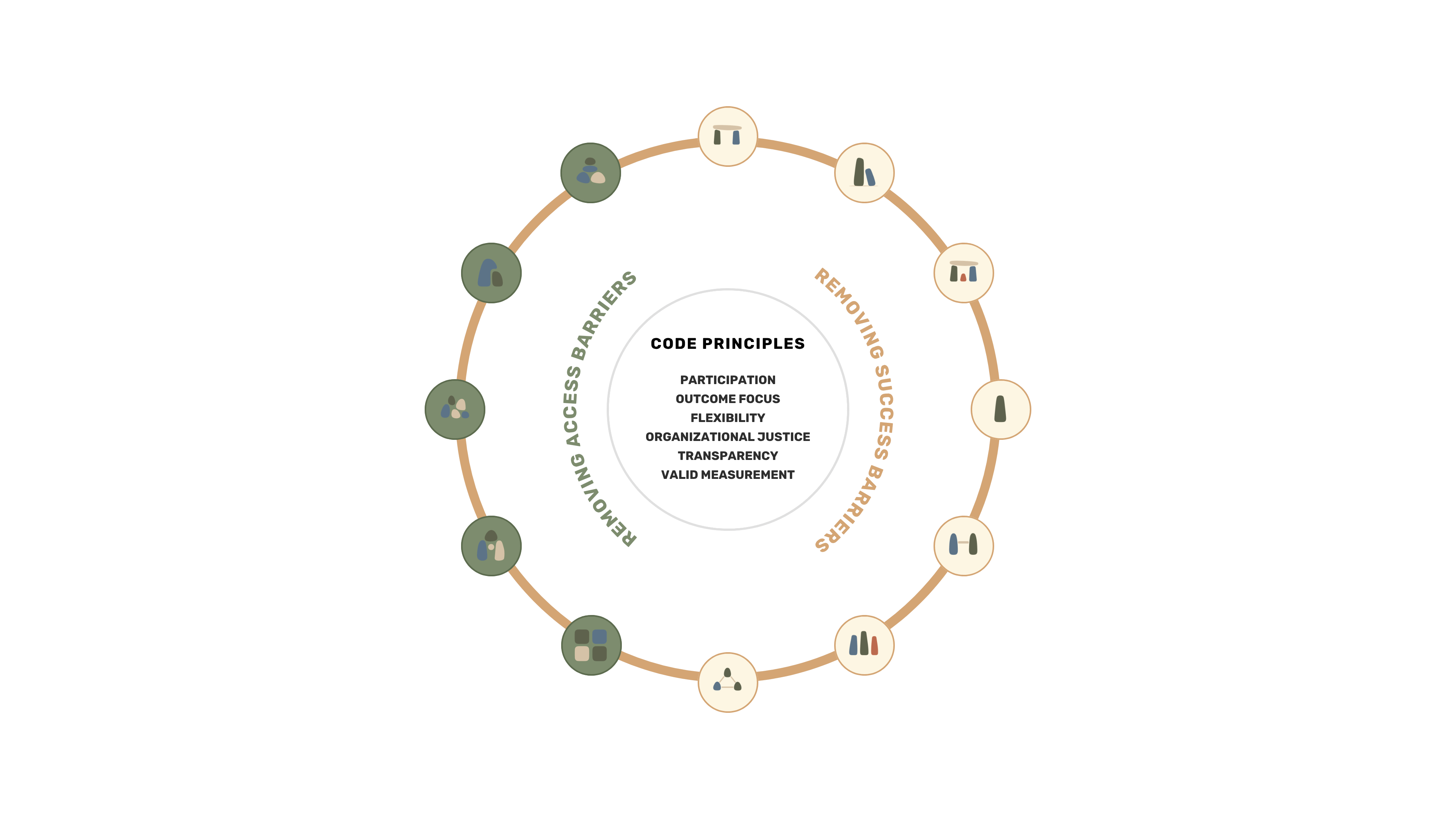
The Canary Code Framework

Embedding Inclusion Across the Employee Experience

Explore Ludmila N. Praslova’s Canary Code to see how six guiding principles and twelve talent practices work together to create more inclusive, equitable workplaces.

Removing Success Barriers

Realistic Job Descriptions

Base job descriptions on actual responsibilities and essential skills, removing unnecessary barriers before hiring begins.

Removing Success Barriers

Inclusive Recruitment

Broaden recruitment efforts to attract talented candidates from diverse backgrounds and lived experiences.

Removing Success Barriers

Valid, Outcomes-Focused Selection

Use hiring methods that measure the ability to do the job, not subjective impressions or outdated expectations.

Removing Success Barriers

Fair Compensation & Viable Part-Time Options

Create equitable pay practices and flexible employment options that support different needs and career paths.

Removing Success Barriers

Benefit Options for Different Needs & Family Status

Offer benefits that reflect the diverse realities of employees’ identities, families, and caregiving responsibilities.

Removing Success Barriers

Training in Multiple Modalities & Intersectional Inclusion

Deliver learning in accessible ways while building understanding across identities, experiences, and perspectives.

Removing Success Barriers

Health-Supportive Physical Work Environments

Design work environments that support employees’ physical, sensory, and psychological well-being.

Removing Access Barriers

Flexible Work & Job Crafting

Provide flexibility in where, when, and how work happens while allowing roles to align with individual strengths.

Removing Access Barriers

Civility & Anti-Bullying Mechanisms

Create respectful workplaces with clear expectations, accountability, and support for addressing harmful behavior.

Removing Access Barriers

Fair, Outcomes-Based Performance Measurement

Measure performance by meaningful outcomes rather than visibility, work style, or subjective perceptions.

Removing Access Barriers

Fair, De-Biased & Transparent Promotion

Make advancement decisions using clear, equitable criteria that give every employee a fair opportunity to grow.

Removing Access Barriers

Representation in Leadership & Decision-Making

Build representation into leadership and decision-making, so those affected by choices have a real voice in making them.

Areas of Exploration

Building Cultures of Belonging

Healthy workplace cultures are built through everyday leadership, communication, and relationships. Together, we’ll develop practical approaches that strengthen belonging, psychological safety, and inclusive teams.

An interactive workshop that equips employees with the knowledge, practical tools, and shared language to foster LGBTQ+ inclusion, communicate respectfully, and strengthen workplace culture.

A leadership-focused workshop for managers and executives exploring how inclusive leadership strengthens trust, psychological safety, team performance, and organizational culture through everyday decisions and relationships.

Building the confidence to respond thoughtfully to bias, conflict, identity-related conversations, and moments of repair with empathy, clarity, and professionalism.

Creating more equitable hiring and talent development processes by reducing bias, strengthening recruitment and interviewing practices, and fostering fair opportunities for employees at every stage of the employee lifecycle.

Evaluating organizational policies, employee benefits, and workplace practices to ensure they reflect company values, support an inclusive employee experience, and provide equitable access, resources, and protections for all employees.

Supporting organizations as they navigate organizational change, helping leaders build buy-in, respond to challenges, and sustain momentum as new initiatives become everyday practice.

Explore My Work

Creating Lasting Organizational Change

Explore workshops that translate current research into practical, evidence-informed strategies for strengthening leadership, fostering psychological safety, and creating workplaces where people and organizations can thrive.

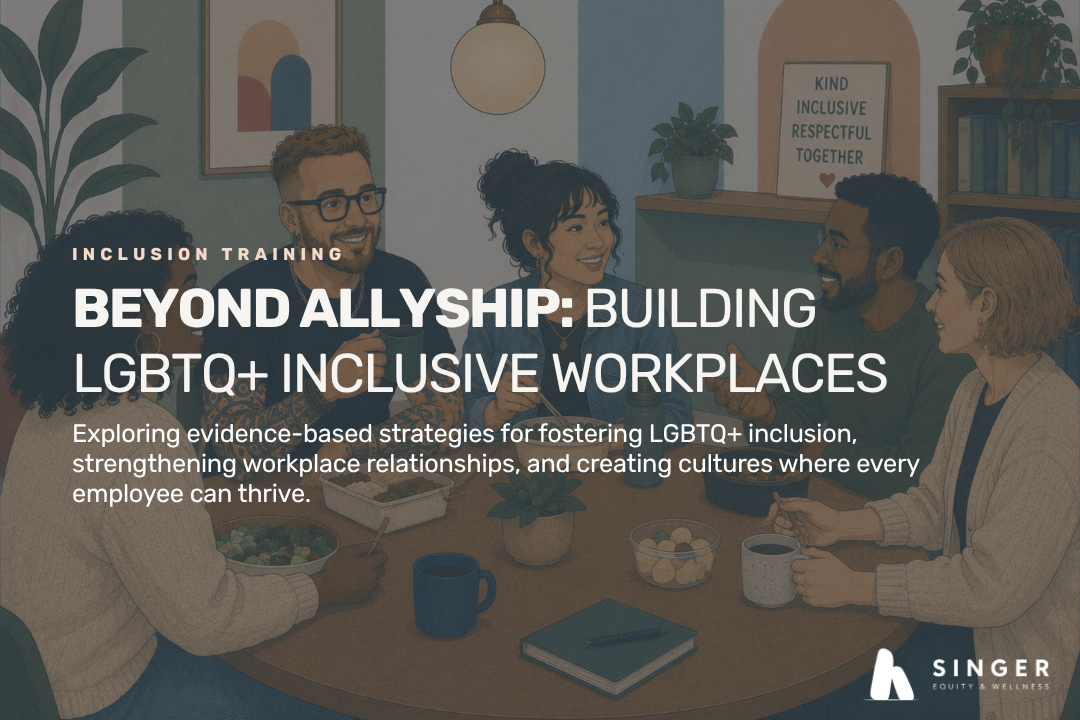
inclusion Training

Beyond Allyship: Building LGBTQ+ Inclusive Workplaces

Evidence-based strategies for fostering LGBTQ+ inclusion, strengthening workplace relationships, and creating cultures where every employee can thrive.

Open the Workshop →

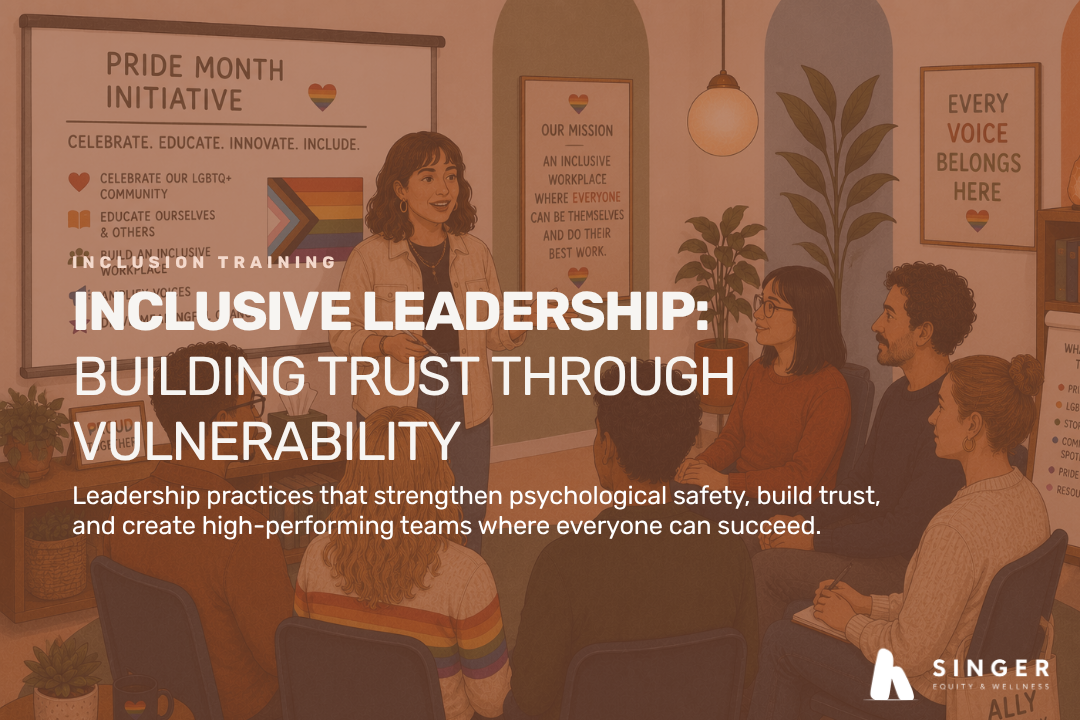
skill Training

Inclusive Leadership: Building Trust Through Vulnerability

Leadership practices that strengthen psychological safety, build trust, and create high-performing teams where everyone can succeed.

Open the Workshop →

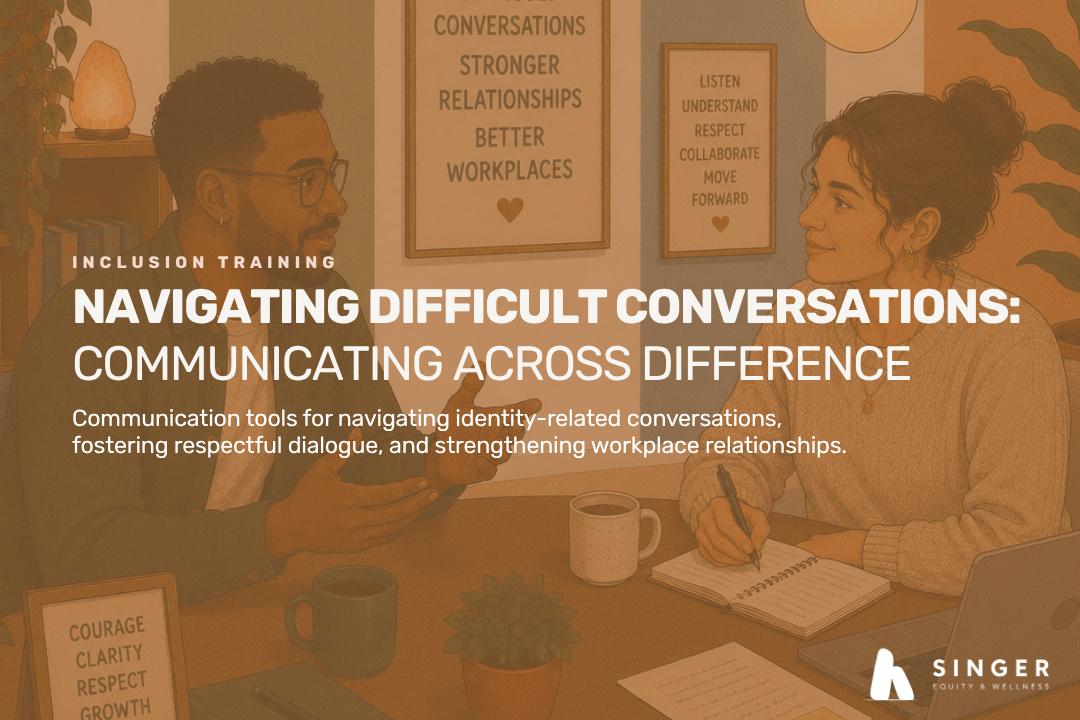
skill Training

Navigating Difficult Conversations: Communicating Across Difference

Communication tools for navigating identity-related conversations, fostering respectful dialogue, and strengthening workplace relationships.

Open the Workshop →

Reviews

What Teams Say About Our Work

Feedback is a welcomed part of the collaboration process. We shape the experience together through practicing open communication.

Kris led a Pride Month workshop that challenged our team in all the right ways. Rather than focusing on scripts or buzzwords, they helped people think more deeply about inclusion, ask better questions, and feel more confident supporting one another every day.

N

Nicole Kiley
Managing Director · Razorfish, NYC

Before Kris’ training, we had some clinicians so afraid of saying the wrong thing that they said nothing at all. Now they know how to respond, and our queer and trans clients are staying in care instead of disappearing after one session.

K

Katie Dreiling
Clinical Director · Triumph ABA, NYC

Our lawyers cared, but kept getting small things wrong that cost them trust. Kris showed our lawyers what they were missing, and now our LGBTQ+ clients are telling them things that actually change how a case goes.

S

Sam Bartels
Paralegal · Legal Aid Society, NYC

For School Communities

Training for School Communities

Workshops and consultation that help schools become places where LGBQ+ and TGNC students, and the adults around them, are supported.

School Communities

Supporting The Whole School Community

Creating an affirming school climate isn’t the responsibility of one person or one department. It grows through the everyday actions of the people who shape a student’s experience, both in school and at home.

01The StudentThe person at the center of every decision.
02Teachers & StaffThe adults who shape daily belonging.
03School LeadershipThe people building the culture and systems.
04Caregivers & FamiliesThe relationships connecting school and home.

Explore My Work

Building Strong School Communities

Explore examples of workshops designed to help caregivers, educators, and school communities build confidence, strengthen relationships, and better support LGBTQ+ and TGNC youth.

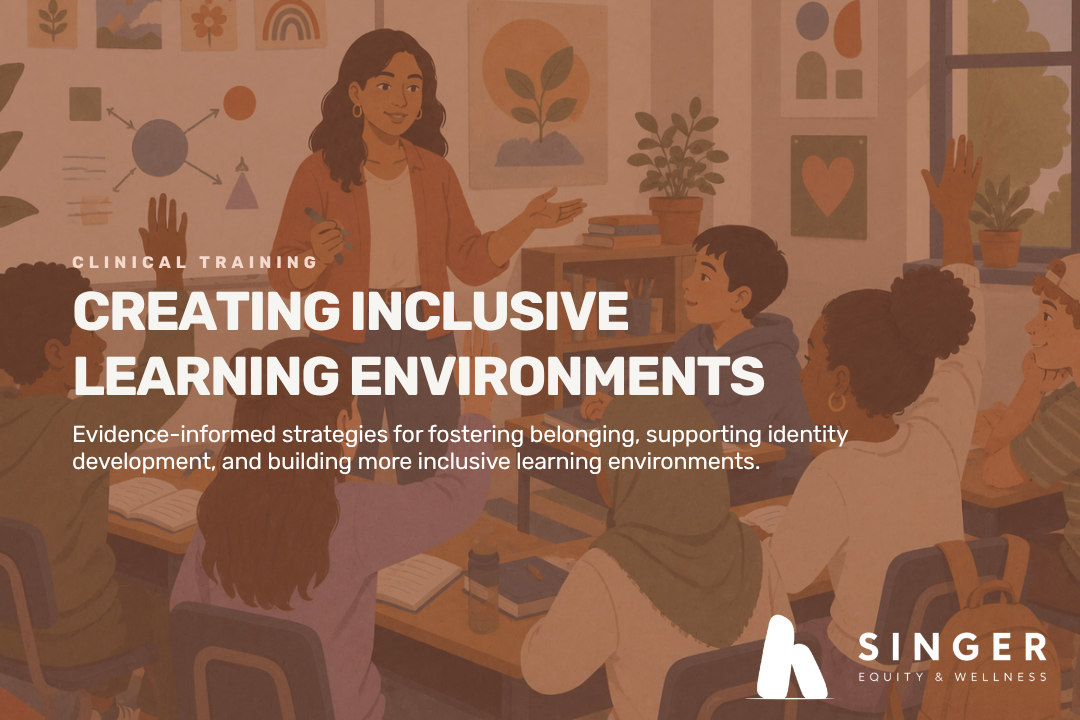
Creating Safer, More Inclusive Learning Environments

For Educators

Creating Safer, More Inclusive Learning Environments

Practical tools to foster belonging and build classrooms where every student can thrive.

Open the Workshop →

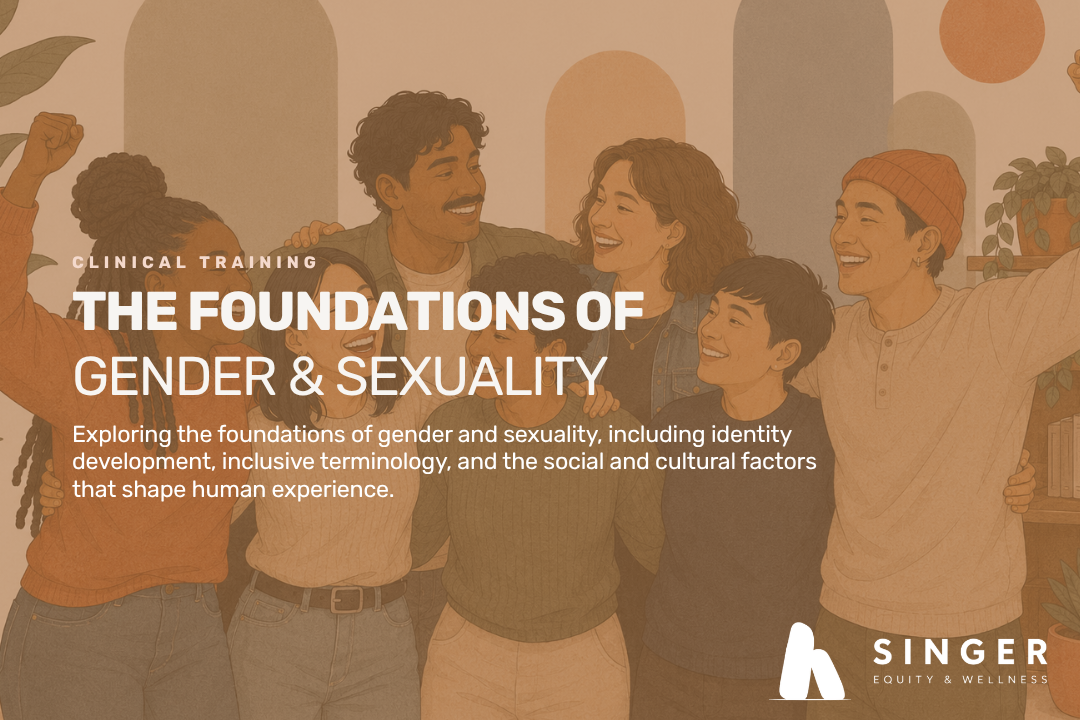
The Foundations of Gender & Sexuality

Foundations

The Foundations of Gender & Sexuality

An accessible introduction to key concepts, terminology, identity development, and affirming practices.

Open the Workshop →

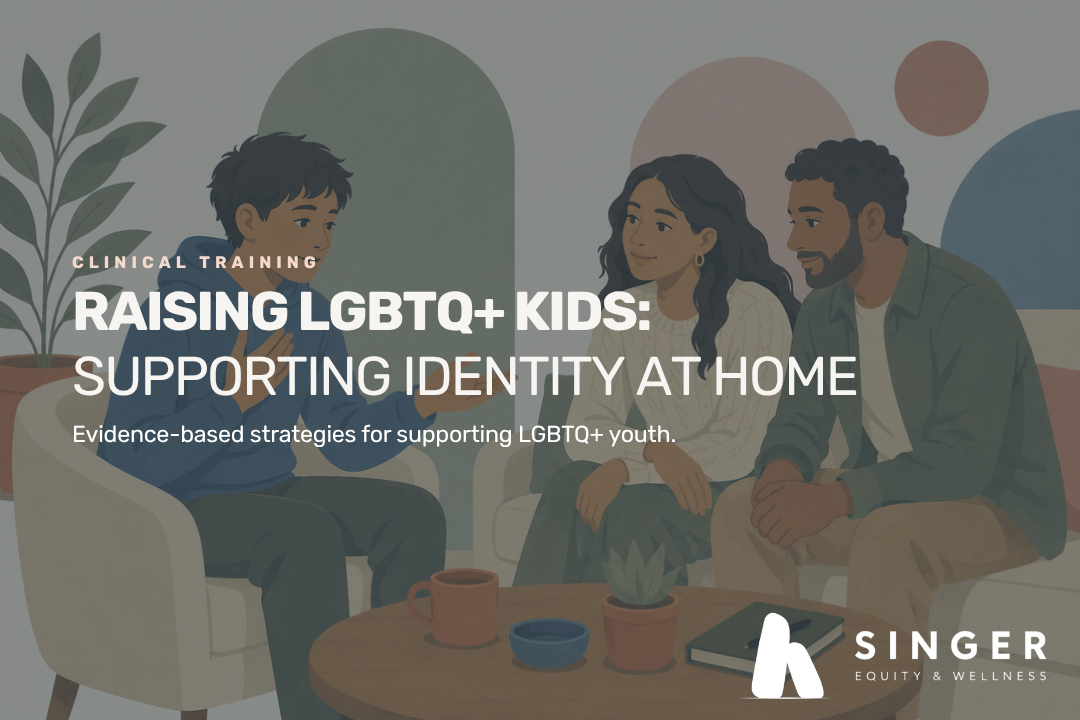
Raising LGBTQ+ Kids: Supporting Identity At Home

For Caregivers

Raising LGBTQ+ Kids: Supporting Identity At Home

Evidence-based strategies for supporting LGBTQ+ youth while strengthening communication and building trust.

Open the Workshop →

Areas of Exploration

How I work with school communities

I have yet to walk into a school community where the adults didn’t care. What’s usually missing is the language, the practice, and the room to get it right. That is what we work on together.

Partnering with students, caregivers, and school communities to create environments where LGBTQ+ young people are supported and able to thrive.

Working with educators to thoughtfully integrate inclusive language, curriculum, and classroom practices that reflect the diversity of students’ lived experiences.

Providing practical guidance for schools and caregivers as they navigate names, pronouns, social transition, and the evolving needs of gender-diverse young people.

Supporting caregivers as they navigate important conversations, strengthen relationships, and respond to their child’s development with confidence.

Helping educators strengthen their knowledge, respond to complex situations, and create learning environments where every student can succeed.

Partnering with schools to develop policies and practices that support student wellbeing and foster a school culture grounded in dignity and respect.

Reviews

What School Communities Say About Our Work

When our child came out, we wanted to be supportive but honestly didn’t know where to begin. Kris never made us feel judged for not having answers. They helped us understand what our child needed, and our relationship is stronger because of it.

S

Steve Collins
Student Parent · High School of Art & Design, NYC

Kris helped make conversations about identity feel approachable rather than intimidating. They co-facilitated lessons, supported our LGBTQ+ student group, and gave our staff practical ways to create classrooms where students felt seen, respected, and safe enough to learn.

K

Kim Tannen
Health Teacher · High School of Art & Design, NYC

Kris embedded in our high school and quickly became someone our students wanted to be around. They gave our staff practical tools and met our families with real warmth. Our whole school community is stronger for having them.

M

Michelle Daly
Assistant Principal · High School of Art & Design, NYC

Resources for Every Stage of the Journey

Whether you’re a young person, caregiver, educator, or clinician, these resources are designed to help you find support, understanding, and next steps.

Individuals

Resources for individuals exploring identity, seeking affirming support, and finding their own path toward wellbeing and understanding.

Explore Resources →

Youth, Families & Schools

Resources for youth, families, and schools navigating mental health, identity, and belonging with affirming support and community care.

Explore Resources →

Clinicians & Organizations

Resources for clinicians and educators building affirming, identity-centered practice from clinical frameworks to continuing education.

Explore Resources →

Whenever you’re ready, I’m here.

(646) 598-2216 · singerwellness@gmail.com