
WHY THE MONOLITH
Why The Monolith?
Because making meaning out of what we feel is one long, unbroken line. Pick a point on it.

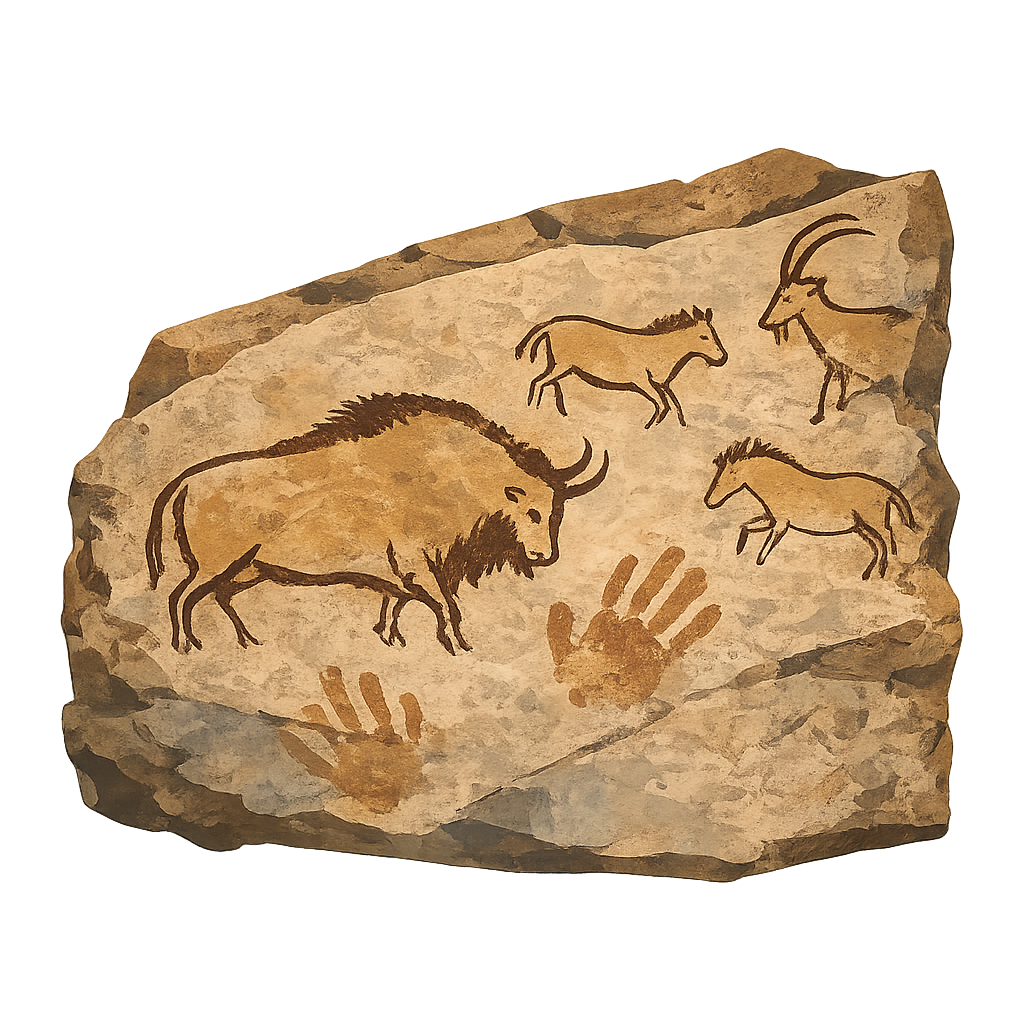
UPPER PALEOLITHIC · FOUND AGAIN IN 1869
Somebody stood in the dark at Niaux and drew a bison, fifteen thousand years ago.
Before writing, before diagnosis, before any of the language we now use for feeling, people were already recording what it was like to be alive.
The impulse came first. Everything we call treatment came a very long time afterward.
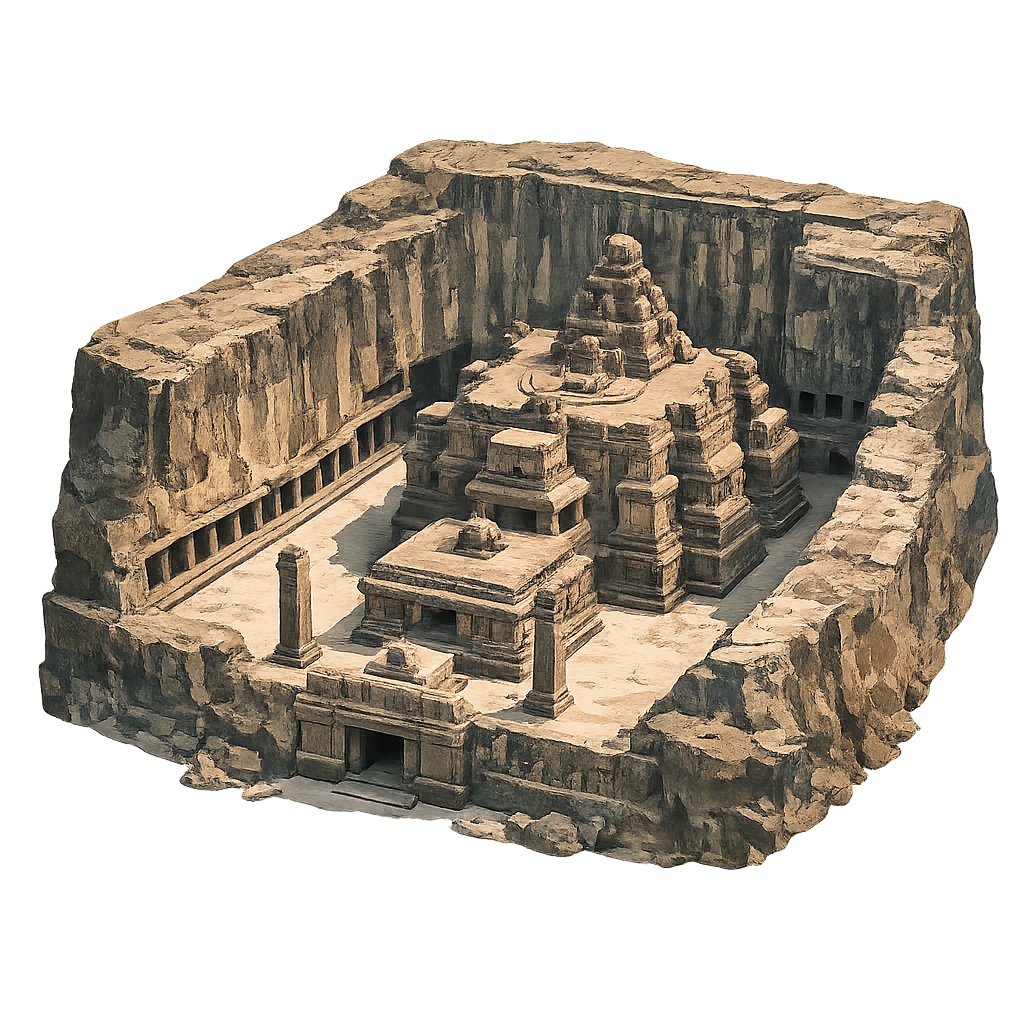
ONE ROCK · ROUGHLY TWENTY YEARS OF CARVING
A temple nobody built. They removed everything that was not the temple.
Kailasa was cut down into solid basalt from the top, three storeys of courtyards, elephants, and towers released from a single rock.
The civilizations who made what we still cannot replicate were remembered as lesser anyway. Being told your way of being is lesser is not an ancient problem.

TERRACOTTA · THE METROPOLITAN MUSEUM OF ART
A seated figure made in Mali in the 1200s, and I could feel exactly what it felt.
When I first moved to New York I kept going back to this one piece at the Met. Grief, maybe rest, something held.
It came across immediately, across eight hundred years and an ocean, with nothing translated in between. That is the whole reason I do this work the way I do it.

Same impulse, same line, and you are standing on it right now.
The human spirit has been creating since the moment we drew breath, and I am in awe of it.
So the monolith is not decoration. It is my working assumption about you: what you feel is real, it has always been worth recording, and you already carry the wisdom I am here to witness.
 SINGER EQUITY & WELLNESS