
My philosophy
Not a problem to solve.
A person to be
My approach is grounded in four values. Whether you’re seeking care for yourself, a kid you love, your school, or your organization, they shape how I listen, protect, support, and advocate.


Where Regulation Begins
Name What You Feel
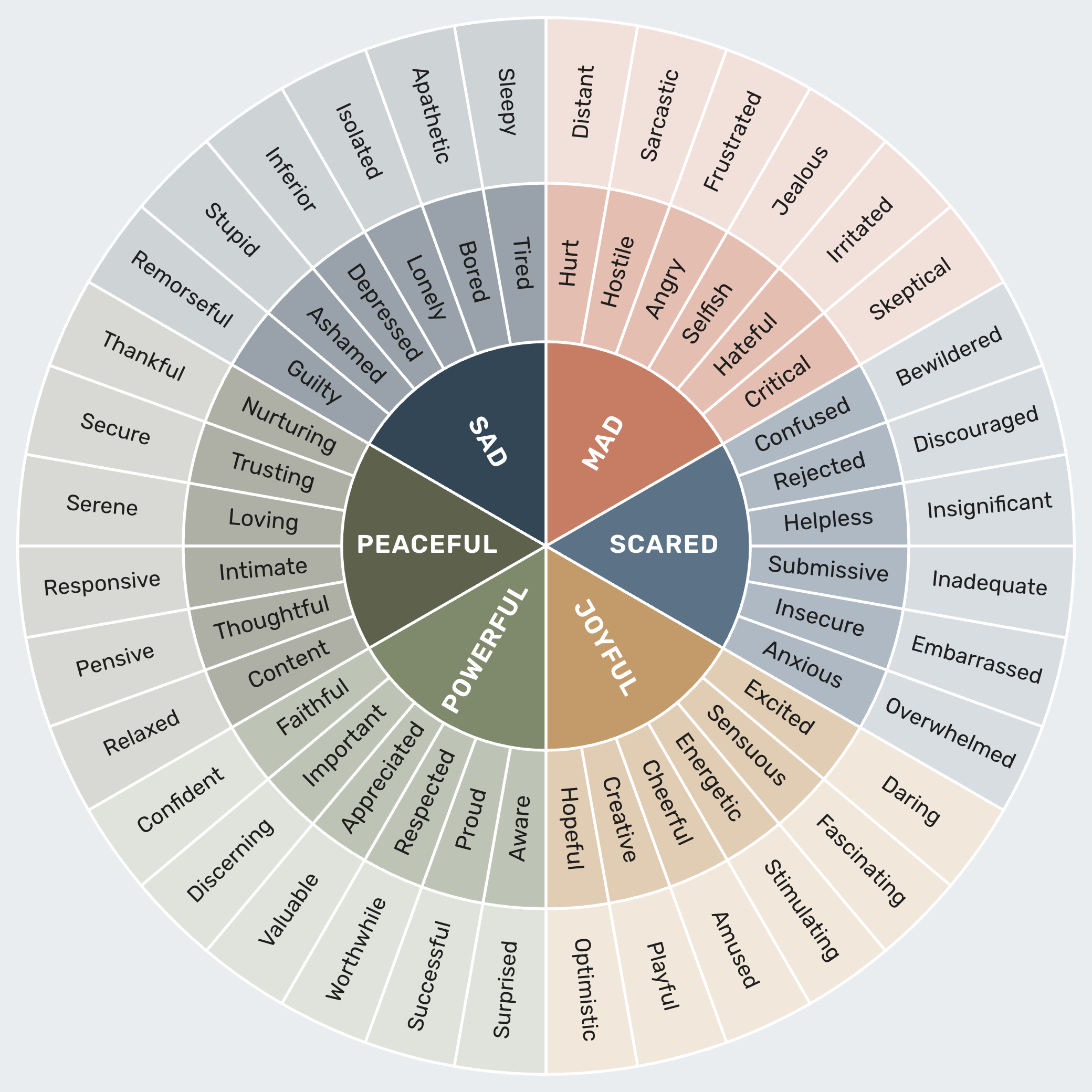
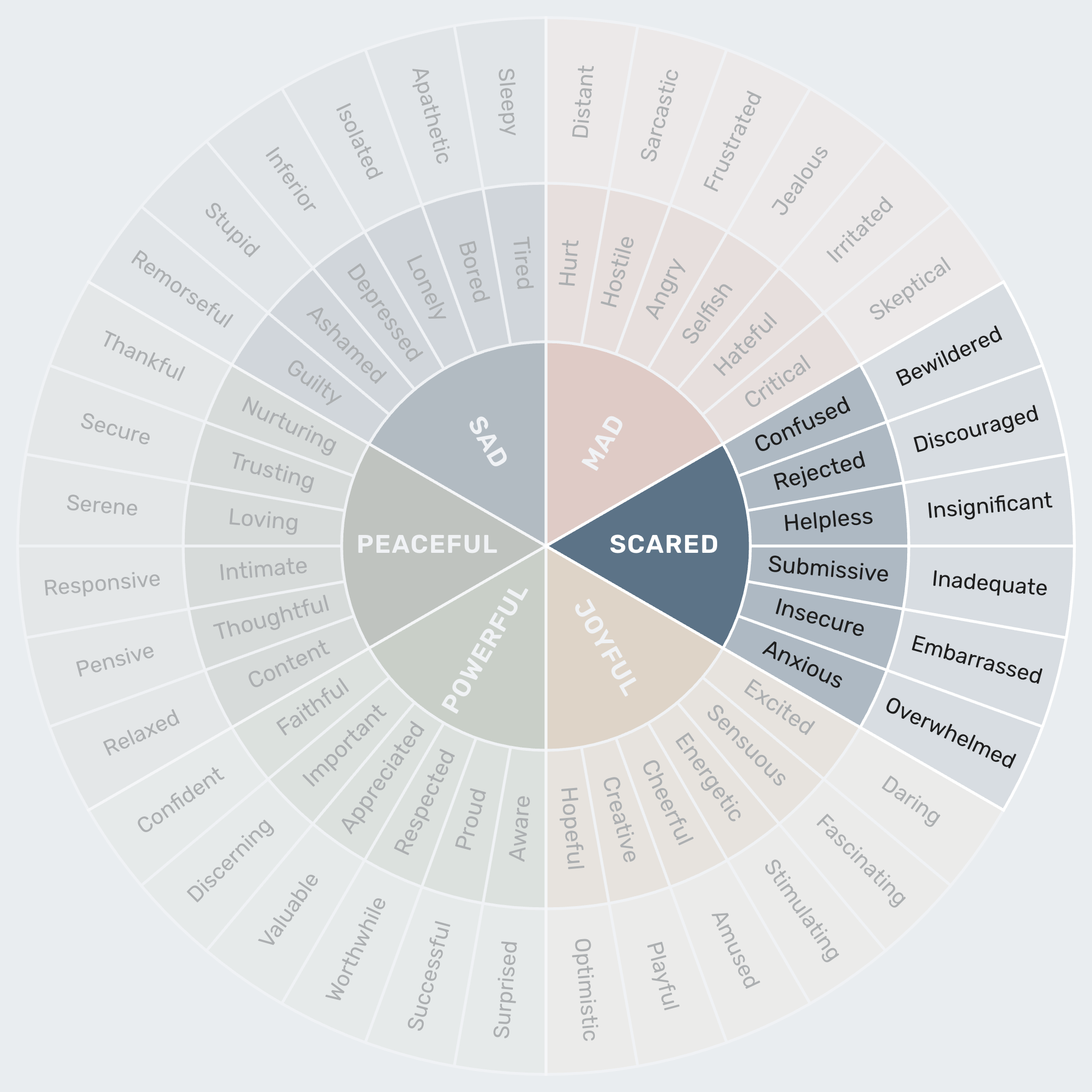
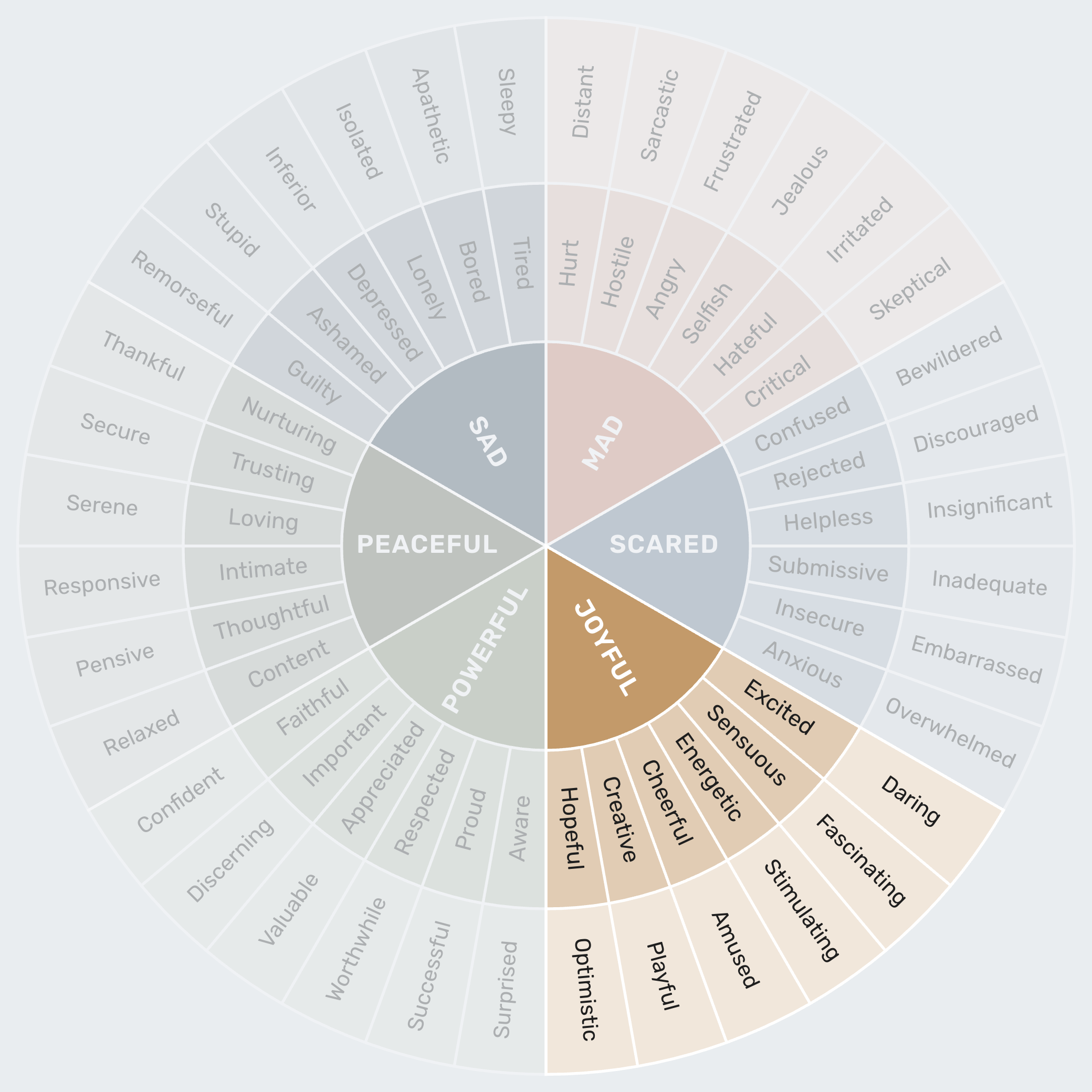
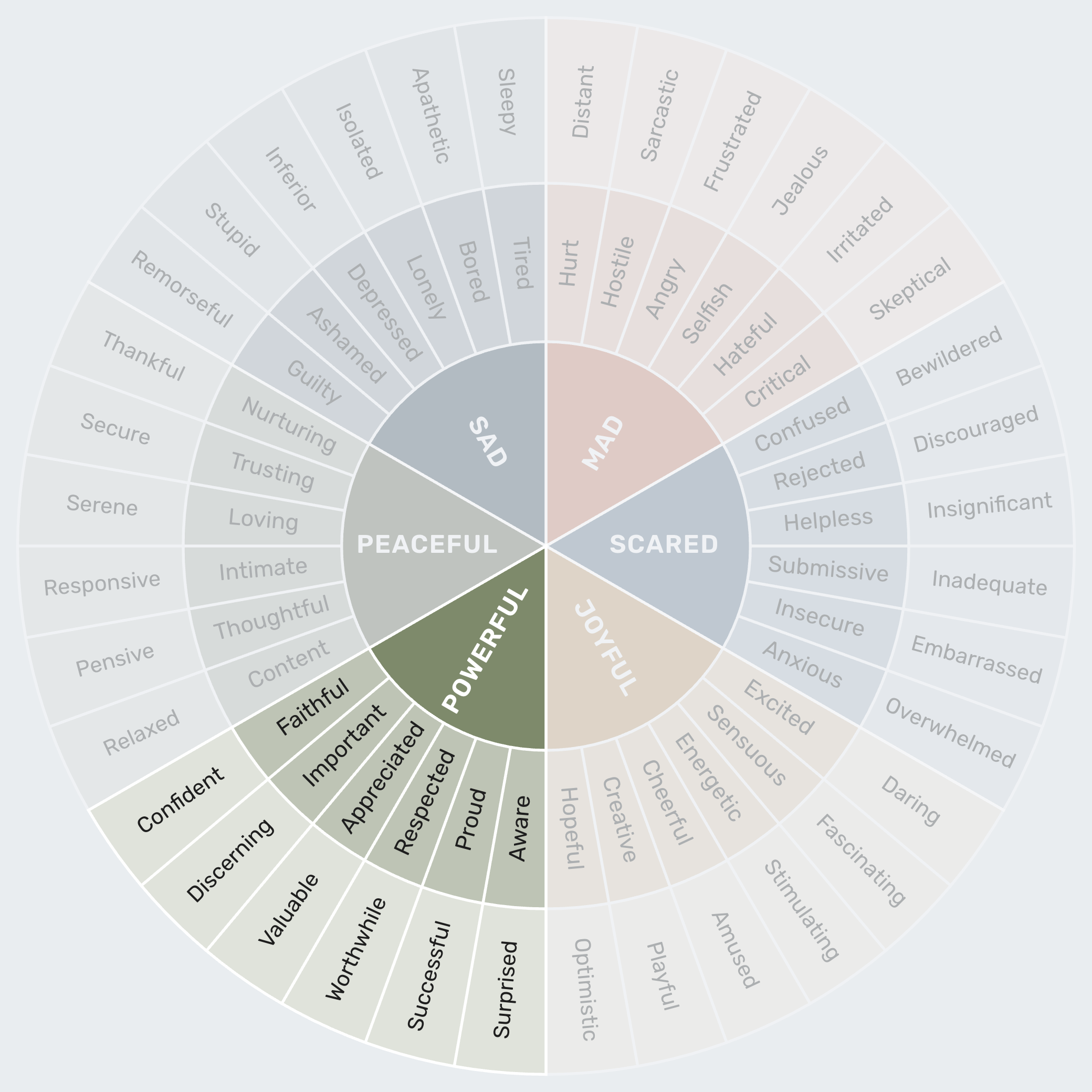
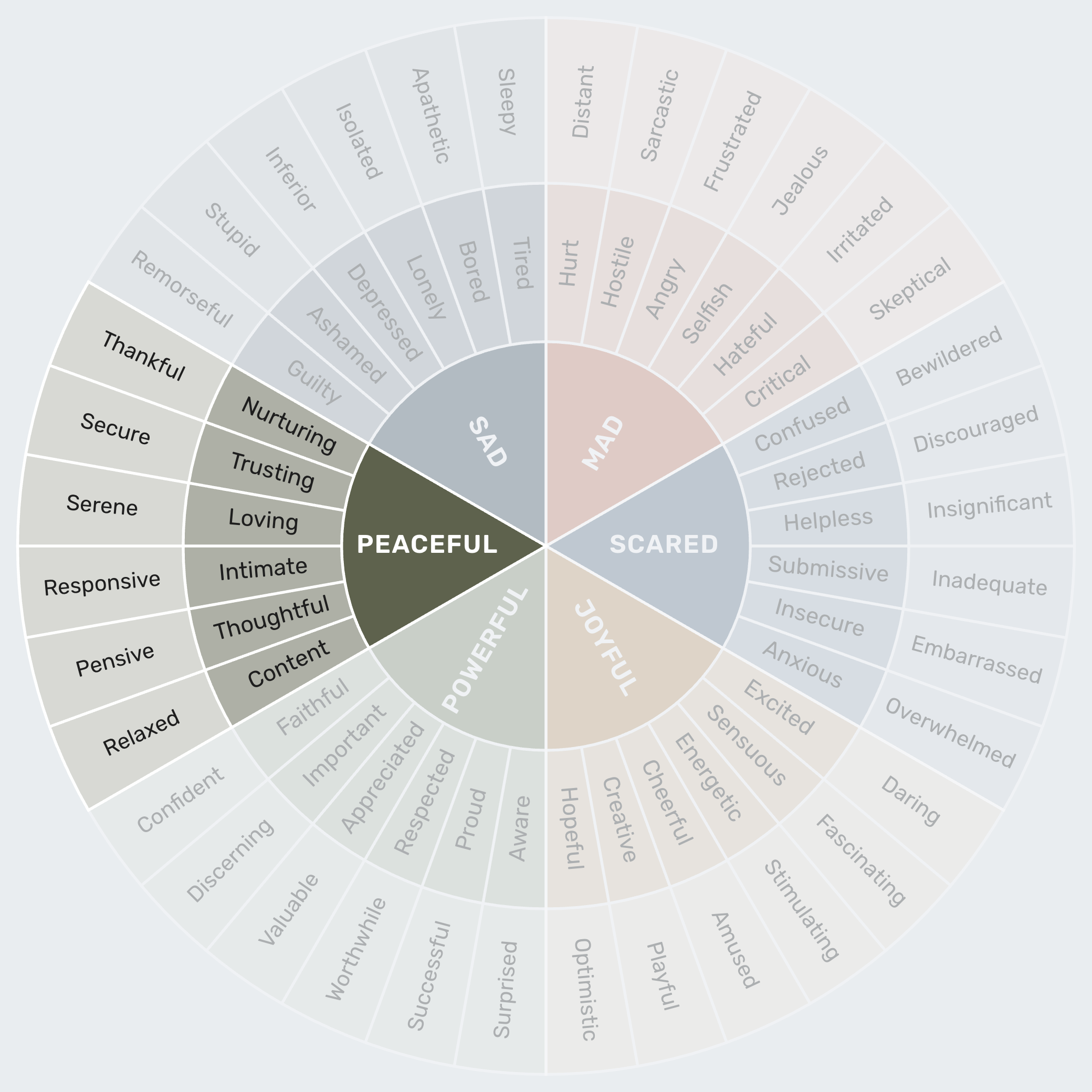
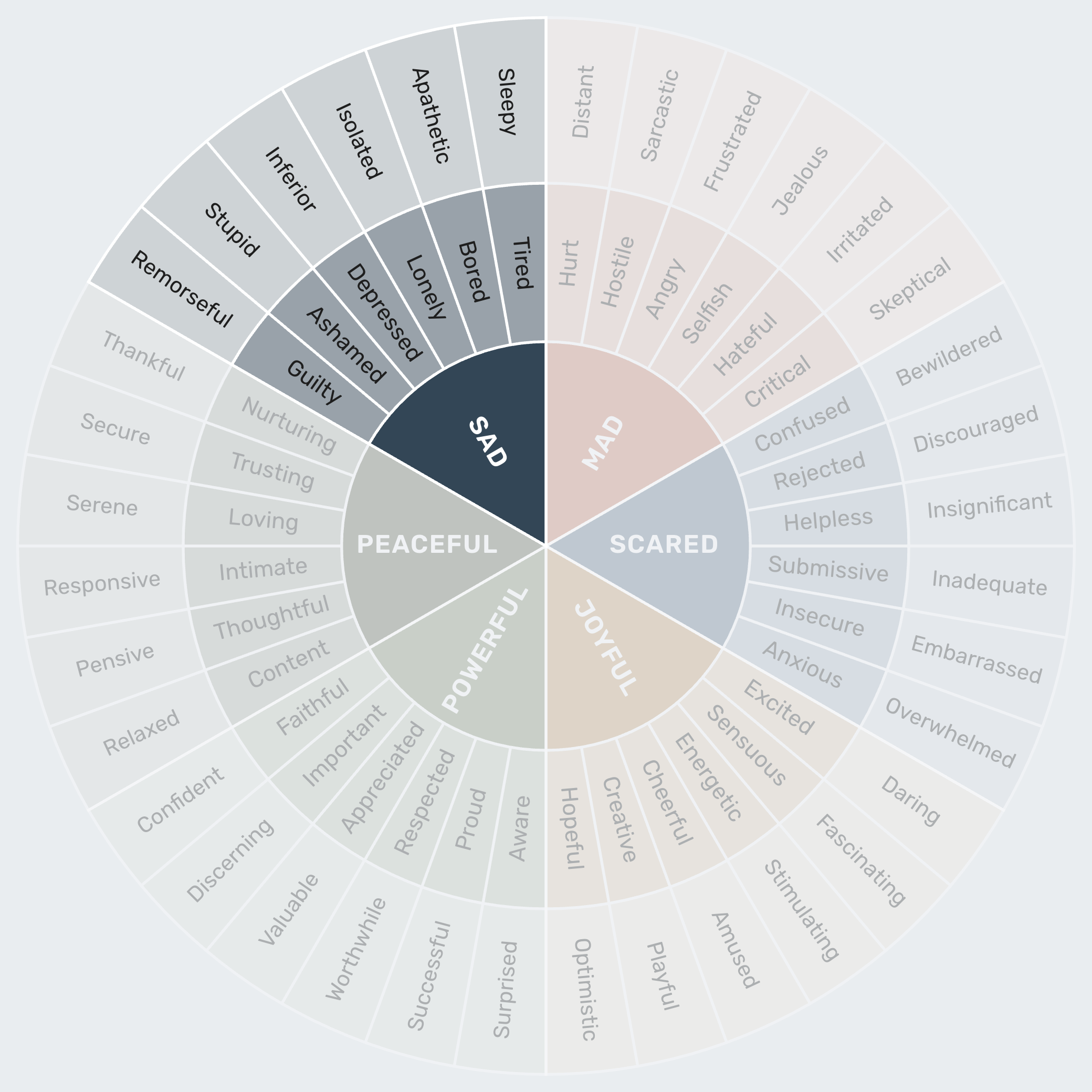
Most of us get by on a few blunt words for how we feel, but “fine” and “bad” only take us so far. The Feeling Wheel opens six core emotions into more precise vocabulary, because a feeling we can name is one we can start to understand, embody, and express to others.
Start Anywhere
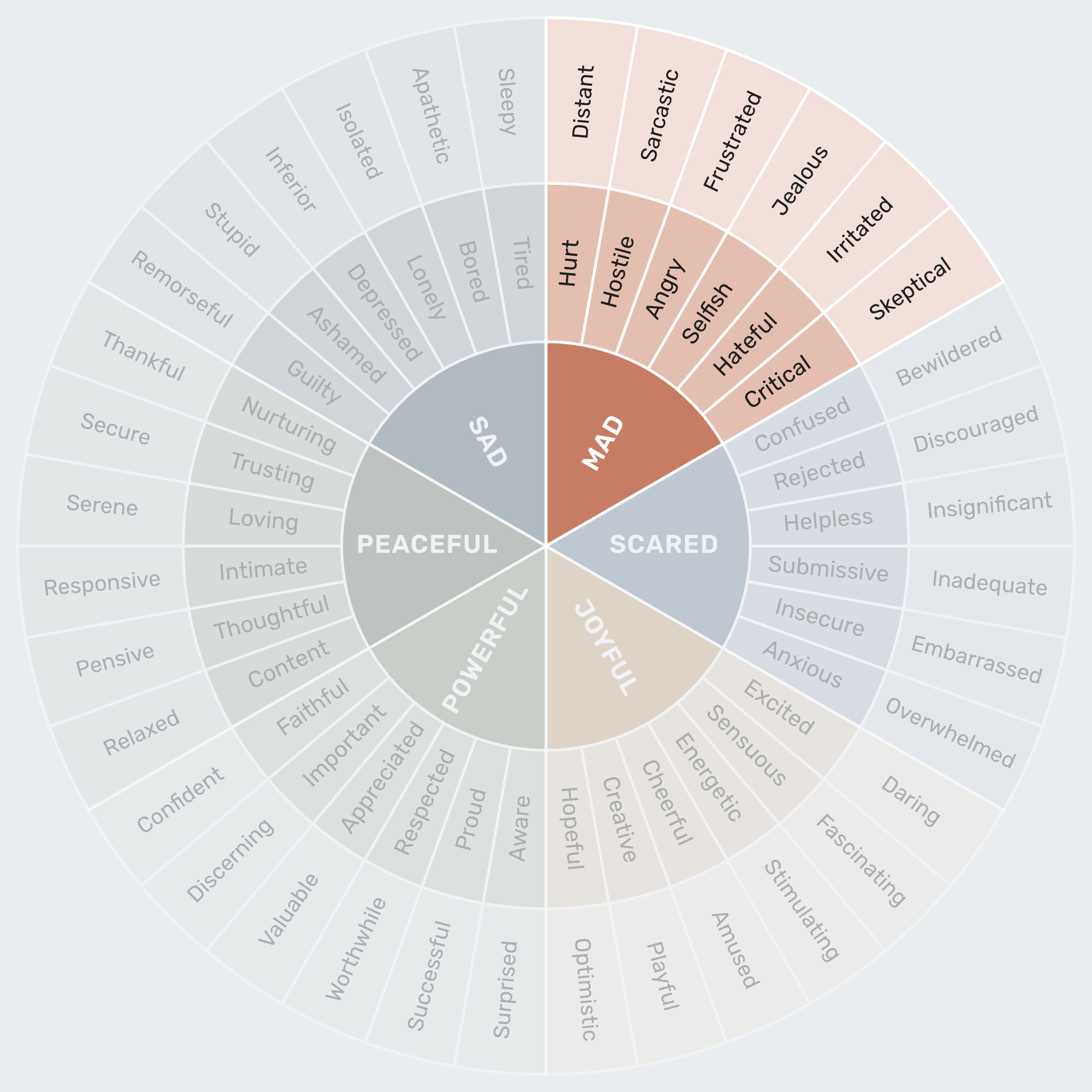
Tap the color family that feels closest, even if the word is not exact. The wheel opens that family into more precise words.
Mad→Scared→Joyful→Powerful→Peaceful→Sad→MadShow all ×
Six shades of mad. Which is closest?
Hurt→Distant
Hostile→Sarcastic
Angry→Frustrated
Selfish→Jealous
Hateful→Irritated
Critical→Skeptical
ScaredShow all ×
Six shades of scared. Which is closest?
Confused→Bewildered
Rejected→Discouraged
Helpless→Insignificant
Submissive→Inadequate
Insecure→Embarrassed
Anxious→Overwhelmed
JoyfulShow all ×
Six shades of joyful. Which is closest?
Excited→Daring
Sensuous→Fascinating
Energetic→Stimulating
Cheerful→Amused
Creative→Playful
Hopeful→Optimistic
PowerfulShow all ×
Six shades of powerful. Which is closest?
Aware→Surprised
Proud→Successful
Respected→Worthwhile
Appreciated→Valuable
Important→Discerning
Faithful→Confident
PeacefulShow all ×
Six shades of peaceful. Which is closest?
Content→Relaxed
Thoughtful→Pensive
Intimate→Responsive
Loving→Serene
Trusting→Secure
Nurturing→Thankful
SadShow all ×
Six shades of sad. Which is closest?
Guilty→Remorseful
Ashamed→Stupid
Depressed→Inferior
Lonely→Isolated
Bored→Apathetic
Tired→Sleepy
Adapted from Gloria Willcox, “The Feeling Wheel,” Transactional Analysis Journal (1982). There is no wrong answer here, and feelings from different families can be true at the same time.

