ABOUT
A Second Career. A Return To Myself.
Corporate exec turned social worker in pursuit of purpose.
Over the last twenty years, I built a successful career in corporate America. I spent nearly two decades helping organizations grow, leading teams, driving DE&I, and learning how to navigate uncertainty. On paper, things looked good. Yet beneath the titles, and accomplishments was a ever-present sense that something was missing.
Long before social work, I earned a master’s degree in women’s history because I wanted to teach. I was fascinated by who’s stories were told, the stories we tell about ourselves, the systems we build, and the ways identity, culture, and power shape human lives. But the need for a job took me in a very different direction and, again and again, I found myself standing at the edge of something unfamiliar thinking, I’ve never done this before, but I’ll try.
That willingness to try shaped my career, but it also eventually led me to a harder question: Was I living a life that felt aligned with my values?
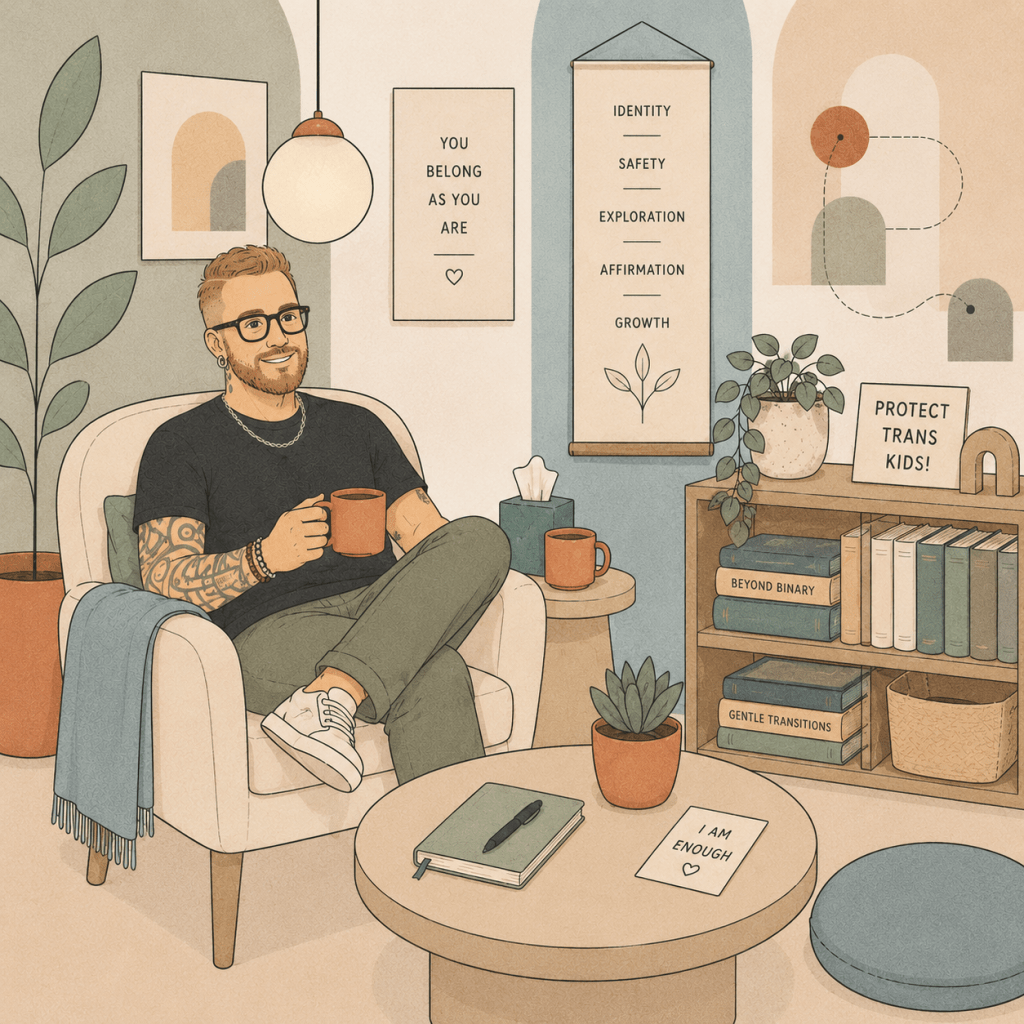
As an openly queer and trans professional, I found some of my greatest meaning in work that extended beyond my formal roles. Helping drive DE&I initiatives, I led LGBTQ+ Business Resource Groups (BRGs), and collaborated with other marginalized employee communities to create more inclusive policies and meaningful programming. I mentored younger queer and trans professionals who were learning how to navigate the cisheteronormative environment and modeled a future where they could be both out and successful. I also advocated in work with clients, once launching a gender-affirming product and marketing campaign crafted by queer and trans creatives. Everything that brought joy in my work revolved around the people.
By my late thirties, I was successful but burned out. My health was suffering. My sense of purpose felt non existent. For the first time, I began seriously considering a completely different path, one centered fully on supporting people.
Returning to graduate school after forty was one of the most difficult and rewarding decisions I’ve ever made. Today, I work primarily with LGBTQ+ and transgender and gender non-conforming (TGNC) individuals, families, and communities. My approach is grounded in curiosity, collaboration, and the belief that people are not problems to be solved. We are all navigating complex lives shaped by relationships, histories, systems, losses, hopes, and possibilities.
I don’t believe therapy is about fixing what is broken. I believe it is about creating space for reflection, growth, healing, and self-discovery. It is about helping people reconnect with parts of themselves that may have been hidden, overlooked, or denied. It is about finding new ways of understanding our stories and imagining what comes next.
About
Core Values: How I Show Up To The Work
My approach is grounded in the belief that meaningful change happens within authentic relationships. These are some of the values that guide how I listen, support, challenge, and advocate alongside the people I serve.

Co-Conspirator
Moving beyond passive support toward active care, accountability, and advocacy. I believe affirmation requires showing up alongside people in ways that are relational, intentional, and responsive to their lived realities.
WITNESS
Bearing witness to people’s stories with empathy, curiosity, and deep relational care while helping them reconnect with the insight, resilience, and wisdom that already exist within them.

Protector
Creating emotionally safer spaces where people feel respected, affirmed, and supported in their identities and experiences. Protection, to me, means helping reduce harm while fostering trust, dignity, and belonging.
Nurturer
Supporting growth through consistency, affirmation, emotional presence, and compassion. Nurturing means creating environments where people have space to explore, evolve, and become more fully themselves.
Therapy isn’t about fixing what is broken, it’s about creating space for reflection, growth, healing, and self-discovery. It’s about helping people reconnect with parts of themselves that may have been hidden, overlooked, or denied. It is about finding new ways of understanding our stories and imagining what comes next.
MY APPROACH
The CARE Framework
Guiding Clinical Judgement in Gender-Affirming Care
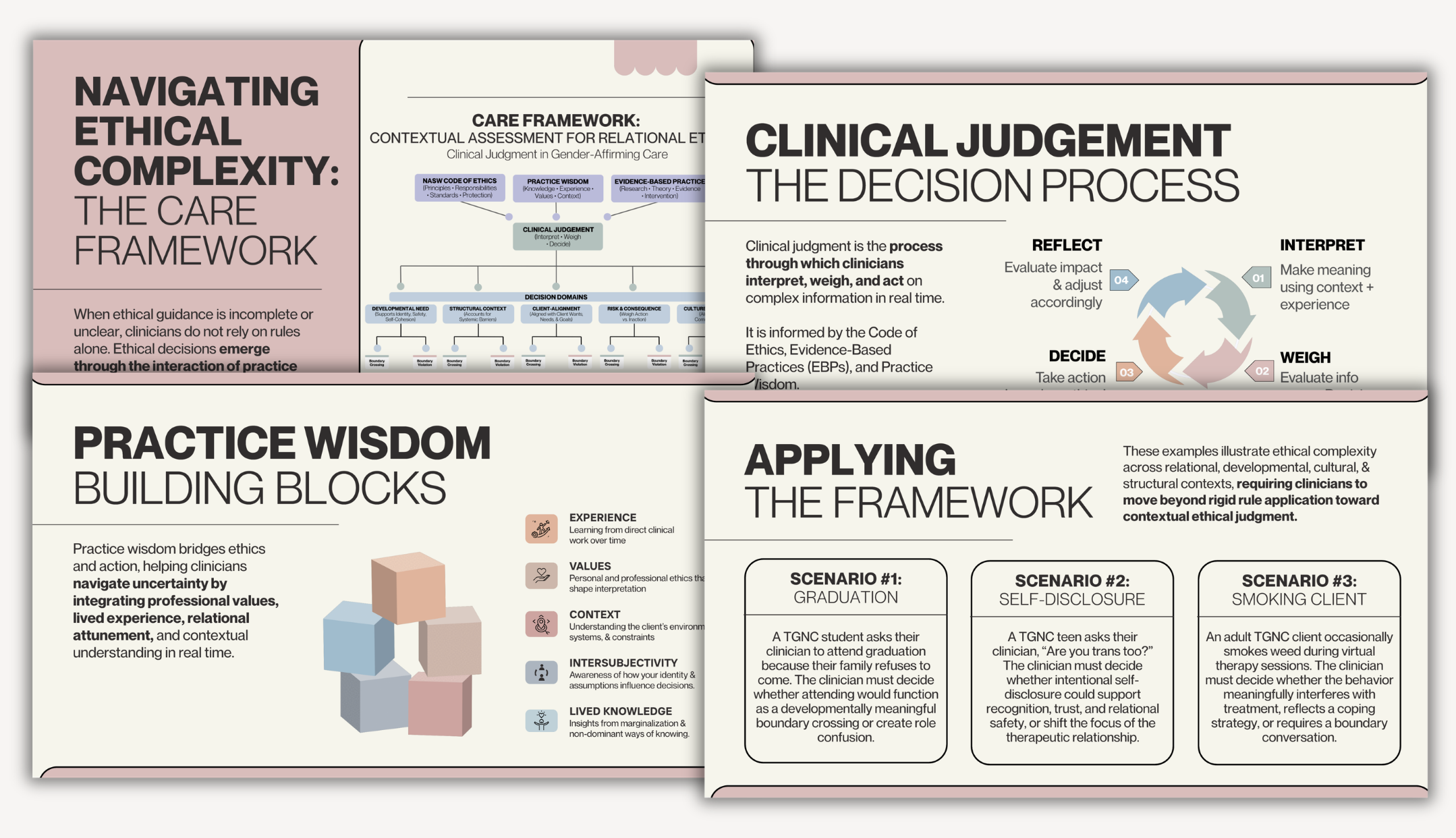
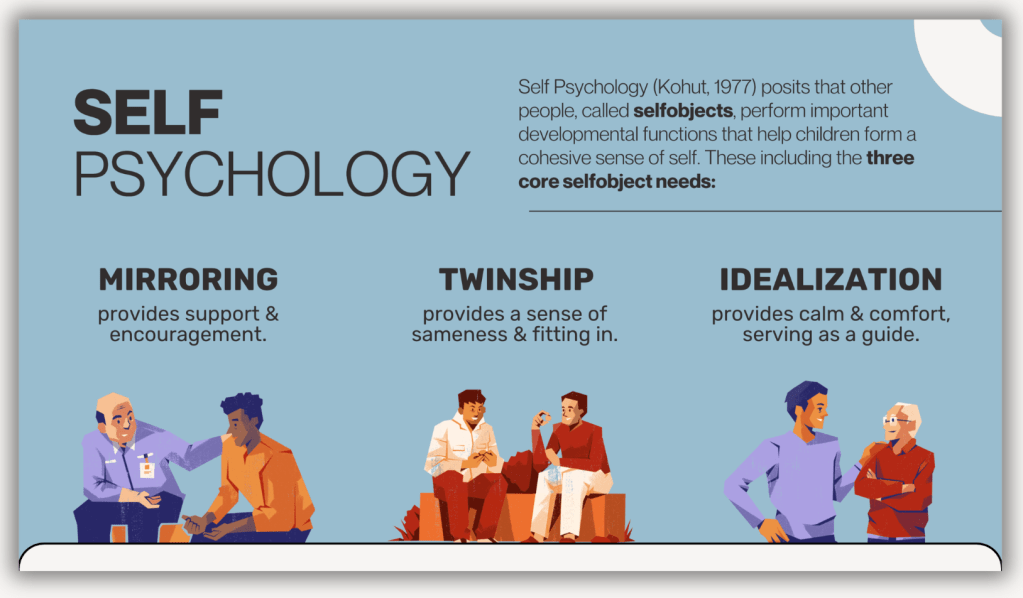
CARE (Contextual Assessment for Relational Ethics) is a framework I developed through my research on gender-affirming care, professional boundaries, and clinical judgment. It is grounded in the belief that ethical decision-making requires careful consideration of developmental needs, structural realities, client self-determination, potential risks and consequences, and the cultural and community contexts in which people live their lives.


 SINGER EQUITY & WELLNESS